
A contentious, decades-long scientific debate over the classification of smaller tyrannosaurid fossils appears to be reaching a critical juncture. New research challenges the prevailing theory that these remains represent juvenile Tyrannosaurus rex, instead suggesting they belong to a distinct genus, Nanotyrannus. The findings, published this week, offer fresh insight into the biodiversity of apex predators during the late Cretaceous period and demonstrate the evolving nature of paleontological understanding.
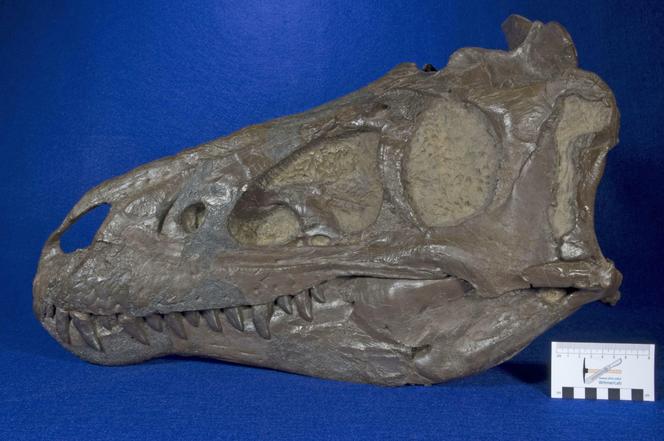
A decades-long debate surrounding Tyrannosaurus rex may be nearing its conclusion. Two recently published papers in leading scientific journals challenge the long-held hypothesis that certain smaller tyrannosaurids were simply juvenile forms of the iconic T. rex. This research highlights the complex methodologies paleontologists employ to understand prehistoric life.
“This is a story with many twists and turns,” says paleontologist Ronan Allain of the National Museum of Natural History. “Personally, I used to believe that the fossils in question were juveniles of T. rex. But I am now largely convinced by this new work that refutes that hypothesis, without resorting to appeals to authority.”
For the French researcher, the issue is purely intellectual, unlike some American paleontologists for whom the question has been central to their careers.
The story began in 1942, with the discovery in the Hell Creek Formation in Montana of a remarkably complete, small tyrannosaurid skull, approximately 66 million years old – dating back to just before the extinction of non-avian dinosaurs. Cataloged as CMNH 7541, it was initially classified as belonging to Gorgosaurus, a genus of tyrannosaur. In 1988, Robert Bakker of the University of Colorado, Boulder, proposed that CMNH 7541, housed at the Cleveland Museum of Natural History (Ohio), represented a new genus, Nanotyrannus, which he described as a “pygmy tyrannosaur.”
Il vous reste 78.89% de cet article à lire. La suite est réservée aux abonnés.
