
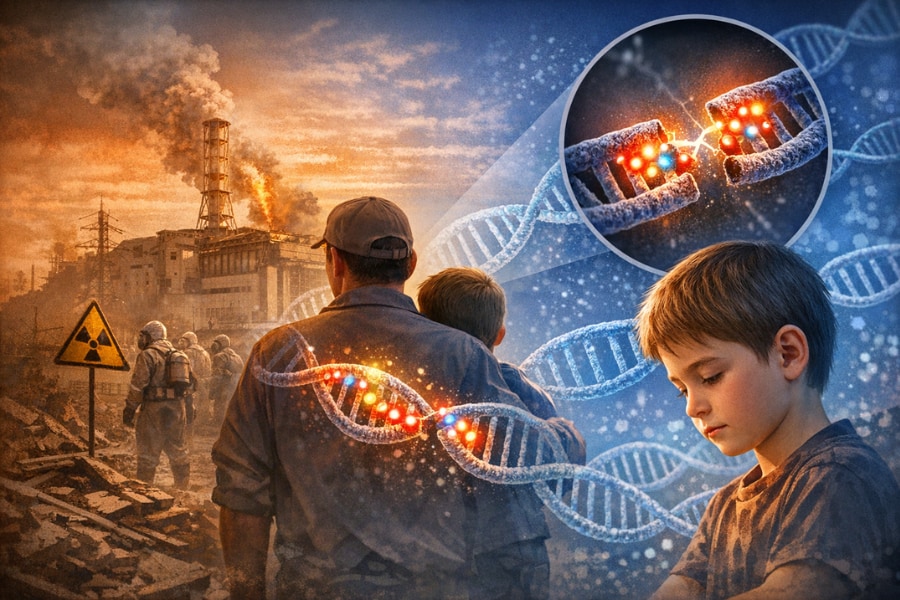
DNA Mutations Discovered in the Children of Chernobyl Workers
A new study has revealed an increase in a specific type of DNA mutation in the children of workers who participated in the cleanup efforts following the 1986 Chernobyl nuclear disaster. The findings, published on June 23, 2025, in the academic journal Scientific Reports, mark the first clear evidence of a potential transgenerational effect of radiation exposure on humans. This research offers a crucial insight into the long-term health consequences of the accident and raises questions about the potential for inherited genetic impacts from similar events.
Researchers at the University of Bonn in Germany, leading the study, conducted detailed analysis of the DNA of children born to those involved in the Chernobyl cleanup. The investigation identified an elevated presence of “a certain type of DNA mutation” within this population. ScienceAlert provides further details on the study’s methodology and findings.
The study focused on individuals conceived after the accident, specifically between 1987 and 2002, and involved whole genome sequencing. According to research published in Scientific Reports, no related mutations were found in a comparative study. This suggests the observed mutations are linked to the radiation exposure experienced by the parents.
While a previous study in 2021 found no “additional DNA damage” in children of parents exposed to the Chernobyl disaster, this new research focuses on a specific type of mutation not previously examined. BBC News reported on the earlier findings, which indicated that high-dose exposure did not appear to affect future generations.
The Chernobyl disaster, which occurred on April 26, 1986, at the Vladimir Ilyich Lenin Nuclear Power Station in what was then the Soviet Union, resulted in widespread contamination and the evacuation of numerous towns, including Pripyat. The area remains a restricted zone, but has seen a surprising resurgence of wildlife, including bears, bison, wolves, and over 200 bird species, as detailed in Postposmo. The ongoing research into the effects of radiation on these animals provides a unique natural laboratory for studying the long-term consequences of nuclear contamination.
