
A group of Cuban exiles attempting to reach Cuba in a boat engaged in a deadly shootout with the Cuban Coast Guard on February 25, raising questions about clandestine operations against the Cuban government. The incident, which left four people dead and six injured, involved individuals linked to an organization called Autodefensas del Pueblo (ADP), which openly advocates for armed resistance against the Havana regime.
The ten individuals aboard the vessel departed from Cayo Maratón, Florida, intending to connect with other members of the group within Cuba, according to ADP leaders. Cuban authorities have characterized the incident as a “terrorist infiltration” orchestrated by Cuban residents in Florida, although the ADP maintains it was a “patriotic mission.”
“This is the only organization that is dedicated to overthrowing the regime. These patriots are the only ones who have tried to liberate Cuba after Playa Girón,” said Michel Naranjo Riverón, the 47-year-old founder and leader of the ADP, in a video call. The incident has brought renewed attention to exiled Cuban groups that support insurgency, a strategy that, while historically significant, remains on the fringes of the opposition.
According to Cuban officials, the group opened fire on the Coast Guard patrol, wounding the commander, before being met with return fire. Four members of the group were killed, and six were wounded. Authorities recovered rifles, pistols, ammunition, and insignia from both the ADP and the Movimiento 30 de noviembre, a non-recognized political party, from the boat. Images released by the Cuban government show the recovered weaponry.
Those killed in the incident have been identified as Pavel Alling Peña, Michael Ortega Casanova, Ledián Padrón Guevara, and Héctor Duani Cruz Correa. Leordan Enrique Cruz Gómez, Conrado Galindo Sariol, José Manuel Rodríguez Castelló, Cristian Ernesto Acosta Guevara, and Roberto Álvarez Ávila were injured. Amijail Sánchez González, identified as one of the organizers, was similarly wounded.
Naranjo insists the men are “heroes who were willing to give their lives for the freedom of their homeland,” adding that the mission had a political objective. “This, although it may seem like madness, is not madness. It is a thought and an ideal.”
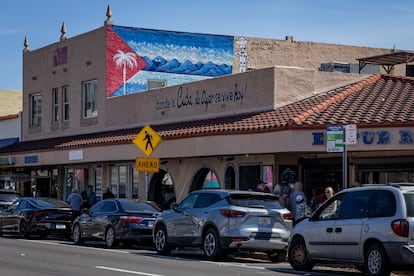
Naranjo founded a movement called Nueva Nación Cubana while still in Cuba, engaging in graffiti, sugarcane field fires, and calls for civil disobedience. He arrived in Florida by raft in 2021 and sought political asylum. He later met Sánchez González at the Versailles restaurant in Miami, a frequent gathering place for Cuban exiles, and the two discovered a shared history of opposition to the Cuban government. Both are listed on a Cuban Ministry of Justice blacklist of individuals and organizations allegedly linked to “terrorism,” which includes exiled leaders and opposition figures. “I am number 44 on the list,” Naranjo said proudly.
The ADP was founded in 2022 by Naranjo and Sánchez González. The organization shares its activities on social media, including graffiti reading “Patria ADP” in Cienfuegos and footage of what appears to be a sugarcane field fire. Videos also feature masked individuals with distorted voices. The group uses social media to promote its political ideology and solicit donations, with one Facebook post stating, “If you wish freedom and support the underground, we are ready to give our lives for our homeland. Long live free Cuba.”
While the ADP focuses its actions on activities within Cuba, Naranjo said he was unaware of the boat operation but knew all those involved. He expressed frustration with criticism of the mission circulating on social media. “They are denigrating them on social networks, saying they left in a tub. For me, it is an honor and a pride what they did.”
The group’s activities echo past attempts by Cuban exile groups to overthrow the Castro regime, dating back to the 1959 revolution. Groups like Alpha 66 and Omega 7 engaged in covert operations, some with CIA support during the Cold War. However, over time, opposition movements both inside and outside of Cuba have largely shifted towards civic engagement, leaving armed initiatives marginalized.
“The perception here was that these groups didn’t exist, that the exile was simply dominated by individuals linked to the Republican Party,” said Eduardo Gamarra, a professor of political science at Florida International University (FIU) who has extensively studied the Cuban exile and regional politics. “Alpha and Omega were groups that obviously aimed to fight with weapons, but also to eliminate anyone in the community who was against them. They saw anyone who talked about negotiation or accommodation with Cuba as communists or useful idiots.”
Guillermo Grenier, an FIU sociology professor specializing in the Cuban diaspora, noted that many recent arrivals from Cuba are motivated to confront the government “in the ways that can be done there,” which differs from the approach developed within the exile community. The case highlights the continued, though limited, appeal of armed resistance among some Cuban exiles.
Organizing an armed incursion against another country from U.S. Territory could have legal consequences. The Department of Justice declined to comment on whether it is investigating the incident. Washington’s response has largely focused on demanding explanations from the Cuban government. Several U.S. Lawmakers have called for accountability and a thorough investigation.
The government of Donald Trump has increased pressure on Havana in recent weeks. Following the capture of Nicolás Maduro in Venezuela, the U.S. Has restricted oil supplies, and the heightened tensions have prompted military mobilizations on the island.
Ramón Saúl Sánchez, founder of the Movimiento Democracia and a key strategist within the exile community, believes Cuba is “probably militarized” out of fear of “an invasion.” “At a time like this, and in an overloaded boat, landing during the day, are all somewhat reckless decisions, without diminishing the seriousness I give to a group of men who want to give their lives for the freedom of their country.”
Sánchez, who served time in prison in the 1980s for refusing to testify before a grand jury in an Omega 7 case and has since promoted peaceful resistance, believes those involved “were going to throw themselves into Cuba, probably didn’t consider the ramifications that this could have from here,” and speculates that the group may have had “an infiltrator who motivated them to do things a little recklessly.”
