The last surviving veterans of nuclear weapons testing conducted by the United States and Great Britain during the Cold War have shared their harrowing experiences, along with the untold stories of soldiers who died with the secrets of what they witnessed. These tests took place in remote locations, from deserts to the open ocean, and the full extent of their impact remained largely unknown, even to the families of those involved.
The accounts reveal the profound physical and psychological effects of being in close proximity to nuclear explosions, and raise questions about the lasting legacy of these programs. Veterans reflect on their experiences and offer their perspectives on the use of atomic weapons today.
These personal narratives are interwoven with significant historical events, including Albert Einstein’s letter to President Roosevelt, the Manhattan Project, the bombings of Japan, and the Cuban Missile Crisis – a period when the world stood on the brink of nuclear war. The stories are now compiled in a new book that sheds light on a largely hidden chapter of the Cold War.
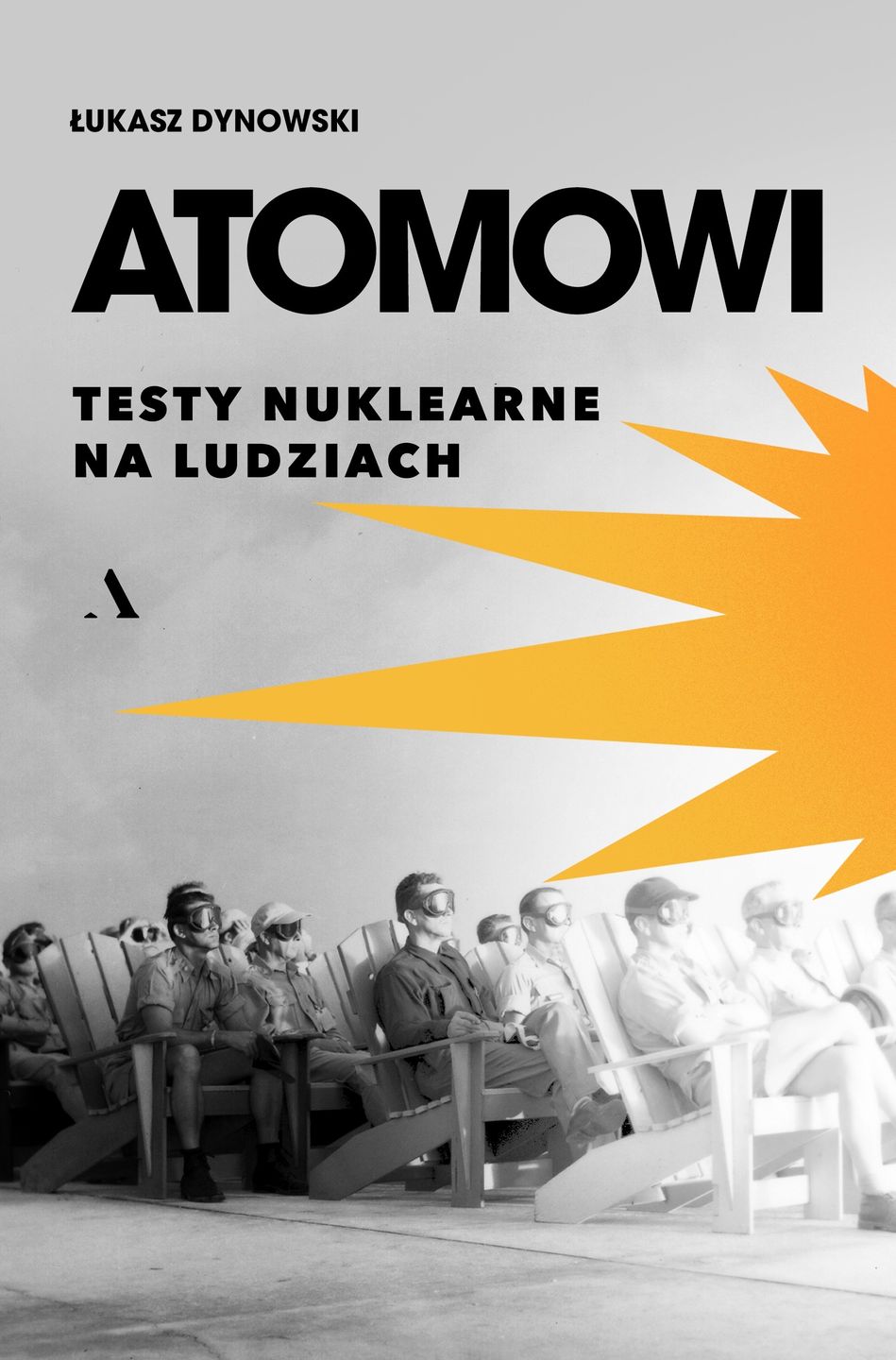
Fragment książki “Atomowi. Testy nuklearne na ludziach” Łukasza Dynowskiego:
“The Geiger counters were going wild. Just moments before, I was sitting in a trench. A lieutenant stood in front of me. I looked at him, and he was praying. He didn’t know, just like the rest of us, exactly what was going to happen.”
“We were only told they would count down from ten to one. And that when we heard ‘one,’ we should brace ourselves against the trench wall closest to the blast. So they counted. Ten, nine… One – we braced ourselves. Zero – I heard three short clicks, click, click, click. And then the light. It was so bright… indescribable. Blinding. We were supposed to stay in the trench until the shockwave passed over us and returned.”

“When we finally came out, we saw it. The mushroom cloud. And a huge ball of fire. The commander had Geiger counters. Clicking, clicking – quickly, faster and faster – clicking, clicking, clicking! Suddenly, a whistle – a signal that it was time to move. A large, dark cloud and gigantic flames. And we were supposed to go there – right there, into ground zero. Into the mushroom. What could we do? We were soldiers. An order was given, so we went. 10 meters, 20, 30… The ball of fire grew and grew, and we got closer and closer. Click, click, click, click, click! After 90 meters, the Geiger counters went completely crazy, then another whistle. Stop!”
Alex Partezana was 22 years old at the time. He would never forget the commander’s words, spoken months earlier: “You will go to a test.”
Partezana and his colleagues looked at each other. The obvious question – what kind of test? And the answer came crashing down on them: a test of an atomic bomb.
Partezana didn’t quite grasp it. He didn’t know much about the atomic bomb. No one really did then. But everyone had heard about what happened in Hiroshima and Nagasaki.
Perhaps about people vomiting in the streets.
Perhaps about those whose skin came off in patches and hung from their hands and feet, revealing the bones, and then fell to the ground, curling up into grotesque rolls.
About those whose intestines protruded.
About people “no longer of this world” – who would live for hours, maybe minutes, spending them lying in agony, burned, struggling to breathe.
About the moans that came from their mouths – “water, water.”
Or about hundreds of charred bodies, completely black “except for the gaping white teeth.”
Perhaps they knew only the statistics: 90,000 deaths in Hiroshima, maybe 166,000, or something in between – 100, 120, or even 150,000. And likewise 60,000 deaths in Nagasaki, maybe 80,000, maybe 72, maybe 78.
The discrepancy in estimates is large, but whether 150,000 or 246,000 people died, or even more – what difference does it make? German writer Kurt Tucholsky once looked into the depths of the human soul and extracted a thought perfectly suited to the unbridled horror of the bomb, and to the horror of all wars that evoke fear, but after a few weeks, when eyes adjust to the darkness of this world, commence to tire and bore, at least for distant audiences who are looking for something new and elsewhere, some other dramas. He wrote: “The death of one man is a catastrophe. The death of 100,000: it’s statistics!”
The book “Atomowi. Testy nuklearne na ludziach” (Atomic. Nuclear Tests on People) by Łukasz Dynowski will be released on March 11, 2026.