
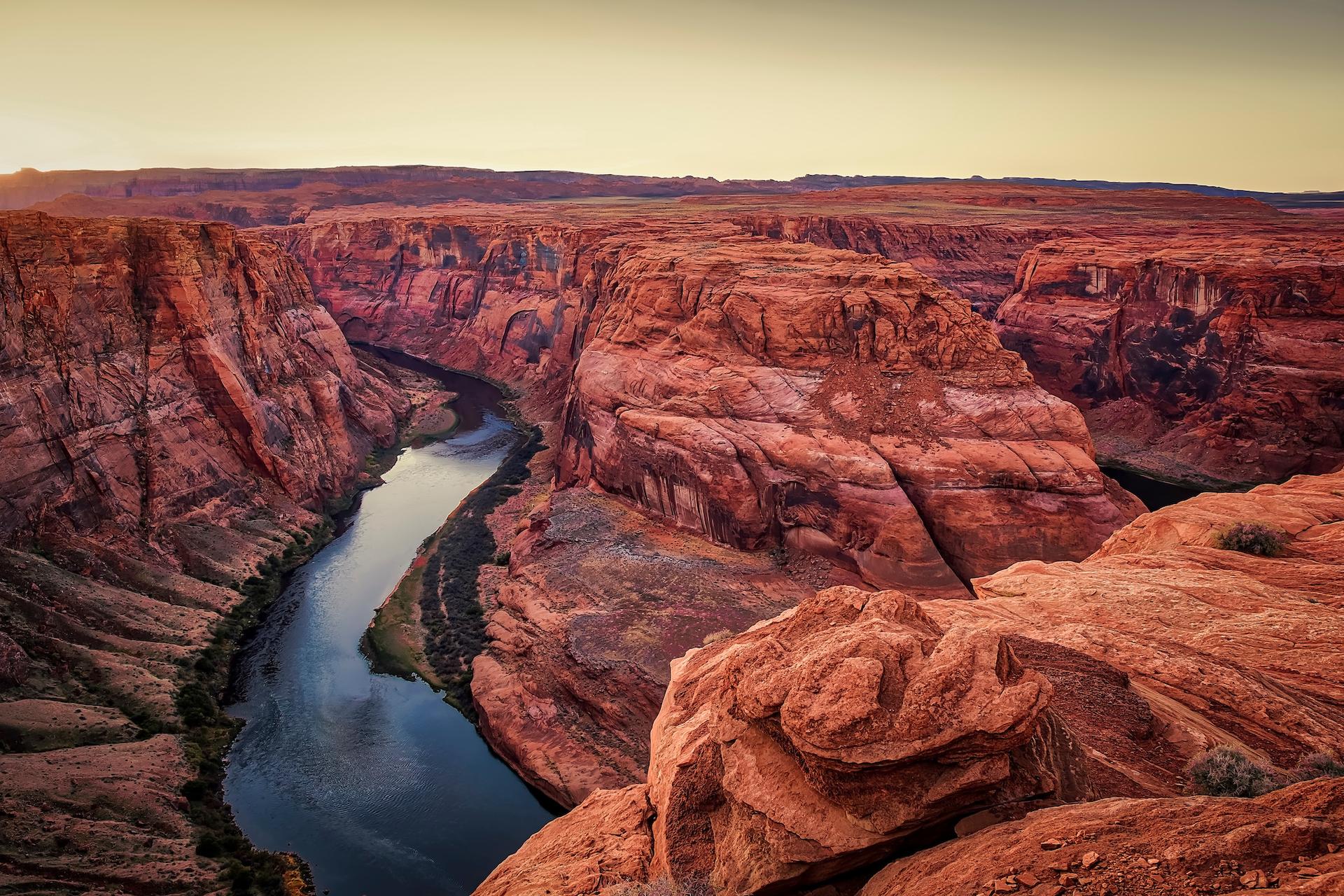
Scientists have solved a long-standing geological puzzle surrounding the Colorado River and the Grand Canyon, revealing how the region’s landscape evolved over millions of years. The mystery centered on a gap in the rock record—approximately five million years of missing geological history—that had puzzled researchers for decades.
Using advanced dating techniques and detailed sediment analysis, researchers from multiple institutions reconstructed the river’s ancient path and determined that the Colorado River began carving the Grand Canyon much earlier than previously thought. Their findings indicate that the process started around 5 to 6 million years ago, aligning the formation of the canyon with the integration of the river system into its current configuration.
The breakthrough came after analyzing volcanic deposits and mineral samples from the canyon’s western finish, which provided precise timestamps for when the river first established a continuous flow from the Rocky Mountains to the Gulf of California. This connection allowed the river to erode the landscape rapidly, carving through layers of rock and exposing nearly two billion years of Earth’s history.
Researchers emphasized that the resolution of this gap doesn’t just clarify the canyon’s origins—it likewise improves understanding of how tectonic uplift, climate shifts, and drainage reorganization interact to shape major landforms. The Colorado River’s role as a powerful erosive force is now better contextualized within the broader geological timeline of the American Southwest.
The study, published in a peer-reviewed geoscience journal, combines fieldwork, radiometric dating, and computer modeling to present a coherent narrative of the region’s evolution. Scientists noted that while the broad timeline is now clearer, ongoing research continues to refine details about the river’s episodic cutting and pause phases during its development.
This breakthrough highlights how modern geoscience tools can resolve deep-time mysteries, offering insights not only into iconic landscapes but also into the dynamic processes that shape planetary surfaces. For technologists and innovators, such interdisciplinary approaches—blending field data with computational analysis—mirror methodologies increasingly used in Earth observation, climate modeling, and AI-driven environmental forecasting.
