
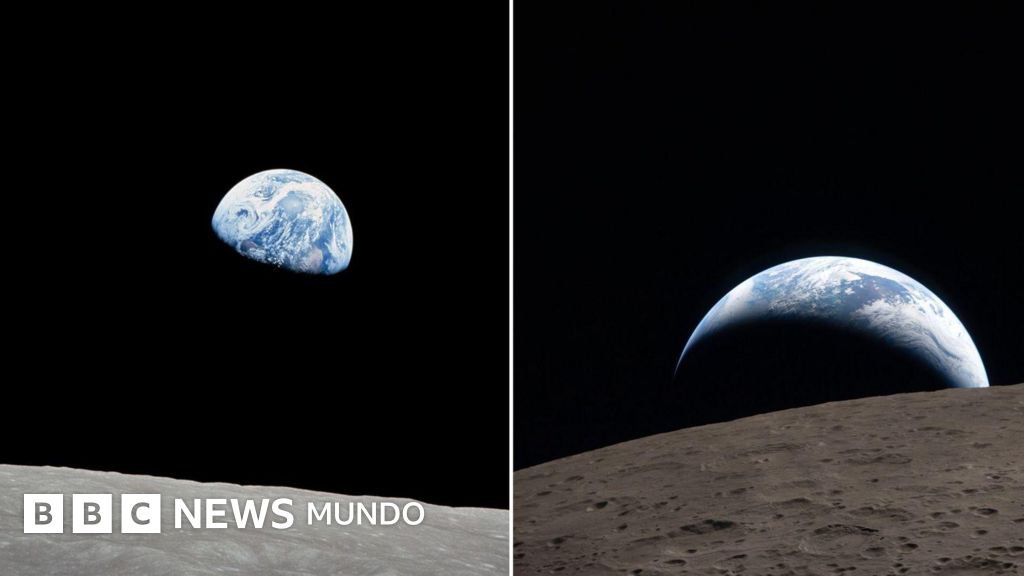
On December 11, 2024, astronaut Reid Wiseman, commander of NASA’s Artemis II mission, shared a previously unreleased video captured from lunar orbit that offers a striking perspective on Earth’s transformation over nearly six decades. The footage, recorded during the mission’s journey around the Moon, draws a visual parallel between the iconic “Earthrise” image taken by the Apollo 8 crew in 1968 and contemporary views of our planet from deep space.
The comparison highlights both the enduring beauty of Earth as seen from the Moon and subtle changes in its appearance over time. Wiseman described the moment as profoundly moving, likening the sight of Earth emerging over the lunar horizon to “watching the sunset on a beach” — a sentiment echoed in his personal reflections shared with mission control and later released to the public.
Among the most notable visuals was the first-ever recorded “earthset” — the moment Earth disappears below the lunar horizon — captured using an iPhone mounted inside the Orion spacecraft. This marks a historic milestone in space documentation, demonstrating how consumer-grade technology, when adapted for extreme environments, can contribute to meaningful scientific and cultural records.
The Artemis II mission, which launched in November 2024 and completed its lunar flyby in early December, carried a crew of four astronauts on a trajectory that took them farther from Earth than any humans have traveled since the Apollo era. Even as the mission did not land, its primary objectives included testing life support systems, navigation, and communication technologies essential for future crewed lunar landings under the Artemis program.
NASA officials emphasized that the imagery and data gathered during Artemis II serve not only as engineering validation but as well as a powerful reminder of humanity’s place in the cosmos. The mission’s visual record, particularly the Earth-Moon comparisons, has resonated widely across scientific and public audiences, reinforcing the importance of continued investment in deep space exploration.
As the Artemis program advances toward Artemis III — slated for a crewed lunar landing in 2026 — missions like Artemis II continue to provide critical insights and inspiration. The use of accessible tools like the iPhone in space underscores a growing trend: the integration of everyday technology into high-stakes scientific endeavors, blurring the lines between consumer innovation and space exploration.
