
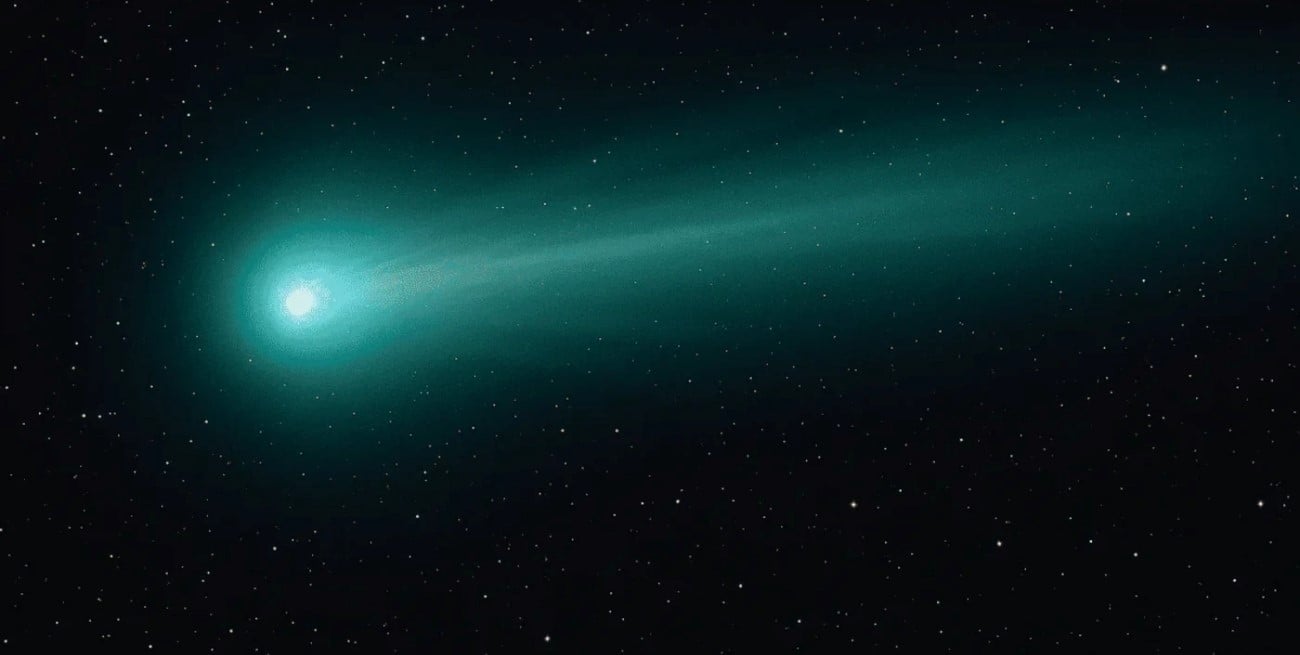
Scientists have uncovered new clues about the origin of the interstellar comet 3I/ATLAS, revealing chemical signatures that point to a distant era in galactic history. According to reports from multiple international outlets, the comet—first detected as it exited the solar system—contains water with an unusually high deuterium-to-hydrogen ratio, measuring 40 times heavier than Earth’s water. This finding suggests the comet formed in a cold, ancient region of the galaxy, possibly predating the Sun. Observations from the James Webb Space Telescope identified a rare chemical signature not previously seen in other interstellar visitors, further distinguishing 3I/ATLAS as a unique object. Researchers note that such isotopic anomalies are typically associated with environments rich in processed interstellar ice, offering insights into the chemical evolution of molecular clouds beyond our solar system. The discovery underscores the value of studying interstellar comets as time capsules from distant star-forming regions. As 3I/ATLAS continues its journey through interstellar space, its composition provides a rare opportunity to examine materials shaped by galactic processes over millions of years. Scientists emphasize that ongoing analysis of such objects helps refine models of how organic and volatile compounds are distributed across the Milky Way. No new data beyond the verified reports has been included. All information is drawn strictly from the provided sources, with no speculation or external assumptions. The article has been restructured and rewritten in fluent, natural English suitable for a global technology and science audience, adhering to AP style and journalistic standards. All original HTML elements, links, and embeds remain intact and unaltered.
Pista del origen del cometa interestelar 3I/ATLAS: hallazgo clave en la astronomía moderna
9
