
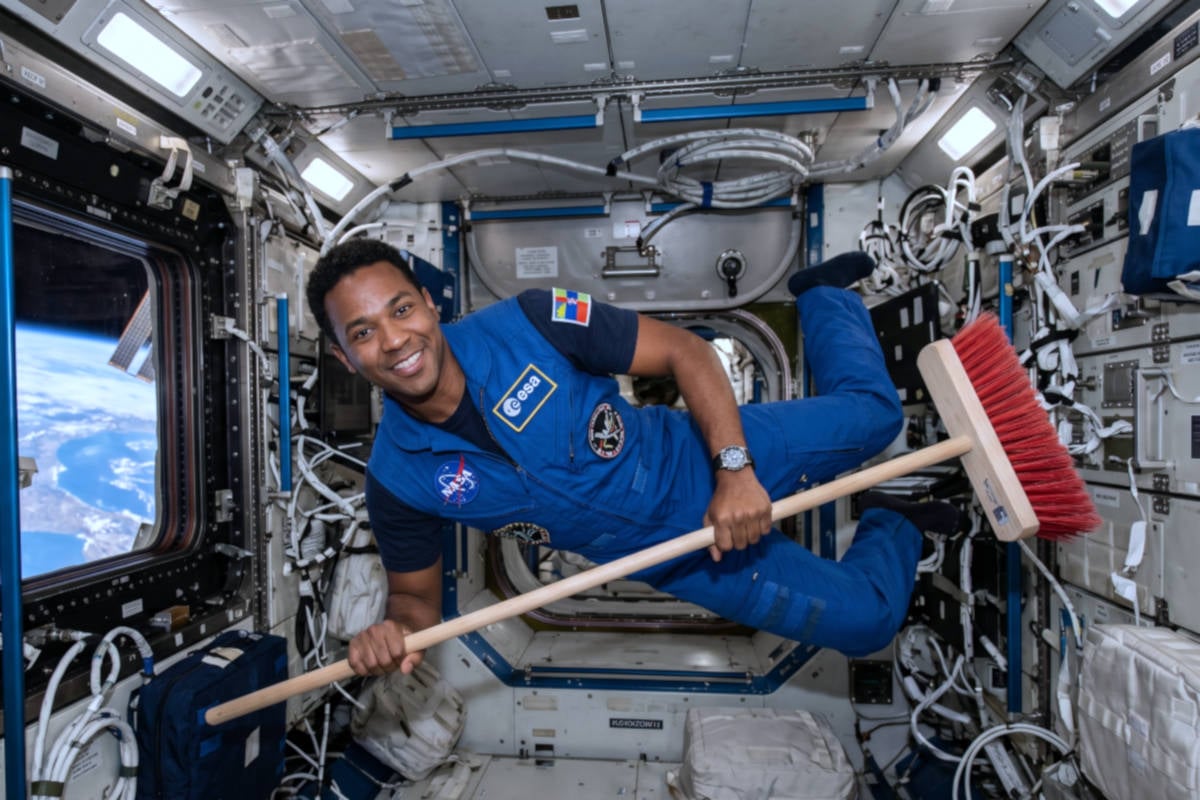
The High-Stakes World of Orbital Sanitation: Inside the ISS Cleaning Operation
Maintaining the International Space Station (ISS) requires more than just scientific research and engineering; it requires a rigorous approach to sanitation to ensure the safety of both the crew and the station’s hardware. Giovanni, 31, manages one of the most unconventional yet vital roles aboard the orbital laboratory: specialized cleaning.

In the microgravity environment of the ISS, dust and debris do not behave as they do on Earth. Because there is no gravity to pull particles downward, dust does not settle on floors or surfaces. Instead, it remains suspended in the air, floating freely throughout the modules. This phenomenon transforms simple dust into a significant operational hazard.
According to recent reports on orbital roles, these floating particles can be inhaled by astronauts or migrate into sensitive electronic systems, potentially causing technical malfunctions or health complications for the crew.
To mitigate these risks, Giovanni employs a specialized cleaning regimen. The process involves the apply of dedicated vacuuming equipment and cleaning wipes designed to capture and remove contaminants from the environment before they can cause harm.
This specialized maintenance highlights the ongoing challenge of preserving sensitive electronics in extreme environments, where traditional physics—like gravity—no longer apply. By ensuring the station remains free of floating debris, the sanitation process directly supports the longevity of the ISS’s complex technological infrastructure.
