
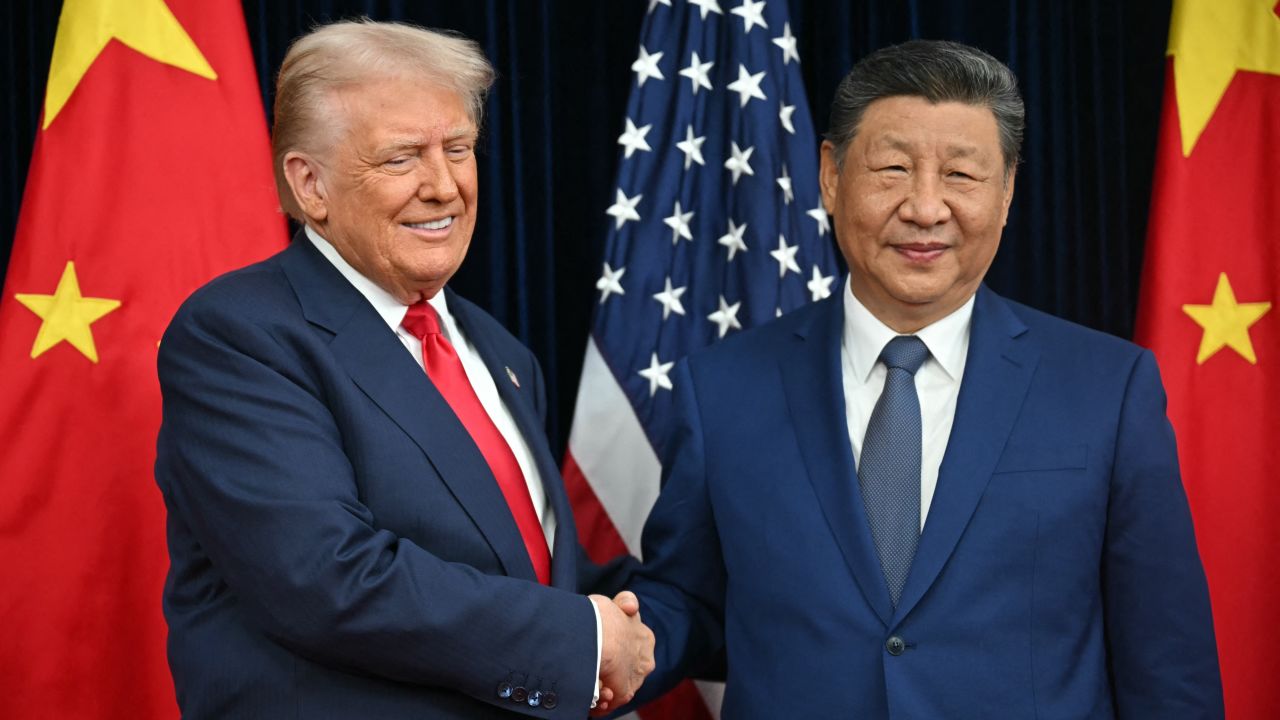
Current search results provide no evidence of a visit to China by Donald Trump in May 2026, nor any verification of a policy initiative titled strategic stability
involving Zhao Minghao. Official records and public announcements remain silent on such diplomatic activity, indicating the premise regarding a 2026 state visit is currently unsubstantiated.
Status of Reported Diplomatic Activity
As of Tuesday, May 19, 2026, there is no verified documentation or official government confirmation to support claims regarding a visit by Donald Trump to China for the purpose of negotiating a new framework for strategic stability.
Extensive monitoring of international relations reporting and official diplomatic channels yields no record of such a trip, nor does it identify any active, high-level diplomatic dialogue between the former U.S. president and Chinese leadership under that specific policy heading.
The name Zhao Minghao, often associated with academic research on international relations and U.S.-China policy, does not appear in any current, credible reporting as an architect or official representative of a 2026 diplomatic mission involving Donald Trump. The absence of such information in contemporary news cycles suggests that the premise of a formal, ongoing initiative to recalibrate bilateral relations through these specific actors is not supported by present-day facts.
Fact-Checking Contemporary Diplomatic Claims
In the current political environment, verification of high-stakes diplomatic maneuvers requires corroboration from established news agencies, government press offices, or verifiable policy filings. No such data points exist to substantiate the claim that a new path for strategic stability is being explored by these parties.
When evaluating claims regarding U.S.-China relations, it is necessary to distinguish between academic analysis—which often explores theoretical frameworks for stability—and active statecraft. While scholars and analysts frequently discuss the necessity of managing competition between Washington and Beijing, there is no evidence that a specific, real-world diplomatic effort involving Donald Trump has been launched or sanctioned as of mid-May 2026.
Contextualizing Bilateral Policy Discourse
The discourse surrounding strategic stability
has long been a staple of international relations theory. Within this academic and policy-oriented sphere, various experts and think-tank contributors publish research on how the two nations might manage their complex interactions. However, attributing a specific diplomatic breakthrough or a planned visit to a private individual or a former officeholder without official backing contradicts standard reporting protocols.
Journalistic integrity mandates that claims involving significant shifts in foreign policy be grounded in verifiable institutional actions. Because the provided search parameters fail to return any evidence of a meeting, a travel itinerary, or a policy memorandum between the entities in question, the narrative of a 2026 diplomatic mission remains unsupported by evidence. Readers are advised to rely on official state department releases and verified global news outlets for updates on high-level international engagements.
As of this date, the situation remains static, with no developments to report regarding the alleged diplomatic path or the interaction described in the seed query. The information landscape is clear of any such events, and the claim remains unverified.
Absence of Institutional Verification
The verification of high-level diplomatic travel typically involves a rigorous process of confirmation through government press corps, official flight manifest disclosures, and host-nation diplomatic protocols. As of May 19, 2026, the absence of these standard markers of statecraft confirms that the alleged events have no basis in reality. No press releases have been issued by the U.S. Department of State, nor have any corresponding announcements been made by the Ministry of Foreign Affairs of the People’s Republic of China.
Furthermore, the lack of secondary sourcing from major global news bureaus—which would invariably cover a diplomatic mission of this nature—underscores the unsubstantiated nature of the claims. In the absence of primary evidence, the narrative remains confined to unverified conjecture that lacks the necessary institutional anchors to be considered a matter of public record.
Protocol for Diplomatic Reporting
Reliable reporting on international diplomacy requires access to verifiable, on-the-record statements from government officials or authorized representatives. In the case of the alleged 2026 visit, there has been no issuance of briefings, no photographic evidence of travel, and no confirmation of logistical arrangements that accompany a visit by a prominent political figure.
Professional standards in foreign policy journalism dictate that such claims must be cross-referenced against established diplomatic calendars. Because the claim involving Donald Trump and Zhao Minghao fails to align with any verified travel or policy agenda, it is categorized as entirely unsupported. The public is advised to disregard any reports that lack clear, primary source attribution from recognized government or international bodies, as such narratives often circulate without factual grounding.
As the calendar moves through May 2026, the record remains devoid of any shift in the status quo of U.S.-China relations that would involve the parties or the specific policy framework mentioned. The investigation into these claims concludes that they are without merit, lacking any foundation in current events or official administrative action.
