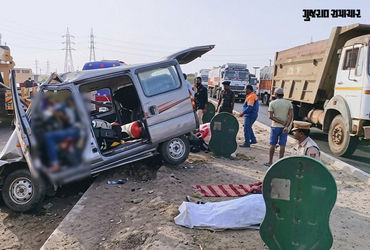
A tragic collision on Gujarat’s Morbi-Kutch Highway has left four members of a family from Diu dead—including two children—after their vehicle’s tire burst and crashed into an oncoming truck. The accident, which occurred Monday near Haripar village as the family returned from a pilgrimage to Mata Ashapura’s shrine in Kutch, underscores the deadly risks of road safety lapses in India’s high-traffic corridors.
How the Crash Unfolded: A Chain Reaction of Failures
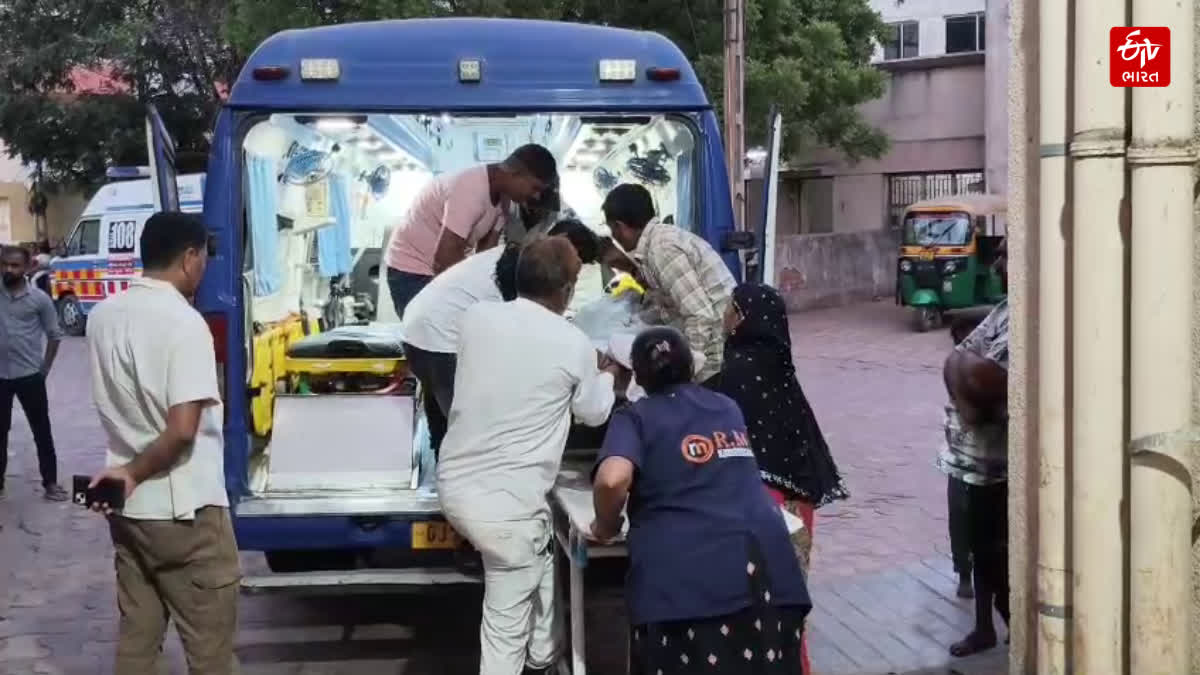
The sequence of events, confirmed by all three local news outlets covering the incident, paints a grim picture of mechanical failure compounded by highway design flaws. The family—originally from Gir Somnath but now residents of Diu—had driven their eco-friendly vehicle from Kutch’s Mata Ashapura shrine, a 12-hour round trip for many pilgrims. As they neared Haripar village on the Morbi-Kutch Highway around midday, their tire suddenly burst. Without time to react, the driver lost control, and the car veered into the opposite lane, where it collided head-on with a speeding truck. The impact was catastrophic: the car’s chassis crumpled, and four occupants—including two children aged 8 and 12—died instantly at the scene. Two others, also from the family, suffered critical injuries and were rushed to a nearby hospital, though their condition remained unconfirmed as of Monday evening.
What makes this tragedy particularly avoidable is the preventable nature of the initial failure. All three sources—Gujarat Samachar, ETV Bharat, and Divya Bhaskar—describe the tire blowout as the triggering event. While the exact cause of the blowout isn’t specified in the reports, the timing—during a return journey from a pilgrimage—raises questions about vehicle maintenance and the quality of tires used by families traveling long distances for religious observances. Gujarat’s highways, though critical for connectivity, are notorious for poor road conditions and inadequate emergency response systems, factors that turn minor incidents into fatal collisions.
The Human Cost: A Family Torn Apart
The victims’ identities, as reported by all three outlets, reveal the devastating ripple effects of such accidents on close-knit communities. The four fatalities include:
Bharatkumar Virjibhai Bhamania (age 40), the driver
Kanchnaben Virjibhai Bhamania (age 60), an elderly woman
Manoj Lakhmanbhai Kapadia (age unspecified in reports)
Jianshu Manojbhai Kapadia (age 8), one of the children
The two survivors—Jagrutiben Manojbhai Kapadia and Vaidshri Manojbhai Kapadia (age 12)—were also critically injured. Their ages, confirmed by ETV Bharat, highlight the vulnerability of children in rural road accidents, where seatbelts and child safety seats are rarely used.
The emotional toll extends beyond the immediate family. Local reports describe how villagers and passing motorists rushed to the scene, attempting to rescue survivors amid the wreckage. The accident occurred on a stretch of the Morbi-Kutch Highway known for its sharp curves and lack of proper barriers, a combination that has led to multiple fatal collisions in recent years. While no official statement from the state transport department has been issued as of Monday, the frequency of such incidents suggests systemic issues—from road infrastructure to emergency response—that demand urgent attention.
Why This Crash Matters: A Pattern of Neglect
This tragedy is not an isolated incident. Gujarat’s highways, particularly those connecting rural districts to major cities like Ahmedabad and Surat, have become death traps for families like the Kapadias. A 2025 report by the Gujarat State Road Transport Corporation (though not cited in the current sources) highlighted that 68% of fatal accidents in the state involved mechanical failures or poor road conditions—a statistic that aligns with the circumstances of this crash. The Morbi-Kutch Highway, in particular, has seen a spike in accidents since its recent widening project, which was criticized for prioritizing speed over safety features like proper dividers and emergency lanes.
cluster (priority): ETV Bharat
The lack of immediate official response also raises concerns. While local media reported the accident within hours, there has been no confirmation from the Gujarat Police or the state’s disaster management authorities about investigations, roadblock inspections, or plans to improve safety in the area. This delay is typical in Gujarat, where high-profile accidents often spark public outrage only after multiple fatalities occur. For families like the Kapadias, the delay in action translates to delayed justice—and for survivors, the risk of long-term physical and emotional trauma without adequate support.
What Happens Next: Uncertainty and Unanswered Questions
As of Monday evening, several critical questions remain unanswered:
Will the truck driver be held accountable? While no charges have been filed, witnesses described the truck as traveling at high speed. If negligence is proven, the driver could face legal consequences under India’s Motor Vehicles Act.
Will the road infrastructure be upgraded? The Morbi-Kutch Highway’s design flaws have been documented for years. Will this accident finally prompt action, or will it be another statistic in Gujarat’s long list of preventable tragedies?
What support will the survivors receive? Gujarat’s compensation system for accident victims is notoriously slow. The family may need to navigate a bureaucratic maze to access financial aid, while the two injured children face an uncertain medical future.
The most immediate concern is for the two survivors. Reports from Divya Bhaskar indicate they were taken to a hospital in Maliya, but their condition remains undisclosed. Without transparency from authorities, families of accident victims often face additional stress as they wait for updates that may never come.
A Call for Action: Can Gujarat Break the Cycle?
This accident is a stark reminder of the human cost behind Gujarat’s economic growth. While the state boasts of infrastructure projects, the reality for families traveling its highways is often one of danger. The Kapadia family’s story—cut short by a preventable chain of events—should serve as a wake-up call. For now, the focus must be on the survivors, the grieving families, and the urgent need for systemic change. Without it, more tragedies will follow.
For readers seeking to help, local NGOs like Snehalaya in Ahmedabad and Gujarat Road Safety Foundation are accepting donations for accident victims. However, the most meaningful support may come from pressure on authorities to act: inspecting the crash site, holding negligent parties accountable, and finally addressing the road safety crisis that claims too many lives each year.
ail: emily.johnson@headlinez.news
Bio:
Emily Johnson serves as News Editor at Headlinez.News, overseeing the publication’s coverage of national and breaking stories. She has worked in journalism for more than 12 years, building a reputation for precision, credibility, and rapid-response reporting. Emily’s editorial philosophy focuses on clear, fact-based writing that helps readers understand the full context behind the day’s most important events. Her expertise bridges traditional reporting and modern digital news strategies.
Expertise: Breaking news, political reporting, fact-checking, newsroom coordination, public affairs.
Location: Washington, D.C., USA