
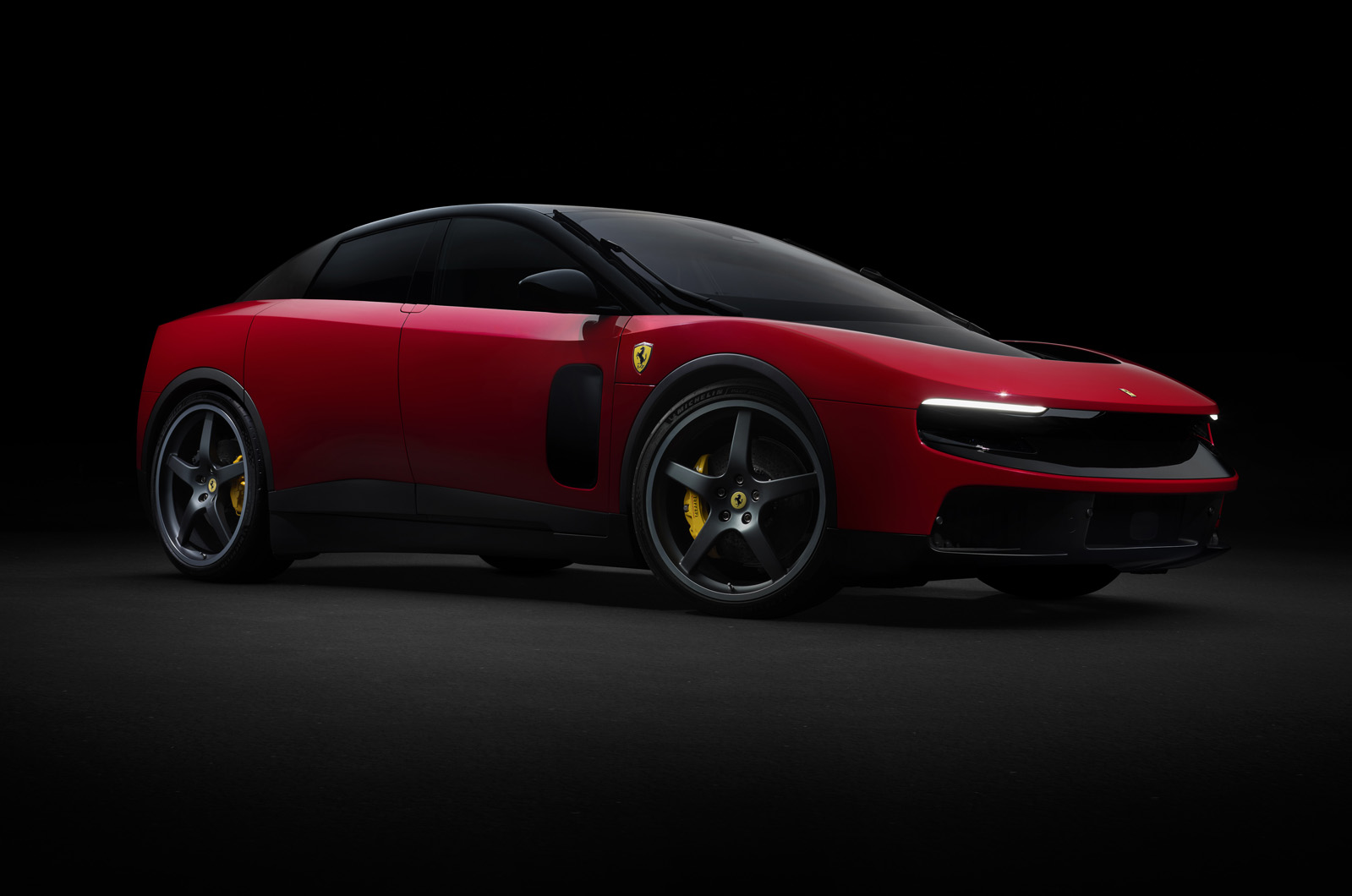
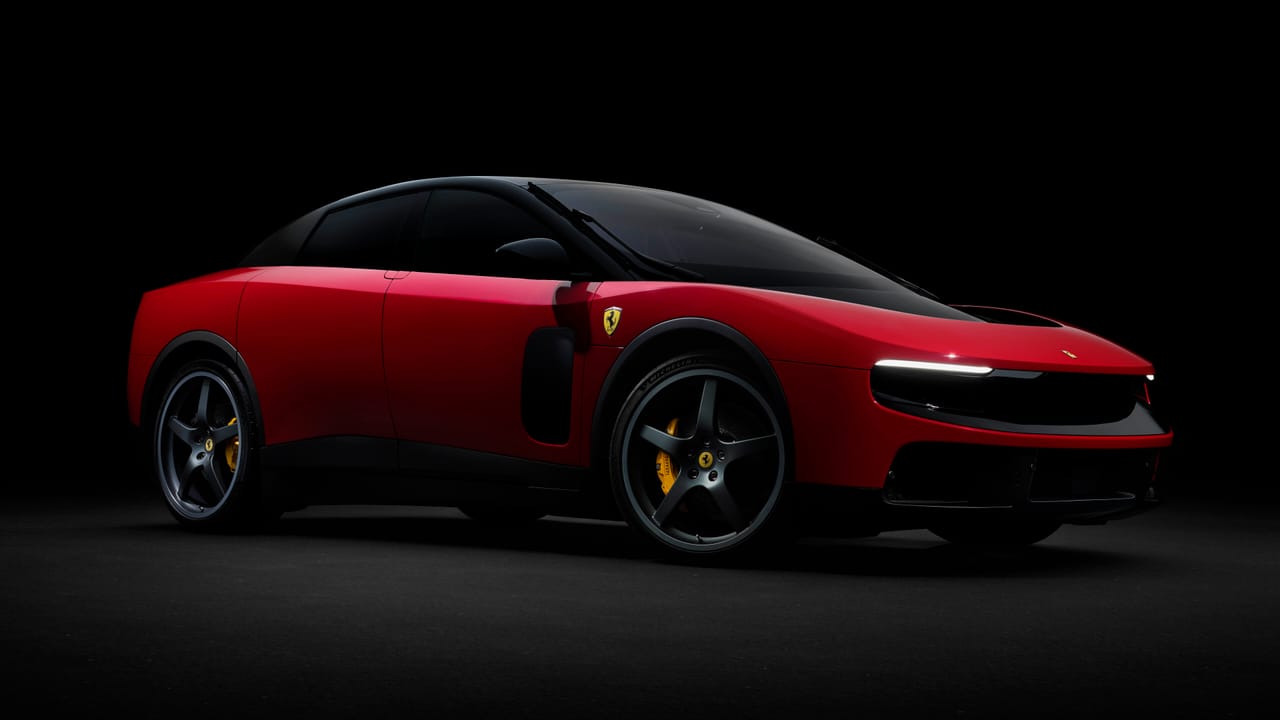
Ferrari has officially unveiled the Luce, its first all-electric vehicle, which features a 1,035bhp powertrain and a 122kWh battery. Scheduled for release in continental Europe early next year with a projected price of £440,000, the four-motor supercar represents a significant technological shift for the Maranello-based manufacturer as it enters the EV market.
Engineering a New Performance Philosophy
The development of the Luce required Ferrari to move away from traditional mid-engined layouts. According to Top Gear, the company determined that simply replacing an internal combustion engine with a battery pack would offer no advantage in terms of center of gravity or inertia. Instead, engineers opted for a larger architecture that accommodates five passengers and utilizes a hatchback design, achieving a center of gravity 95mm lower than that of the Purosangue.
By integrating the battery pack directly into the vehicle’s body, Ferrari claims to have improved torsional rigidity, resulting in a chassis where 95 per cent of the components are new. The car is managed by a vehicle control unit that monitors targets 200 times per second, overseeing four motors that deliver a combined 1,035bhp. The front motors contribute 282bhp, while the rear motors provide 831bhp and a substantial 5,900lb ft of torque at the rear wheels. This specialized motor configuration is designed to manage the vehicle’s weight distribution, with the battery pack serving as a structural member of the chassis, a departure from the company’s traditional sub-frame assembly methods.
Manual Control and Regenerative Braking
Ferrari has focused on maintaining driver engagement despite the switch to electric power. As Autocar reports, the Luce utilizes steering column paddles to adjust regenerative braking and power availability rather than performing mechanical gearshifts. In Performance mode, the vehicle amplifies authentic sounds derived directly from the motors and gearsets.
“The sound is authentic; the sound is real. You can see where it comes from. We didn’t want a fake, nostalgic sound.” — De Simone, via Autocar
The paddle system offers five levels of regenerative braking. The most aggressive setting provides 0.33g of deceleration, which the company equates to the engine braking found in a 12Cilindri in second gear. Drivers can manipulate these settings to manage power delivery, particularly when exiting low-speed corners where utilizing the full 1,035bhp is not feasible.
“It’s not a fake gearbox. The power is cut in slices, not speed. We keep the interaction, to keep decision making active.” — De Simone, via Autocar
The integration of these controls is intended to bridge the gap between traditional internal combustion driving dynamics and the instantaneous torque delivery of an electric powertrain. By allowing the driver to modulate the “slice” of power, Ferrari aims to prevent the sensation of a binary on/off throttle response, which the company suggests can often diminish the feedback loop between the driver and the road in high-performance electric vehicles.
Collaboration and Future Market Positioning
The exterior and interior design of the Luce was handled by the agency LoveFrom, led by Sir Jonathan Ive. Ferrari describes the collaboration as an unconventional, multidisciplinary perspective. The company emphasizes that the vehicle is the product of more than 60 new patents and an ecosystem of technology partnerships.
“We are convinced that a company demonstrates its leadership when it has the courage to dare and to take on the challenge of new technologies.” — Benedetto Vigna, CEO of Ferrari, via Top Gear
While final UK pricing is pending, the Luce is expected to cost €550,000 in continental Europe. The vehicle, which weighs 2,260kg, is capable of a 0-62mph sprint in 2.5 seconds and features a top speed of 192mph. With an 800V architecture and a range of approximately 330 miles, the Luce is positioned to test the market’s appetite for a high-performance electric Ferrari. The company intends to begin sales in continental Europe early next year, with a UK arrival anticipated for the following spring.
The transition to an 800V system marks a critical technical milestone for the manufacturer, enabling faster thermal management and charging efficiency compared to standard 400V architectures. Ferrari has indicated that the Luce will serve as the cornerstone of its electrification strategy, which includes the development of new manufacturing facilities in Maranello dedicated to the assembly of high-voltage battery modules. Analysts and stakeholders are monitoring this launch closely, as it represents the first instance where the brand has fully committed to an electric-only platform for its flagship performance tier, moving beyond the hybrid assistance systems previously featured in models such as the SF90 Stradale and the 296 GTB.
The logistical rollout will be phased, with initial production volumes prioritized for the European markets where the vehicle’s specific charging infrastructure requirements are already well-supported. Ferrari has not yet disclosed specific production caps for the first year, though the use of new, highly automated assembly lines suggests that the company is preparing for higher volume output than the limited-run special editions of its combustion-engine portfolio. The success of the Luce will likely influence the pace at which Ferrari pivots its remaining model lineup toward full electrification, a process currently under the oversight of Benedetto Vigna as part of the company’s broader strategic roadmap through the end of the decade.
