

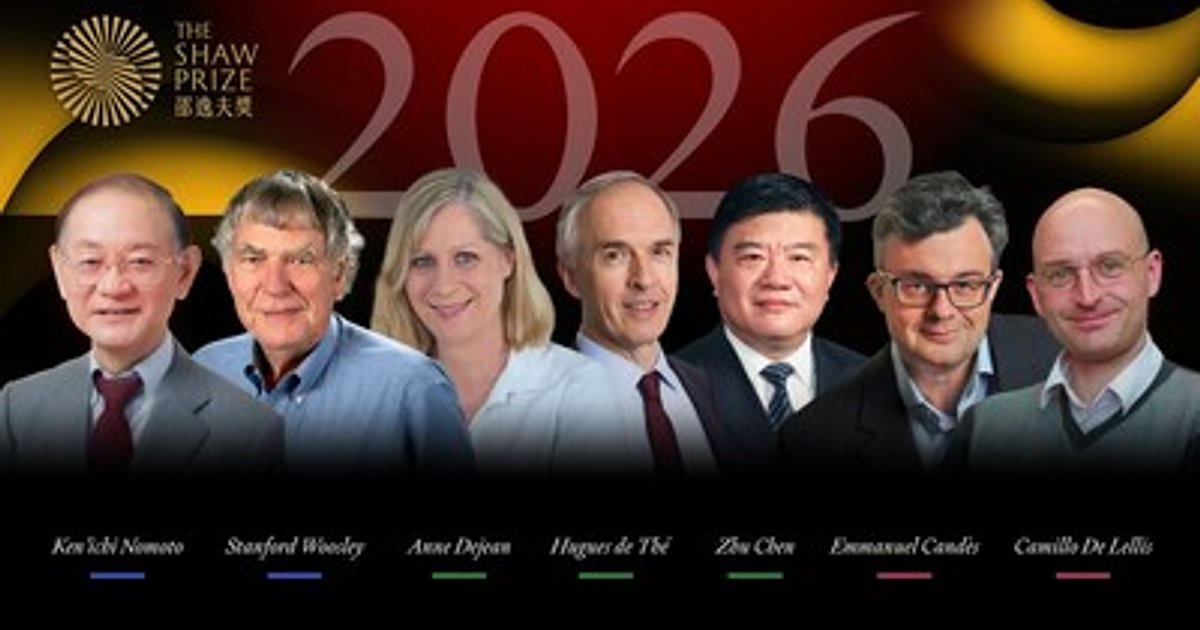
HONG KONG – Seven scientists were named recipients of the 2026 Shaw Prize, with accolades spanning cancer research, astrophysics, and mathematical analysis, as announced by the Shaw Prize Foundation on May 27, 2026. The awards, often dubbed the “Nobel of the East,” carry $1.2 million in each of their three categories: Astronomy, Life Science and Medicine, and Mathematical Sciences. A new Computer Science Prize will debut in 2027, marking the first expansion of the foundation’s scope since its inception in 2004.
Medical Breakthroughs: Transforming Leukemia into a Curable Disease
The Life Science and Medicine prize was shared by Anne Dejean of the Institut Pasteur, Hugues de Thé of the Collège de France, and Zhu Chen of Shanghai Jiao Tong University for their work on acute promyelocytic leukemia (APL). Their research, spanning decades, transformed a once-fatal cancer into a highly treatable condition. Dejean identified the PML-RARα oncoprotein, the genetic driver of APL, while de Thé demonstrated how targeted drugs could degrade this protein. Zhu Chen pioneered a synergistic therapy combining all-trans retinoic acid (ATRA) and arsenic trioxide, achieving remission rates above 95%. BriefGlance noted that this approach has become a blueprint for oncogene-targeted therapies, with implications for other cancers.
“This is a medical miracle that turned a death sentence into hope,” said the Shaw Prize Foundation in its statement. The trio’s work underscores the power of interdisciplinary collaboration, blending molecular biology, pharmacology, and clinical innovation. Their success has already saved thousands of lives, with APL now serving as a model for precision medicine.
Unraveling Cosmic Origins: Stellar Explosions and Element Formation
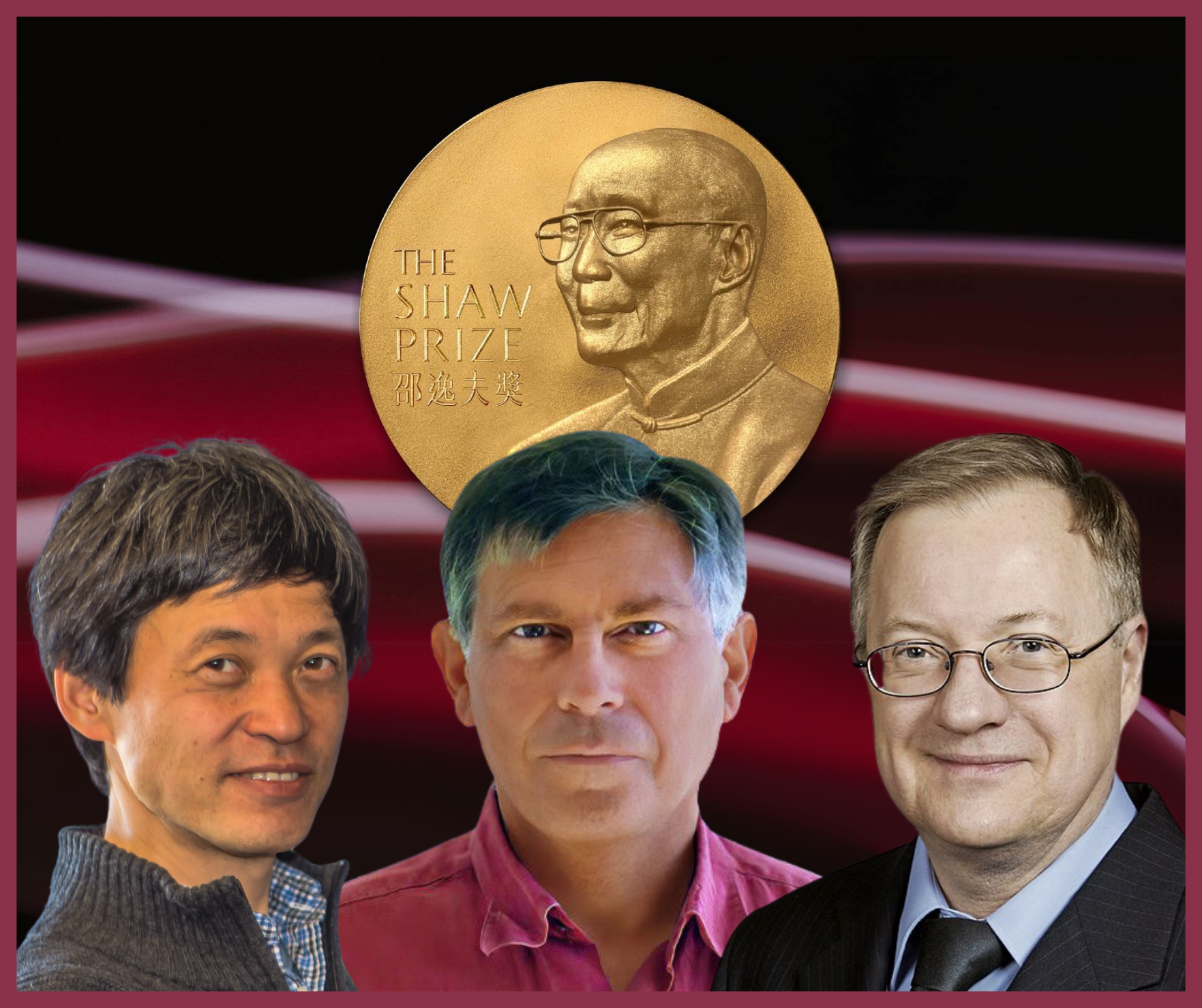
The Astronomy prize honored Ken’ichi Nomoto of the University of Tokyo and Stanford Woosley of the University of California, Santa Cruz, for their foundational studies on stellar explosions and the origin of elements. Their research addresses a fundamental question: how did the universe’s building blocks—carbon, oxygen, and heavier elements—arise? By modeling supernovae and nucleosynthesis, Nomoto and Woosley provided critical insights into the processes that forged the elements essential for life, from the iron in our blood to the silicon in Earth’s crust.
“These discoveries are not just academic—they are the story of our existence,” said the foundation. The work has direct applications in astrophysics, including understanding the life cycles of stars and the distribution of elements in galaxies. China Daily highlighted that their research has influenced modern cosmological models, particularly in explaining the origins of heavy metals in the universe.
Mathematical Innovation: Bridging Theory and Application
The Mathematical Sciences prize was awarded to Emmanuel Candes of Stanford University and Camillo De Lellis of the Institute for Advanced Study in Princeton for their work in applying mathematical analysis to real-world problems. Candes, known for his contributions to compressed sensing, developed algorithms that enable efficient data reconstruction, revolutionizing fields like medical imaging and signal processing. De Lellis advanced the understanding of geometric measure theory, with applications in fluid dynamics and materials science.
“Mathematics is the language of the universe, and these researchers have expanded its vocabulary,” said the foundation. Their work exemplifies the growing intersection of pure mathematics and practical challenges, from optimizing MRI scans to predicting turbulent flows in engineering. The prize underscores the increasing recognition of mathematics as a cornerstone of technological and scientific progress.
The Future of the Shaw Prize: A New Era in Computing
The 2026 awards also signaled a shift in the foundation’s priorities. The Shaw Prize Foundation confirmed plans to introduce a Computer Science Prize in 2027, reflecting the field’s rising prominence. While details remain sparse, the move aligns with global trends in funding and research, as artificial intelligence, quantum computing, and cybersecurity gain critical importance. China Daily noted that the new category could address ethical and technical challenges in AI, a topic of intense debate in academia and industry.
“This is a forward-looking decision,” said a foundation spokesperson. “Computer science is shaping the future of humanity, and we must recognize its transformative power.” The addition of the new prize highlights the foundation’s adaptability and its mission to celebrate innovations that resonate across disciplines.
What This Means for Science and Society
The 2026 Shaw Prize winners exemplify the synergy between fundamental research and real-world impact. Their achievements span from curing diseases to decoding the cosmos, demonstrating how science can address both immediate human needs and existential questions. The recognition of computer science in 2027 suggests a broader acknowledgment of technology’s role in solving global challenges, from climate modeling to pandemic preparedness.
For researchers, the prize offers both validation and a platform to influence future directions. For the public, it serves as a reminder of science’s capacity to transform lives. As the foundation expands its scope, the Shaw Prize remains a beacon of excellence, celebrating those who dare to ask “why” and “how” in a rapidly evolving world.
“These laureates are not just winners—they are pioneers,” said the foundation. “Their work will inspire generations to come.”
