

India’s banking sector faces a seismic shift as the Reserve Bank of India (RBI) prepares to implement new credit rules on April 1, 2027, which will significantly impact borrowers with CIBIL scores below 730. The expected credit loss (ECL) framework, outlined in the ECL Direction-2026, mandates banks to anticipate potential defaults and set aside capital reserves earlier, potentially making home, auto, and education loans harder to secure for 62% of applicants, according to multiple reports.
RBI’s New Rule: What It Means for Borrowers
The ECL Direction-2026, set to take effect on April 1, 2027, marks a departure from the current system, where banks only provision for loan defaults after 90 days of non-payment. Under the new rules, institutions must forecast potential defaults and allocate reserves proactively. For instance, a ₹25 lakh home loan with a 30-day payment delay would see reserves jump from ₹10,000 to ₹25,000, while a 60-day delay would trigger ₹1.25 lakh in reserves, up from ₹10,000. This shift could force banks to tighten lending criteria, particularly for those with CIBIL scores below 730, which 62% of loan applicants currently hold.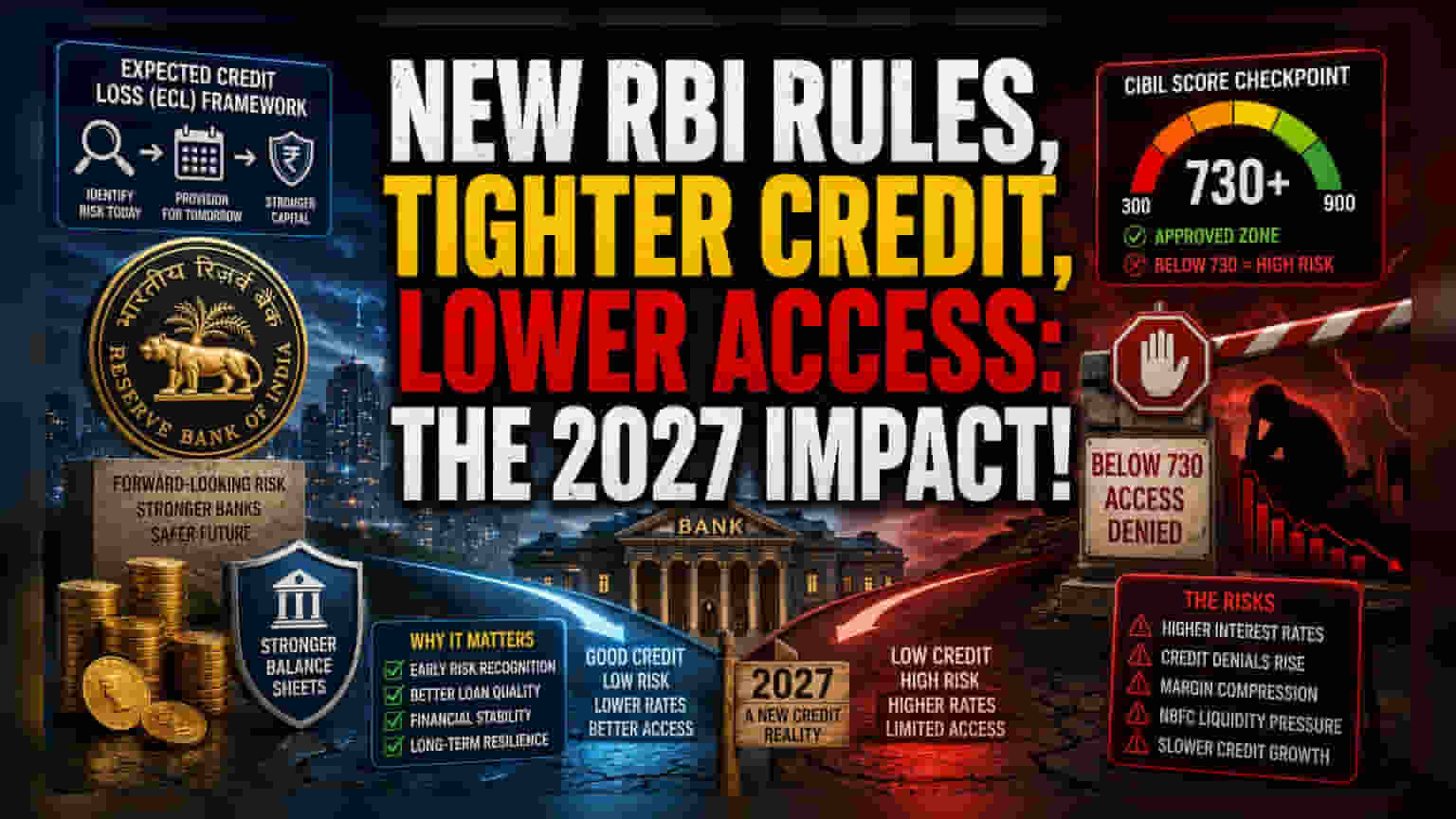
“Banks will focus more on premium customers with higher credit scores, while those with lower scores may face higher interest rates or stricter collateral requirements,” said a senior official at the Federal Bank, as reported by Bhaskar. The policy’s ripple effects are expected to disproportionately affect middle- and lower-income borrowers, who often lack the financial cushion to meet these new thresholds.
Banking Sector Implications
The regulatory overhaul is projected to strain banks’ profit margins. The RBI estimates that the ECL framework could reduce banking sector profits by up to ₹42,000 crore, as institutions must allocate more capital for anticipated defaults. This financial pressure may lead to a two-tier lending system, where high-credit-score borrowers receive favorable terms, while others face increased costs or denial of credit.“The new rules will force banks to prioritize risk assessment, potentially sidelining smaller borrowers,” noted a banking analyst in GNT TV. The shift could also accelerate the dominance of digital-first fintech lenders, which may adapt more swiftly to the ECL framework due to advanced data analytics capabilities. Traditional banks with outdated infrastructure, however, risk higher operational costs, as highlighted in Whalesbook.
Structural Challenges and Market Reactions
The ECL framework has already sparked concerns about liquidity risks in the non-banking financial companies (NBFC) sector, which relies heavily on short-term funding. A report in Whalesbook warned that NBFCs with limited capital reserves may struggle to meet the new requirements, potentially triggering a credit crunch. Meanwhile, the housing and automotive sectors, which depend on retail loans, face uncertainty as demand from lower-score borrowers declines.
“The policy aims to stabilize the financial system, but its immediate impact could be a slowdown in credit growth,” said a sector expert quoted in GNT TV. The RBI’s emphasis on forward-looking provisioning aligns with global standards, but the transition period may test the resilience of India’s financial ecosystem.
What Comes Next?
As the April 2027 deadline approaches, borrowers with scores below 730 are advised to improve their credit profiles to avoid exclusion from the loan market. Meanwhile, banks and fintechs will need to invest in predictive analytics to comply with the ECL rules. The long-term outcome could reshape India’s credit landscape, favoring financially disciplined consumers while leaving others to navigate a more fragmented lending environment.For now, the RBI’s move underscores a broader trend toward risk-aware banking, but its success will depend on how effectively stakeholders adapt to the new paradigm. As one industry observer noted, “This isn’t just a regulatory change—it’s a fundamental shift in how credit is evaluated and distributed.”
