

KUALA LUMPUR, June 21 — Nearly 39,000 Malaysians lost their jobs between January and May 2026, with the 25-39 age group disproportionately affected, according to data from the Human Resources Ministry. The job losses, reported under the Employment Insurance System (EIS), highlight growing concerns about economic resilience as the unemployment rate held steady at 3.0% in April, per the Statistics Department Malaysia (DOSM).
Job losses by sector and demographics
The Human Resources Ministry identified manufacturing, wholesale and retail trade, motor vehicle repair, and administrative support as the hardest-hit sectors, citing business restructuring and operational adjustments as primary causes. Men accounted for 23,536 layoffs, while women made up 15,417 cases, according to the ministry’s report. Malay Mail noted that the ministry attributed the trend to broader economic shifts, including automation and global supply chain pressures.
Government response and labor market resilience
Human Resources Minister Datuk Seri R. Ramanan emphasized that Malaysia’s labor market remains resilient, citing a labor force of 17.33 million people as of April. The ministry has expanded employment and skills programs to help displaced workers transition into industries with stronger demand, such as technology and green energy. Newswav reported that Ramanan’s remarks align with government efforts to balance short-term support with long-term workforce retraining.
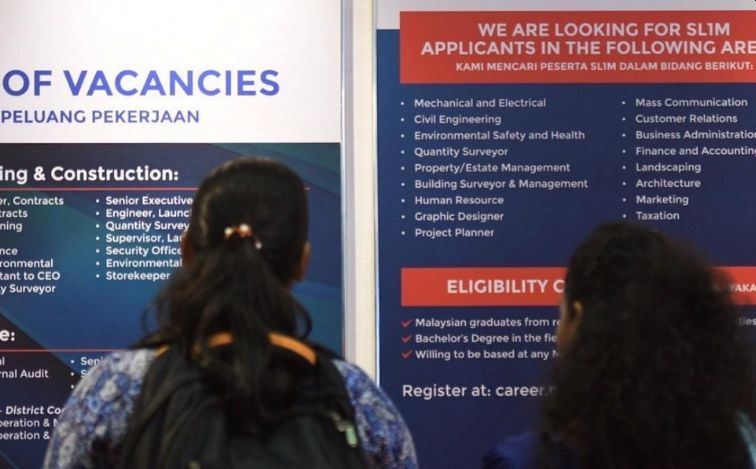
Concerns over rising unemployment
Institut Masa Depan Malaysia (MASA) expressed “serious concern” over the 3.0% unemployment rate in April, calling for urgent policy interventions to address structural gaps in job creation. The Star quoted MASA as warning that the rise reflects “ongoing challenges” in ensuring quality employment opportunities, particularly for young professionals and those in declining sectors.
Alternative pathways for employment
The fourth source, Focus Malaysia, argued that Malaysia’s focus on Technical and Vocational Education and Training (TVET) may overlook opportunities in sales and services. The article highlighted that over 500,000 Malaysians were unemployed in the first quarter of 2026, with roles in customer engagement, account management, and business development offering “practical pathways” for non-technical graduates and displaced workers. It urged policymakers to diversify training programs to align with evolving industry needs.
Implications for future labor strategies
The data underscores a critical tension between immediate job losses and long-term structural reforms. While the government’s focus on skills development aims to mitigate short-term fallout, analysts warn that without addressing systemic issues in job creation, the labor market may struggle to absorb workers from shrinking sectors. The Star noted that MASA’s call for “urgent action” reflects growing pressure on policymakers to balance austerity measures with proactive employment strategies.
Find more reporting in our Business section.
