
Gold prices in Thailand rose by 150 baht per baht of gold on Saturday, June 20, 2026, as the Thai Gold Traders Association adjusted rates for both gold bars and gold jewelry, following a volatile week driven by Federal Reserve signals and global market shifts.
Thailand’s Gold Prices Climb After Fed-Driven Volatility
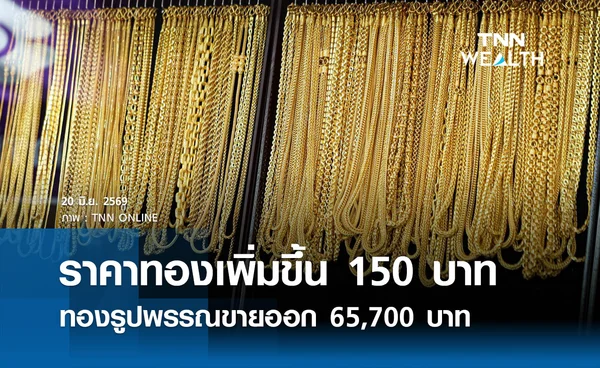
Gold prices in Thailand opened higher on Saturday, June 20, 2026, with the Thai Gold Traders Association reporting a 150 baht increase across both gold bars (96.5% purity) and gold jewelry (96.5% purity). According to Thai Rath, the price for gold bars rose to 64,900 baht per baht of gold for sales, while gold jewelry reached 65,700 baht per baht. The adjustment follows a week of global market turbulence, with international gold prices reacting to signals from the U.S. Federal Reserve about potential interest rate hikes.The Thai market’s increase contrasts with recent global trends. While international gold prices have faced downward pressure—Goldman Sachs Group recently revised its year-end forecast for gold to $4,900 per ounce, down from $5,400—Thai traders appear to have absorbed some of that volatility domestically. The Thai baht’s exchange rate against the dollar, currently at 32.92 baht per dollar, also plays a role, though the local market’s movement suggests additional factors at play.
Price Breakdown: Bars vs. Jewelry
The Thai Gold Traders Association’s latest rates show a clear distinction between gold bars and jewelry, with the latter commanding a premium due to manufacturing costs and market demand. Here’s the full breakdown for Saturday, June 20, 2026:| Product | Buy Price (baht) | Sell Price (baht) |
|---|---|---|
| Gold Bar (1 baht, 15.244g) | 64,700 | 64,900 |
| Gold Jewelry (1 baht, 15.16g) | 63,399.12 | 65,700 |
| Gold Bar (2 slungs, 7.622g) | 32,350 | 32,450 |
| Gold Jewelry (2 slungs, 7.58g) | 31,699.56 | 32,850 |
Jewelry prices reflect additional costs like labor and design, which are factored into the premium. For example, a 1-baht gold jewelry piece sells for 65,700 baht, while a gold bar of the same weight sells for 64,900 baht—a 800 baht difference. The association’s data, verified by TNN, also highlights that gold bars are priced more competitively due to lower overheads.

Why the Increase? Fed Signals and Local Factors
The Thai gold market’s upward adjustment comes amid a backdrop of global economic uncertainty. The U.S. Federal Reserve’s recent signals about potential interest rate hikes have historically pressured gold prices, as higher rates typically strengthen the dollar, making gold—priced in dollars—a less attractive investment. However, the Thai market’s movement suggests a nuanced response. According to PPTVHD36, the Fed’s stance has contributed to a broader sell-off in international gold markets, with prices testing support levels. Yet, in Thailand, the increase may reflect local demand factors, including seasonal buying trends or speculative positioning ahead of potential regulatory changes.Thai traders have also noted that the local market’s movement is influenced by the baht’s exchange rate. While the baht has remained relatively stable against the dollar, the association’s data suggests that domestic traders are pricing gold to reflect both global trends and local liquidity conditions. The 150 baht increase, though modest, signals a cautious optimism among traders following a week of global volatility.
What Happens Next? Watching the Fed and Local Demand
The next few weeks will be critical for gold traders in Thailand, as the market awaits further signals from the Federal Reserve. If the Fed confirms additional interest rate hikes, gold prices could face further downward pressure globally, potentially leading to another round of adjustments in Thailand. Locally, demand for gold jewelry—particularly ahead of festivals and weddings—could also drive prices. The Thai Gold Traders Association’s data shows that jewelry prices remain higher than gold bars due to manufacturing costs, but if demand surges, the premium could widen further. For investors, the current environment offers a mixed outlook. While gold bars may provide a hedge against currency fluctuations, jewelry purchases remain tied to cultural and seasonal trends. Traders will need to monitor both global economic indicators and local demand patterns to navigate the coming months.One thing is clear: the Thai gold market’s resilience in the face of global volatility underscores its role as both a store of value and a cultural commodity. As the Fed’s next moves take shape, traders and buyers alike will be watching closely.
Find more reporting in our Business section.
