
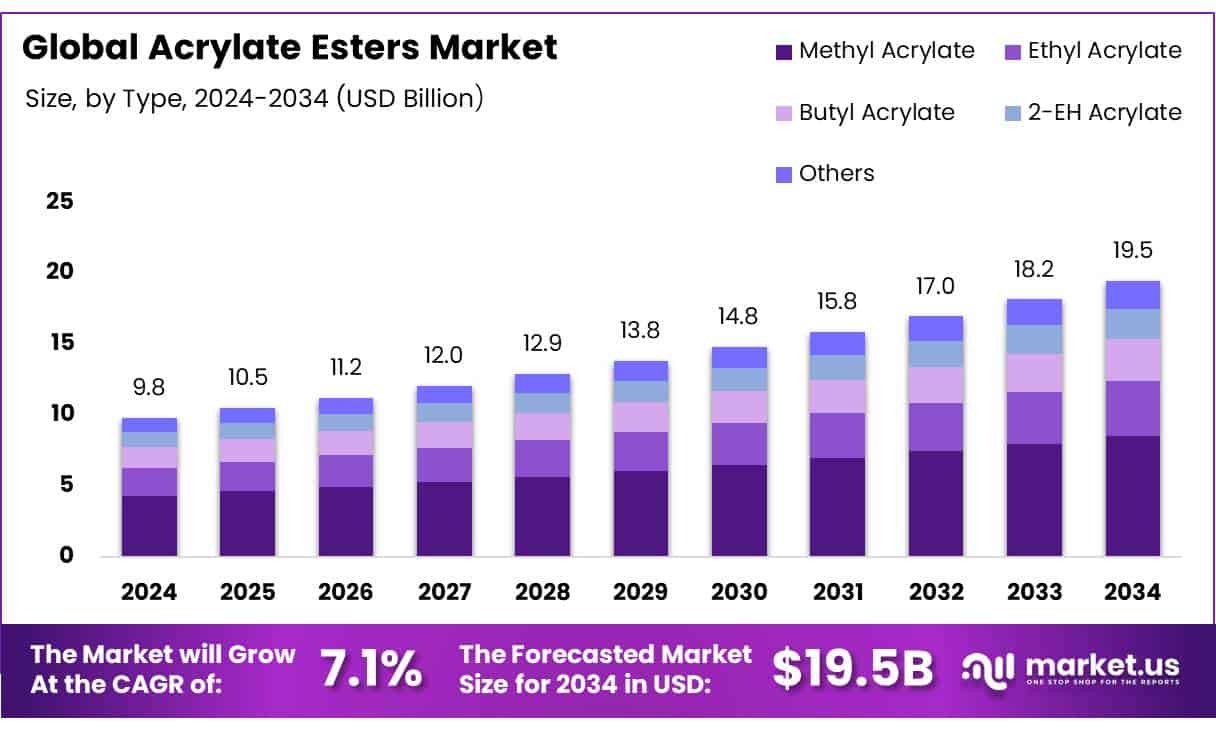
Global Acrylate Esters Market Projected to Reach $8.6 Billion by 2034
The global acrylate esters market is forecast to grow from $4.9 billion in 2024 to approximately $8.6 billion by 2034, driven by demand for sustainable coatings and packaging, according to a new report.
Acrylate esters, crucial chemical intermediates used in polymers for adhesion, flexibility, and weather resistance, are seeing increased adoption due to regulatory pressures to reduce volatile organic compounds (VOCs) in coatings. This shift is pushing manufacturers toward waterborne and high-solids acrylic formulations. Recent investments in integrated acrylic production facilities, such as the Rs 5,894 crore (approximately $700+ million) plant inaugurated in India, are aimed at improving local supply and reducing import dependence.
Methyl acrylate currently dominates the market, holding a 43.9% share in 2024, while surface coatings represent the largest application area with a 48.6% share. The Asia-Pacific region leads in market size, accounting for 43.9% of global demand, valued at an estimated $4.3 billion. Growing consumer awareness of food safety and waste is also driving innovation in smart and active packaging, creating new opportunities for acrylate esters in functional films and coatings – a trend detailed in reports from organizations like the International Energy Agency.
However, the chemical sector faces increasing scrutiny regarding its environmental impact, representing approximately 5% of global greenhouse gas emissions. This is prompting producers to invest in sustainable practices and explore bio-based acrylic acid and ester routes. Key players in the market include BASF SE, LG Chem Ltd., and The Dow Chemical Company, all of whom are focusing on sustainability and product diversification, as discussed in BASF’s sustainability reports.
Industry analysts expect continued growth in demand for acrylate esters, particularly in the Asia-Pacific region, as governments and companies prioritize sustainable packaging solutions and infrastructure development.
