
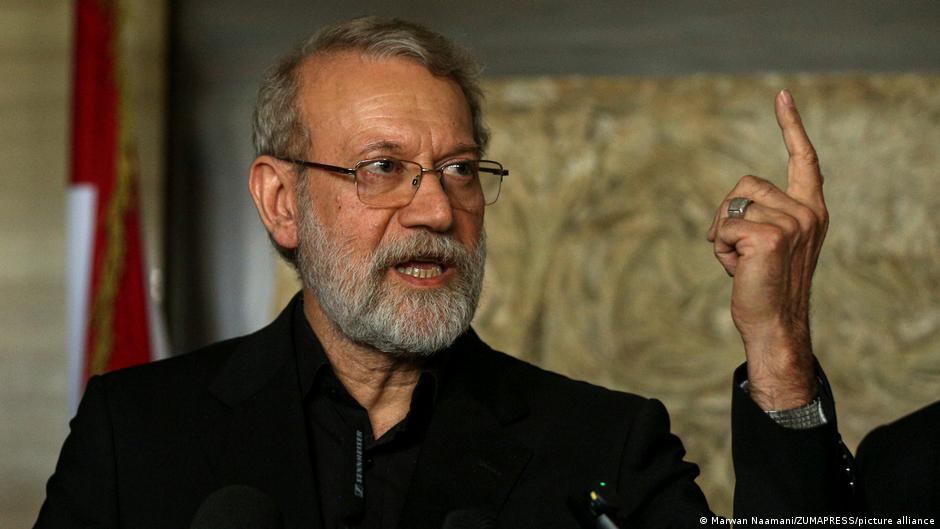
With the leadership transition in Iran still unresolved following the death of Ayatollah Ali Khamenei, a key security official, Ali Larijani, has emerged as a central figure in the country’s response to recent regional conflicts and ongoing negotiations with world powers. The situation underscores the delicate balance of power within Iran and the potential for shifts in its foreign policy.
Approximately 24 hours after an attack in Tehran that resulted in the deaths of Khamenei and much of the Iranian command structure, Larijani appeared on national television and social media to accuse the United States and Israel of setting “fire to the heart of the Iranian nation.” He vowed retaliation, stating, “We will make the criminal Zionists and shameless Americans regret their actions.”
While known for such strong rhetoric, Larijani has also cultivated a reputation as a pragmatic negotiator throughout his decades-long political career. He has demonstrated competence in talks with Russia, China, and even the United States, as well as within Iran’s own complex political system.
Despite this history, Larijani has firmly rejected assertions by President Donald Trump, reported in The Atlantic, that Iranian leaders “want to talk.” Larijani responded on X, stating, “We will not negotiate with the United States.”
“The Kennedys of Iran”
Larijani’s current position at the apex of the Iranian hierarchy is somewhat unexpected, given that he is not positioned to formally succeed the Supreme Leader. Both Khamenei and his predecessor, Ruhollah Khomeini, were high-ranking Shia clerics designated as supreme leaders of the theocracy established after the 1979 Islamic Revolution.
Born in Iraq, Larijani is not a cleric, though he comes from a family with deep religious and political ties within the regime. Time magazine once described the family as “the Kennedys of Iran.”
Larijani’s father was a grand ayatollah. His brother, Sadeq Ardeshir Larijani, also achieved the rank of ayatollah and served as the head of the Iranian judiciary between 2009 and 2019. Another brother, Mohammad-Javad Larijani, is a prominent figure in foreign policy and previously advised the late Khamenei.
Even before Khamenei’s death, there were reports that the Larijani clan was attempting to position one of its members as the next Supreme Leader. Morteza Motahhari, Alí Larijani’s father-in-law, was a close friend and aide to Ruhollah Khomeini during the 1979 revolution.
Larijani solidified his power within the Iranian political system after joining the Islamic Revolutionary Guard Corps in 1981, serving as a commander during the early years of the Iran-Iraq War. Born in 1958, he pursued religious studies but later earned a degree in computer science and mathematics, followed by a master’s degree and a doctorate in Western philosophy from the University of Tehran. His academic work, including his 1995 doctoral thesis, focused on the German philosopher Immanuel Kant.
Overshadowed by Ahmadinejad
While studying philosophy, Larijani leveraged his wartime experience and family connections to advance his political career, becoming Iran’s Minister of Culture in his mid-thirties.
In 1994, Ayatollah Khamenei appointed him director of Iranian state broadcasting. Over the following decade, he used the broadcaster as a tool for pro-government propaganda, labeling Iranian intellectuals critical of the regime as traitors funded by the West.
Larijani first ran for president in 2005, but received less than 6 percent of the vote in the first round, losing to hardliner Mahmud Ahmadinejad. He subsequently became the Secretary-General of the Supreme National Security Council and Iran’s chief nuclear negotiator, resigning from the position in 2007 due to apparent disagreements with Ahmadinejad.
Key to the 2015 Nuclear Deal
Despite continued clashes with Iran’s hardline faction, Larijani secured the position of Speaker of Parliament in 2008, holding the post for 12 years.
He played a crucial role in securing legislative support for the 2015 JCPOA nuclear agreement with six world powers — the United States, China, Russia, Germany, the United Kingdom, and France — which aimed to curb Iran’s nuclear program in exchange for sanctions relief. The agreement was later abandoned by President Trump during his first term in 2018.
In 2020, Larijani oversaw the negotiation of a 25-year strategic cooperation agreement with China, finalized the following year.
Excluded from the 2021 and 2024 Elections
Capitalizing on the China deal, which projected $400 billion in investment in Iran’s energy sector, Larijani attempted to run for president again in 2021.
Unexpectedly, the Guardian Council of Iran barred him from running. The body, comprised of six Islamic clerics appointed by the Ayatollah and six lawyers approved by Parliament, did not explain its reasoning. Some speculated that Larijani was excluded due to the fact that his daughter reportedly resides in the United States and holds a British passport. Others believed the decision was made to clear the path for the regime’s preferred candidate, Ebrahim Raisi.
Ayatollah Sadiq Larijani publicly complained that his brother was disqualified “based on false information from the intelligence service.” However, according to Iranian analyst Ali Afshar, the primary reason for Larijani’s disqualification was that he “openly criticized Raisi and members of the Revolutionary Guard.”
Raisi became president, but his term was cut short by his death in a helicopter crash in 2024. Larijani again sought to run for president in 2024, but was once again prohibited from participating in the race, which was ultimately won by the moderate Masoud Pezeshkian.
Khamenei’s Man in Moscow
Last summer, Pezeshkian renewed Larijani’s appointment as head of the Supreme National Security Council, making him Iran’s top security official following the 12-day war with Israel. Since then, Larijani’s authority and access to Khamenei appear to have eclipsed that of Pezeshkian.
Larijani was seen as the driving force behind the resumption of nuclear talks with the United States. He also traveled repeatedly to Moscow as Khamenei’s envoy to Vladimir Putin.
In statements to Al Jazeera shortly before the U.S.-Israeli attack, Larijani said that Iran used the past months to “prepare” for war. “We identified our weaknesses and corrected them,” he said. “We do not seek war, nor will we initiate it. But if it is imposed on us, we will respond.”
(rml/ms)
