
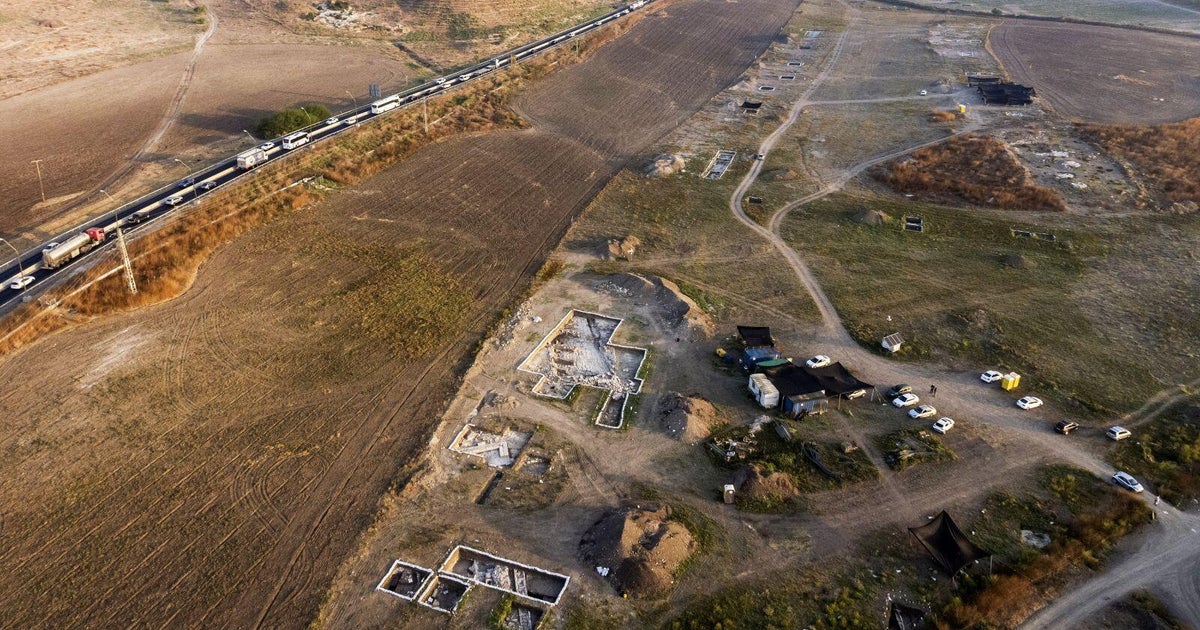
5,000-Year-Old Wine Press, Evidence of Canaanite Rituals Discovered in Northern Israel
Archaeologists have unearthed a remarkably well-preserved wine press dating back approximately 5,000 years at the Tel Megiddo archaeological site in northern Israel, alongside evidence suggesting the presence of a Canaanite religious practice.
The discovery, made during excavations ahead of planned highway construction, represents the earliest known evidence of wine production in Israel. The stone-carved press, along with a model of a small temple and ceremonial utensils dating back 3,300 years, indicates a sophisticated Canaanite presence in the region. “Until now, indirect evidence indicated that wine could have been produced 5,000 years ago, but we did not have conclusive proof of this – a ‘smoking gun’ that would clearly show when this happened in our area,” said excavation directors Dr. Amir Golani and Barak Tzin of the Israel Antiquities Authority in a statement. “This wine press finally provides new and clear evidence that early wine production actually took place here.”
Further excavations across the three-quarter-mile site revealed residential buildings surrounding the wine press, ritual vessels, and pottery imported from Cyprus, offering insights into the daily life and ceremonial practices of these ancient people. The Canaanites, an indigenous group inhabiting the Levant, predate the Israelites and played a significant role in the cultural development of the region; learn more about Canaanite history and culture on Britannica. The finds span the Early Bronze Age (approximately 3300 to 3000 B.C.E.) and the Late Bronze Age (approximately 1550 to 1400 B.C.E.). Understanding these early agricultural practices provides valuable context for the development of viticulture in the Mediterranean world.
The discoveries were presented today at the annual conference on innovations and research in Israeli excavations, organized by the Israel Antiquities Authority and the University of Haifa. Officials stated that the artifacts will be further studied and conserved, with plans for potential public display at the Israel Antiquities Authority facilities.
