
–
An autonomous underwater vehicle (AUV) mapping the underside of the Dotson Ice Shelf in West Antarctica ceased transmitting data after detecting unusual formations beneath the ice.
The AUV, named Ran, spent weeks during a 2022 expedition measuring the hidden cavity beneath the ice shelf. The resulting maps revealed a complex structure of melting that cannot be explained by simple models, according to research published in Science Advances. This discovery underscores the increasing sophistication of tools used to study the rapidly changing polar regions.
The missions were coordinated by Professor Anna Wåhlin at Gothenburg University, who specializes in ocean physics. Wåhlin’s research focuses on how ocean currents erode ice shelves from below, impacting glacial stability and future sea level projections.
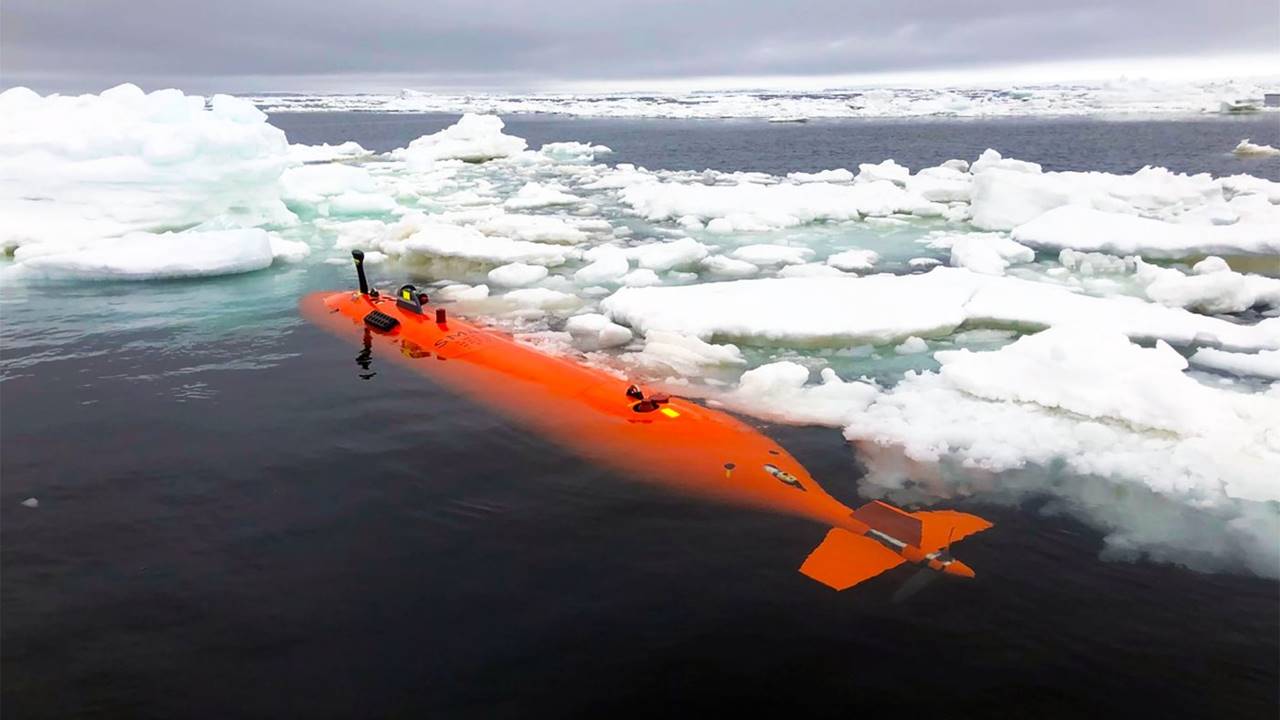
Ran is described as an autonomous underwater vehicle capable of independent operation for hours, following a pre-programmed route. During its 2022 mission, the vehicle traversed the space beneath the ice for 27 days, eventually entering a hidden cavity and traveling approximately 12 miles.
The team aimed to understand the reasons behind the distinct difference between the eastern and western portions of the Dotson Ice Shelf, with the east being thicker and melting slower, while the west is thinner and melting more rapidly.
Teardrop-Shaped Pits Discovered Beneath the Dotson Ice Shelf
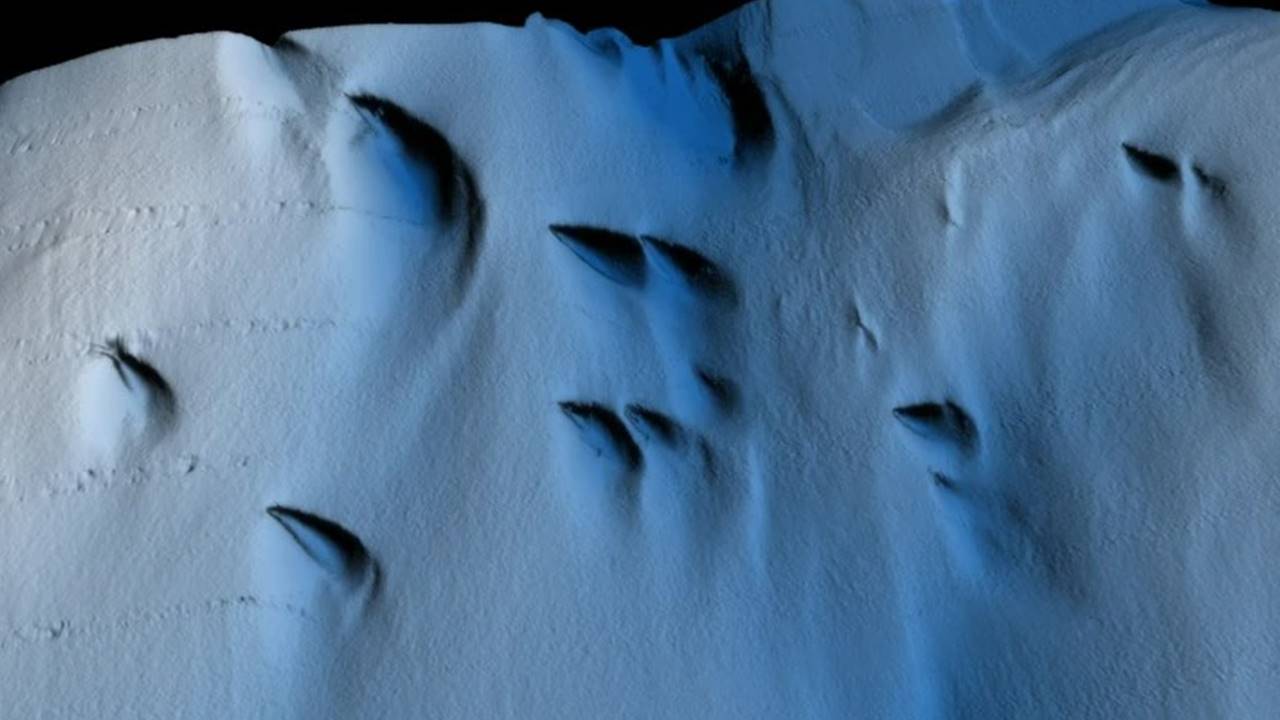
Through its latest measurements, Ran mapped an area of approximately 39 square miles on the underside of the Dotson Ice Shelf. The maps revealed flat, plateau-like surfaces shaped by melting from below, stepped terraces, and teardrop-shaped pits.
The eastern and central regions featured prominent, stepped ice terraces, while the west displayed a smoother surface with channels and cavities. These formations were not visible in satellite imagery and remained entirely hidden until Ran’s mission.
Warm Deep Water Currents Drive Melting
Researchers believe that a warm, salty current known as Circumpolar Deep Water is flowing around Antarctica, moving from the Southern Ocean onto the continental shelf and eroding the ice shelves from below. Satellite altimetry measurements of the Dotson Ice Shelf show that melting channels are thinning at a rate of approximately 39 feet per year, a pattern linked to the influx of warm water.
The team found that measurements taken under Dotson indicate the ice shelf contributed approximately 0.05 inches to sea level rise between 1979 and 2017.
The maps suggest that warm water intrusion is concentrated on the western side, while colder waters relatively protect the eastern flank.
Current Speed Shapes the Ice Base
Researchers found that where currents slow, the ice base appears as stepped “sets,” with erosion leaving small terraces. Conversely, areas with faster outflowing currents exhibit smoother surfaces and the formation of grooves. The team believes “shear-induced turbulence” – mixing caused by layers of water sliding past each other – accelerates melting in these areas.
Some of the pits are teardrop-shaped, reaching approximately 984 feet in length and 164 feet in depth. The terraced plateaus may record the gradual stripping away of ice layers over many years as slightly warmer water occasionally enters the hidden cavities beneath the ice.
Hidden Heat Corridors Imaged
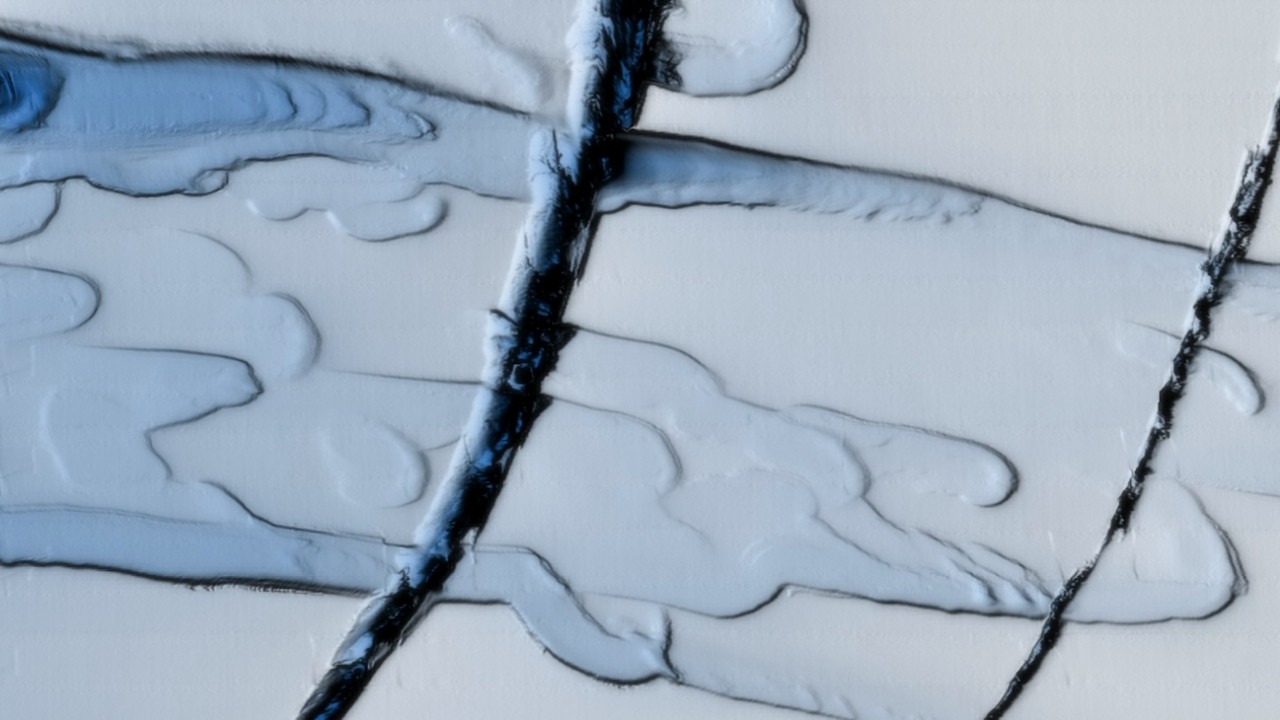
In addition, Ran imaged full-thickness fractures that cut across the entire ice shelf. Some of these fractures showed signs of widening and “smoothing” from below due to melting. Satellite records indicate that some of these fractures have been open since the 1990s, with older fractures exhibiting deeper erosion marks.
The team suggests that faster-moving water within these narrow fissures can direct heat to the ice walls, turning the cracks into “hidden corridors” for ice loss.
Researchers emphasize that many computer models treat melting as a large-scale process, and the effect of fractures and channels concentrating damage by directing warm water is often overlooked.
What Does This Mean for Sea Level?
The study indicates that satellite and climate data show Antarctic ice loss has added approximately 0.55 inches to sea level since 1979. A significant portion of this loss comes from West Antarctica, where ice shelves like Dotson “float” over deep basins and are accessible to warm currents.
As ice shelves thin or break apart, the support they provide to the grounded ice sheet behind them weakens, potentially accelerating glacial flow and leading to faster sea level rise.
Ran’s Mysterious Disappearance
The team explained that Ran operated without real-time communication under the ice, as radio waves and GPS signals cannot penetrate hundreds of feet of solid ice. The vehicle’s location was tracked using navigation systems that compared acoustic measurements with the seafloor and the underside of the ice.
In 2022, the team successfully completed 14 missions with Ran, collecting a comprehensive dataset for glaciologists and oceanographers.
Researchers later redeployed Ran to return to Dotson to expand the mapping and measurements. However, the vehicle failed to appear at the planned rendezvous point, communication attempts were unsuccessful, and searches yielded no signal or wreckage.
Anna Wåhlin described the uncertainty, stating:
“Watching Ran disappear into the dark, unknown depths under the ice is, of course, unsettling; especially given it was operating autonomously for over 24 hours without communication.”
The team stated that there is no definitive data on the cause of the vehicle’s disappearance, with possible scenarios including mechanical failure or collision with ice ridges.
The World Beneath the Ice is More Complex Than Previously Thought
Researchers emphasize that the detailed maps from Ran’s previous missions have changed their understanding of ocean and ice interactions. The maps reveal that a combination of terraces, channels, fractures, and teardrop-shaped pits can exist on the underside of an ice shelf, each responding differently to currents.
The team believes that incorporating these details into models could help refine predictions of how quickly ice loss in West Antarctica may accelerate in the future.
You might also be interested in: Ancient Air Trapped in Antarctic Ice Discovered
What other mysteries do you think Antarctica is hiding? Share your thoughts in the comments or on our Kayıp Rıhtım Forum, and follow us on Google News and WhatsApp for more science news.
Source: Earth
