
Argentine markets are showing cautious optimism as the government navigates sovereign debt obligations and a renewed appetite for dollar financing emerges from the corporate sector. Despite lingering concerns,recent data indicates a fiscal surplus for 2025 and increasing Central Bank reserves – bolstered by recent dollar purchases – though analysts caution that sustained reserve growth remains critical. The IMF has signaled its support for these measures as Argentina prepares for a key technical review in February and faces ongoing political considerations surrounding upcoming labor reforms.
Despite repeated market concerns over the past year – extending beyond the pre-election period – the government has moved forward on a key element for sovereign debt in dollars, even during periods of low trading volume. Simultaneously, the corporate sector has shown renewed appetite for dollar financing, reflected in primary placements in hard currency, amid the elimination of CERA accounts and the restructuring of portfolios following the significant dollarization during the election cycle. In recent days, major companies including Cresud, John Deere, Telecom and Banco Macro have tapped both local and New York law markets with strong demand for dollar investment.
“Towards the close of 2025, following U.S. support ahead of the election process, the Central Bank and Treasury resumed purchasing dollars, signaling a clear understanding of market demand,” said analyst Gastón Lentini in a comprehensive report. However, he cautioned that simply buying dollars is no longer sufficient to address inherited debt. The market requires positive net reserves to allow for a further reduction in country risk, potentially bringing it down to around 300 basis points, in line with the Latin American average. “There isn’t a clear plan for that yet,” he noted.
bcra.png
Regarding reserves, another report from F2 Soluciones Financieras highlighted that the improvement in hard dollar debt was associated with an acceleration in reserve accumulation. However, it warned that “the growth in the positivity of rates in local currency and the pause in the disinflation process, with expectations of greater persistence at levels above 2%, are working against it.”
Looking ahead, the market is also focused on the upcoming labor reform, with the inherent political risk remaining a threat. “The first half of January has already passed, and the discussion of the labor reform is approaching, a topic the market will pay close attention to,” the report stated.
The International Monetary Fund (IMF) this week signaled support for the Central Bank’s policy of accumulating dollars. “We are very encouraged by the measures the authorities are taking to rebuild reserves. These measures are backed by recent adjustments to the monetary and exchange rate frameworks, including the introduction of a foreign exchange reserve purchase program previously announced,” said an IMF spokesperson. The second technical review of the EFF agreement is scheduled for February. The government met its nominal fiscal surplus target, and if the current pace of purchases continues, it may reach its reserve target. Finance Minister Luis Caputo announced a 14% fiscal surplus for 2025, further bolstering confidence.
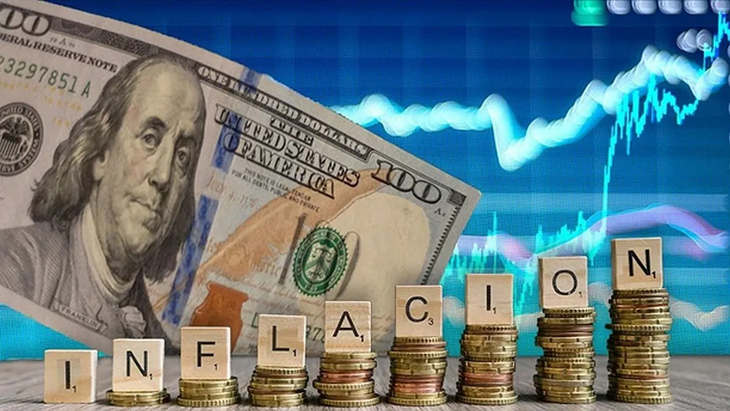
Inflation Remains a Key Concern
There are two ways to view the inflation data: positively or negatively, and both interpretations are technically valid. The National Institute of Statistics and Census (INDEC) reported a December inflation rate of 2.8%, bringing the full-year inflation for 2025 to 31.5%, the lowest level since 2017. However, the index also showed a consecutive acceleration in prices since July, with core inflation rising close to 3%. Whether to view the glass as half full or half empty depends on perspective.
A report from GMA Capital argued that “the coexistence of pending price corrections in regulated prices, elevated service inflation, and the readjustment of some relative prices contributed to a slower dynamic at the disaggregated level.” However, it emphasized that “the consistency of the macroeconomic anchor helped preserve some momentum throughout the year.” Despite the acceleration towards the end of the year, the inflationary dynamic remained significantly more contained than in 2024, when nominality had scaled to 117.8%.
This data served as a “warning signal” this week, driving upward revisions in market expectations. Average monthly inflation is currently projected at 2.1% through May. While the consensus still anticipates a downward trajectory, the speed of the process is now being debated.
To project the scenario going forward, LECAps have regained prominence towards the end of the week, driven by the latest Treasury debt auction and the offered yields, which have repositioned annual nominal rates (TNA) well above fixed-term deposits and comfortably above expected inflation. The data underscores investors’ focus on inflation data and the potential for further rate adjustments.
In this context, peso-denominated bonds showed a mixed weekly performance. The CER segment accumulated average declines of 0.3% (except for longer-term DICP/PARP bonds, which rose 0.7%); fixed-rate bonds had a mixed balance (the short end rose 0.3%, the medium end fell 0.3%, and the long end gained 0.6%); and variable-rate bonds recorded average increases of 0.46% (with the exception of TTD26, which fell 0.3%), according to SBS.
“Analyzing the implicit inflation in the fixed income curve, titles with maturity in May reflect an average monthly rate of 2.3% for the first quarter of the year, practically in line with the projections of the 90th percentile of the REM,” noted TSA Bursátil in its weekly report. The carry trade has re-emerged in the market this week, as the dollar depreciated by 2.4%, its largest drop in two months.
dolar pesos inflacion
The Week Ahead
– Davos Forum Begins: The annual meeting of the World Economic Forum in Davos begins, a major event that will shape market momentum until January 23. More than 2,500 leaders from the business, political, institutional, and academic spheres will attend, discussing key geopolitical and economic issues in a context marked by tensions between Donald Trump and Europe over tariffs and Venezuela. Javier Milei will be present.
– INDEC will publish wholesale price index and construction cost index for December.
– China’s Q4 GDP will be released.
– Eurozone December CPI will be published.
– Wall Street will be closed for Martin Luther King Jr. Day in the U.S.
– INDEC will release Argentine trade data (ICA) for December.
– Netflix will present its Q4 corporate results.
– The Monthly Economic Activity Estimator (EMAE) with data to November will be published.
– Statements from Donald Trump at the Davos Forum.
– UK December CPI.
– Johnson & Johnson corporate earnings presentation.
– INDEC will publish surveys of supermarkets, wholesale self-service stores, and shopping centers, all for November.
– The BCRA will publish the Credit Conditions Survey.
– U.S. Q4 GDP will be released.
– Procter & Gamble, General Electric, Abbott Laboratories, Intel and Visa will present their earnings.
– Wage index data will be released by INDEC.
– BCRA publishes the banking report.
– Bank of Japan interest rate decision.
