
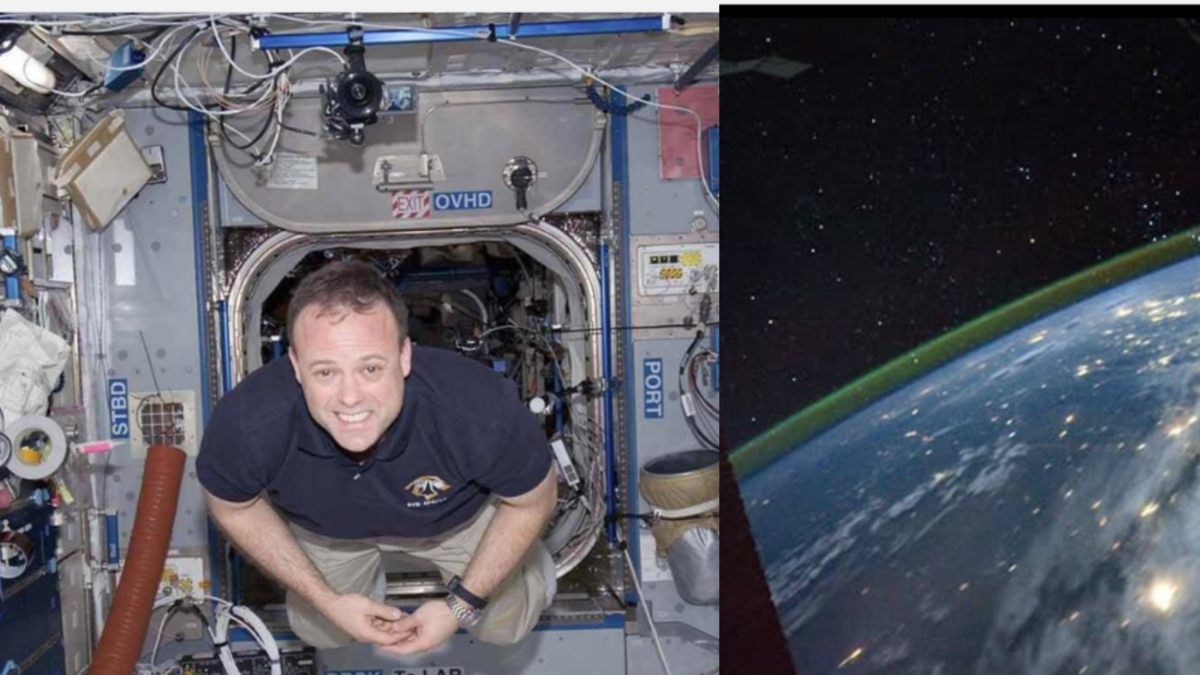
A former NASA astronaut, Ron Garan, has publicly stated that humanity “is living a lie.”
The assertion follows Garan’s observations of Earth from space and his experience with the “overview effect,” a phenomenon known to induce cognitive and emotional shifts when viewing the planet from the International Space Station.
Garan launched into space on April 4, 2011, and returned to Earth on September 16, 2011. During his mission, he completed nearly 3,000 orbits around the planet, returning with a changed perspective on humanity and societal priorities.
READ ALSO
Ron Garan asserted that viewing Earth from space altered his understanding of the world. Photo:Obervatorio Europeo Austral
From the spacecraft window, Garan came to appreciate the fragility and beauty of life on Earth, and how daily routines often lead people to focus solely on survival, without pausing to contemplate the surrounding world. This experience fundamentally reshaped his understanding of life and his connection to fellow inhabitants of the planet. The astronaut’s reflections highlight the potential for space exploration to drive shifts in perspective and inspire a renewed focus on planetary stewardship.
This shift in thinking is known as the “Overview Effect,” a term first coined by philosopher Frank White in 1987. It refers to the change in awareness experienced by astronauts when observing Earth from space, and the resulting understanding of the interconnectedness of all human beings.
In the solitude, darkness, and cold of space, astronauts often find themselves missing the quality of Earth’s atmosphere. From that vantage point, they can admire its thin atmosphere, the absence of visible borders, and the richness of its inhabitants, reinforcing the importance of protecting the planet.
Garan launched into space on April 4, 2011, and returned to Earth on September 16, 2011 Photo:iStock
READ ALSO
Garan stated that this perspective led him to realize that many of the systems upon which humanity relies are based on a flawed premise: the assumption that Earth’s natural resources are merely a support for economic growth. He believes it is crucial to re-evaluate life’s priorities and place the planet first. This sentiment echoes growing calls for sustainable practices and a re-evaluation of economic models in light of environmental concerns.
According to Garan, “people have more power than they realize to influence positive change, and it is vital to live with this broader perspective every day, remembering not only their daily life, but also the shared existence of humanity on Earth.”
the astronaut emphasizes the need to reorganize our priorities: thinking first about the planet, then about society, and finally about the economy, in order to evolve and not remain stagnant in what we are today.
KATHERINE BRAVO HERNÁNDEZ
REDACCIÓN ALCANCE DIGITAL
EL TIEMPO
