
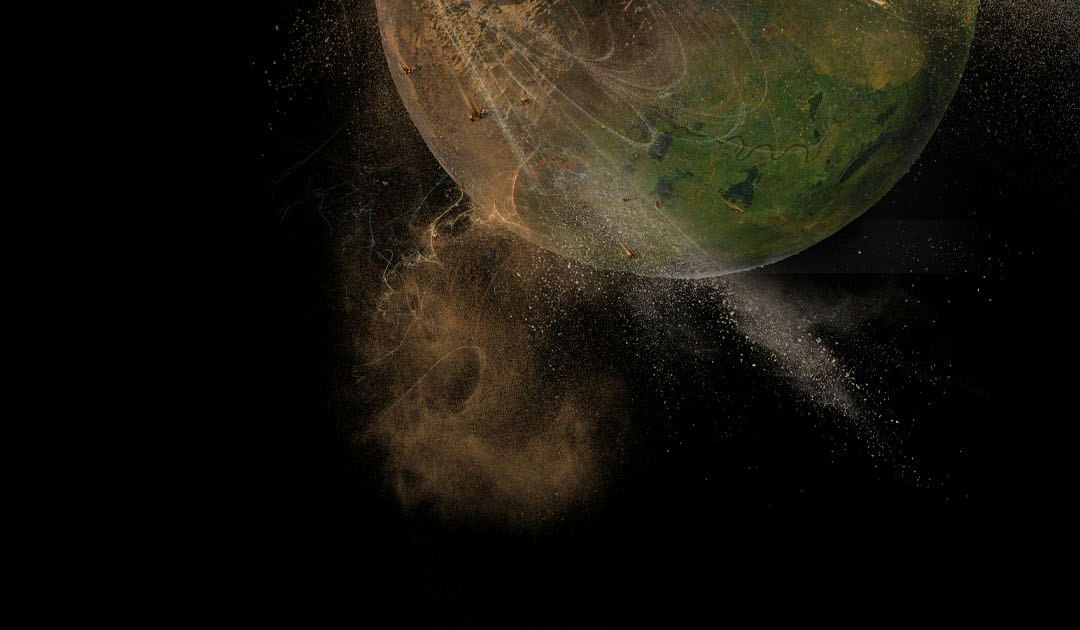
For half a century, astronomers have puzzled over a cosmic mystery: why some exoplanets appear to shrink over time. Now, a breakthrough study has cracked the code, revealing the mechanism behind this puzzling phenomenon.
Researchers have long observed that certain classes of planets—particularly those classified as “hot Neptunes” or “warm sub-Neptunes”—lose mass and radius over millions of years, defying expectations based on their initial formation models. The shrinking effect has been detected in data from space telescopes like Kepler and TESS, but the underlying cause remained elusive until now.
The latest findings, published in a peer-reviewed journal, point to atmospheric escape driven by intense stellar radiation as the primary force. When planets orbit close to their host stars, high-energy photons and stellar winds strip away lightweight gases like hydrogen and helium from their upper atmospheres. Over time, this gradual erosion reduces the planet’s overall size, making it appear to “shrink” in observational data.
What makes this discovery significant is not just the explanation of a long-standing anomaly, but its implications for planetary evolution models. Scientists can now better predict how planetary systems change over time, especially in tightly packed orbits where stellar influence is strongest. This refines our understanding of which exoplanets might retain atmospheres long enough to potentially support conditions of interest—and which are destined to become barren, rocky cores.
The study also highlights the value of long-term observational campaigns. By combining decades of data from multiple missions, researchers were able to track subtle changes in planetary transit signals—dips in starlight that reveal a planet’s size—enough to detect the slow contraction trend.
While the process occurs over astronomical timescales, its detection demonstrates the growing precision of modern exoplanet science. As instruments improve and datasets grow, scientists are increasingly able to observe not just where planets are, but how they evolve.
This insight into planetary shrinkage doesn’t just solve a 50-year-old riddle—it strengthens the foundation for future exploration. Understanding how planets lose mass helps identify which worlds might resemble Earth in composition and stability, guiding the search for habitable environments beyond our solar system.
