
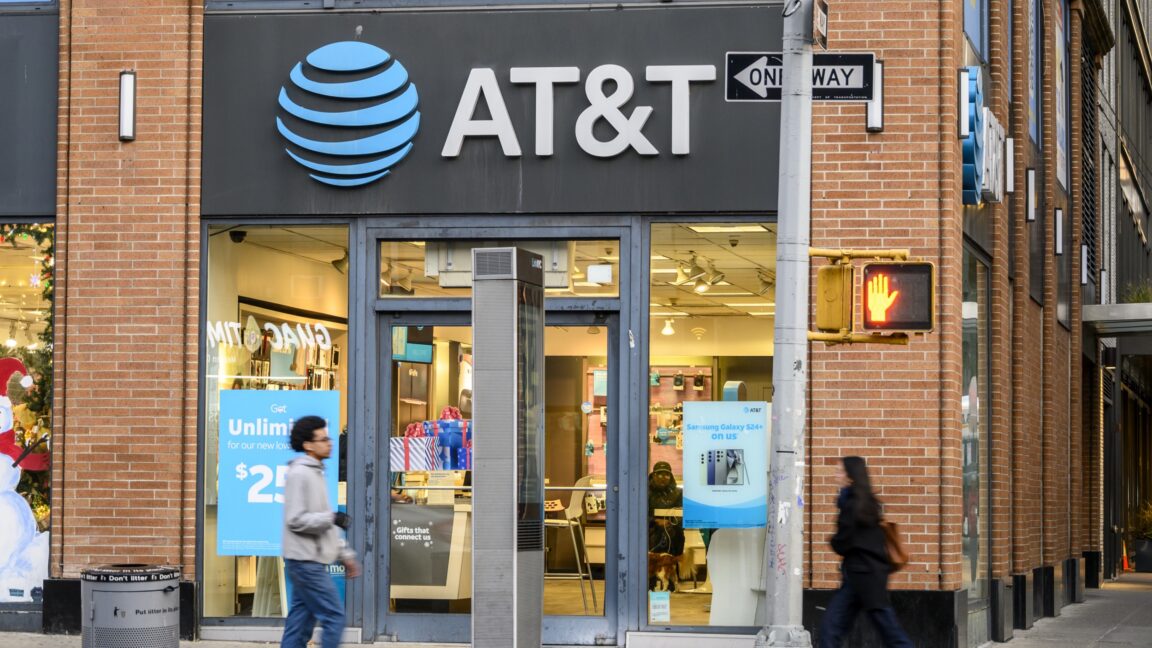
AT&T Ad Claiming “Everyone Gets” a Free Phone Deemed Misleading
The National Advertising Review Board (NARB) today ruled that an AT&T advertising campaign promising “everyone gets” a free phone was misleading, siding with a challenge brought by Verizon.
Verizon argued that the advertisement falsely implied all AT&T subscribers were eligible for a trade-in offer, when in reality, only those on “qualifying” plans could participate. The NARB agreed, finding that the phrase “everyone gets” suggests universal eligibility, not eligibility contingent on subscribing to more expensive plans. AT&T countered that the ad communicated customers “can qualify” for the offer and that the word “learn” indicated limitations, but the NARB dismissed this, stating the placement of “learn how” before “everyone” reinforced the impression of broad eligibility.
AT&T also presented a customer survey intended to demonstrate understanding of the offer’s limitations, but the NARB deemed the survey’s methodology “unsound.” While acknowledging both companies offered “plausible” interpretations of the survey data, the panel ultimately concluded that “the challenged advertising, on its face, conveys a false message and further does not clarify the message by disclosing a material limitation to the offer of a free cell phone in a clear and conspicuous manner.” This decision highlights the importance of clear and conspicuous disclosures in advertising, particularly when using broad claims like “everyone gets.” The Federal Trade Commission offers guidance on avoiding deceptive advertising.
The ruling comes as competition in the wireless industry remains fierce, with companies frequently offering promotions to attract and retain customers. The NARB’s decision means AT&T will likely need to modify its advertising to ensure greater clarity regarding the terms of the trade-in offer. Officials stated AT&T is reviewing the decision and will respond accordingly.
“Focusing on the words ‘everyone gets,’ Verizon argued to NAD that the challenged advertising communicated an explicit message—that all AT&T subscribers are eligible for the trade-in offer—which it asserts was literally false because only subscribers to ‘qualifying’ AT&T plans are eligible. Verizon also argued that the advertisement communicated a comparable misleading message that all AT&T customers were eligible for the trade-in,” the NARB decision said.
While AT&T disclosed the offer limits, Verizon argued that the disclosure was not clear and conspicuous. Verizon said—and the NAD agreed—that the phrase “everyone gets” suggests everyone will get a free phone, not that everyone “can get” a free phone if they subscribe to AT&T’s more expensive plans.
AT&T claimed the ad was literally true because it did not say that everyone “will” get the free phone. “Rather, according to the advertiser, the challenged language communicates that all customers, current or new, can qualify for the offer and urges customers to ‘learn’ the details about the trade-in opportunity,” the NARB said.
AT&T argued that the word “learn” makes it clear there are limits on the offer. The NAD disagreed, saying that the “learn how” phrase “precedes the word ‘everyone,’ suggesting everyone is eligible to receive a phone, not that everyone can learn how to get a phone.”
AT&T also submitted the results of a customer survey, arguing that it proved customers seeing the ad understood the offer’s limitations. The NAD decided that the survey was methodologically unsound, while the NARB said that both AT&T and Verizon offered “plausible” interpretations of the results.
Panel: Buyers of low-cost plans likely duped
After hearing AT&T’s and Verizon’s arguments, the NARB panel decided “that the challenged advertising, on its face, conveys a false message and further does not clarify the message by disclosing a material limitation to the offer of a free cell phone in a clear and conspicuous manner.”
