
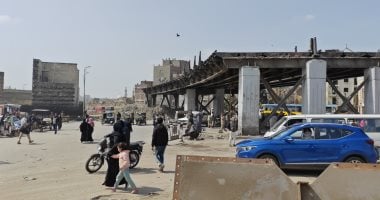
Cairo officials have begun dismantling the Aisha Bridge, a decades-vintage overpass, as part of a comprehensive plan to redevelop the surrounding area into a large open-air museum featuring several religious and Islamic sites. The demolition follows the successful launch of the new Salah Salem alternative route.
The bridge’s removal comes after the operational launch of the alternative route, the new Salah Salem axis, and marks a bold step in a new phase of urban development for the area, with traffic diversions in place to minimize disruption during demolition.
Motives for Removal and the “Open Museum” Plan
The decision to demolish the bridge wasn’t made lightly, but rather stemmed from decades of congestion and deadly accidents. The government aims to implement an ambitious plan to transform Aisha Square into an open-air museum and tourist promenade with international standards. The project will aesthetically and ingeniously connect the historic Citadel of Saladin with the historical mosques of the Ahl al-Bayt (Sayyida Aisha and Sayyida Nafisa), aiming to restore the historical prestige of this vital area.
The New Salah Salem Axis… A Safe and Smart Alternative
As a modern engineering alternative to the dilapidated metal overpass, the new Salah Salem axis, 2.8 km long, has been launched. This axis is designed to completely transfer traffic flow outside the historical square, directly connecting the Citadel to the Civilization Axis and the Nile Corniche. This effectively ends the chronic congestion at the square’s entrances and eliminates concerns about falling from the dangerous curves that characterized the old bridge.
A History of Engineering Flaws and Technical Challenges
The Aisha Bridge was originally built in 1979 as a temporary traffic solution, but this solution persisted for decades with fatal engineering flaws, most notably the sharp bend in the direction coming from the Citadel. The governor of Cairo explained that the construction philosophy at the time did not allow for the removal of properties to modify the routes, leading to sharp deviations that caused traffic disasters; 2025 alone recorded more than 15 traffic accidents on the bridge due to these technical errors.
