
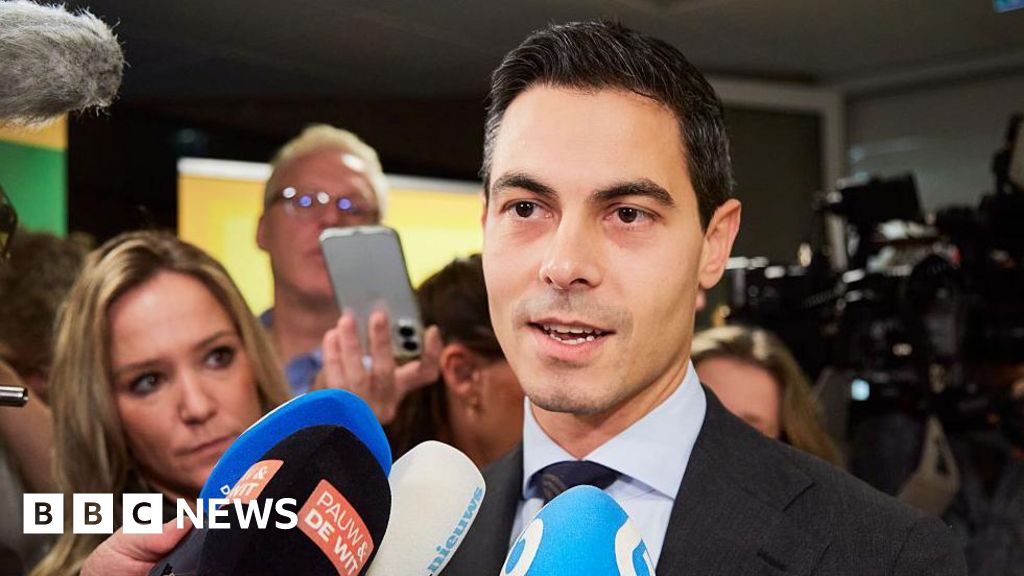
Centrist Liberal Rob Jetten Claims Victory in Dutch Election
Centrist liberal leader Rob Jetten has claimed victory in Wednesday’s closely contested Dutch election, after vote analysis indicated his party, D66, could not be overtaken by anti-Islam populist Geert Wilders, a result that could shift the Netherlands away from a more nationalist direction.
Jetten’s D66 party currently holds a narrow lead of 15,000 votes over Wilders’ Freedom Party, and Dutch news agency ANP reports that even with the vote count incomplete, Wilders is no longer able to win. “We are the biggest party in the Netherlands! Now we’ll get to work for all Dutch people,” Jetten posted on X. Wilders disputed the claim, stating, “What arrogance not to wait for that,” and asserting the electoral council, not a news agency, should determine the result. Projections from approximately 99% of the vote put both parties at 26 seats in the 150-seat parliament, though ANP suggests Jetten’s centrists may secure a 27th seat.
The 38-year-old Jetten, who would become the youngest prime minister in Dutch history if he forms a government, told reporters he was “very proud of this historic result” and felt a great responsibility to establish a stable and ambitious government. He credited his party’s success to a positive campaign focused on the message “Yes, we can.” Forming a coalition will be challenging, requiring support from at least three other parties to reach the 76 seats needed for a majority; potential partners include the conservative-liberal VVD, the left-wing Labour (PvdA)-GreenLeft alliance, and the Christian Democrats. For more on the Dutch political system, see Britannica’s overview of Dutch politics.
Despite Wilders’ earlier lead in opinion polls, Jetten’s D66 gained momentum in recent weeks, aided by strong performances in televised debates and even a notable appearance on a popular TV quiz show. Outgoing Prime Minister Dick Schoof predicted today that forming a coalition will be a complicated process, suggesting it could take months, and even expressed doubt it would be completed by Christmas. The Netherlands has experienced political instability recently, with the previous government collapsing in July after just eleven months due to disagreements over asylum and migration policy – a situation detailed in Reuters’ reporting on the government’s collapse.
Jetten stated he favored a broad-based government from the center of Dutch politics, and a “scout” will begin sounding out parties next Tuesday to explore coalition possibilities.
