
Nearly four decades after the 1986 disaster,the Chernobyl Exclusion Zone continues to reveal unexpected scientific developments. Researchers have discovered a unique fungus thriving within the reactor ruins, not merely surviving but utilizing radiation as an energy source through a process dubbed “radiosynthesis.” This remarkable adaptation, along with observed evolutionary changes in local wildlife like wolves and frogs, is drawing attention from space agencies like NASA for potential applications in radiation shielding and environmental remediation.
Chernobyl, site of the world’s worst nuclear disaster in 1986, continues to yield scientific surprises. Researchers have discovered a fungus thriving within the reactor walls that not only survives exposure to lethal radiation, but actively grows by utilizing it as an energy source.
The dark-colored fungus, identified as Cladosporium sphaerospermum, is capable of converting high-energy radiation, like gamma rays, into chemical energy – a process scientists are calling “radiosynthesis,” analogous to photosynthesis in plants.
This discovery, occurring 39 years after the catastrophic explosion, has implications for both ecological understanding and potential applications in space exploration. The ability to harness radiation could offer novel solutions for shielding and even waste remediation.
Recent studies have identified nine strains of fungi within the Chernobyl reactor exhibiting this remarkable ability out of 47 different strains examined. These strains demonstrate accelerated growth in areas with the highest concentrations of gamma radiation, a behavior researchers have termed “radiation foraging.”
The key to this process appears to be melanin, the pigment responsible for color in humans and many other organisms. Melanin within Cladosporium sphaerospermum undergoes changes when exposed to gamma rays, enabling energy production and allowing the fungus to essentially “power up” in highly radioactive environments.
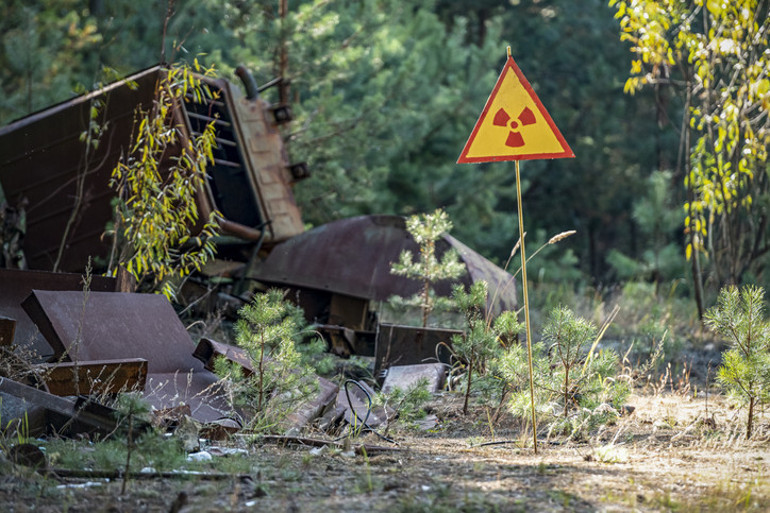
REACTOR WALLS REVEAL NINE RADIATION-SEEKING FUNGAL STRAINS
The findings are still preliminary, and scientists are working to determine whether radiosynthesis is a naturally occurring mechanism. However, the potential applications are already attracting attention from organizations like NASA.
NASA researchers are exploring the possibility of developing “fungal bricks” utilizing the radiation-resistant properties of the fungus. The goal is ambitious: to create biological building materials capable of protecting future lunar and Martian bases from cosmic radiation.
Cosmic radiation poses a significant health risk to astronauts, particularly on the surface of Mars. Traditional lead shielding is heavy and expensive to transport, making it impractical for long-duration space missions. Lightweight, self-renewing biological shields derived from Cladosporium sphaerospermum could offer a viable alternative.
Experiments conducted on the International Space Station (ISS) have bolstered this hope. Samples of the fungus exposed to space radiation grew 21 times faster, and demonstrated a significant reduction in radiation passing through to underlying surfaces.
RADIATION CAPTURE AND NEUTRALIZATION
According to a study published in PLOS One, Cladosporium sphaerospermum doesn’t just block radiation; it can also capture and neutralize radioactive particles. This capability suggests potential applications in nuclear waste site remediation and future space endeavors.
This discovery also offers a new avenue for cleaning up nuclear-contaminated areas on Earth, as the fungus’s ability to safely absorb and transform radioactive materials could revolutionize nuclear waste management.
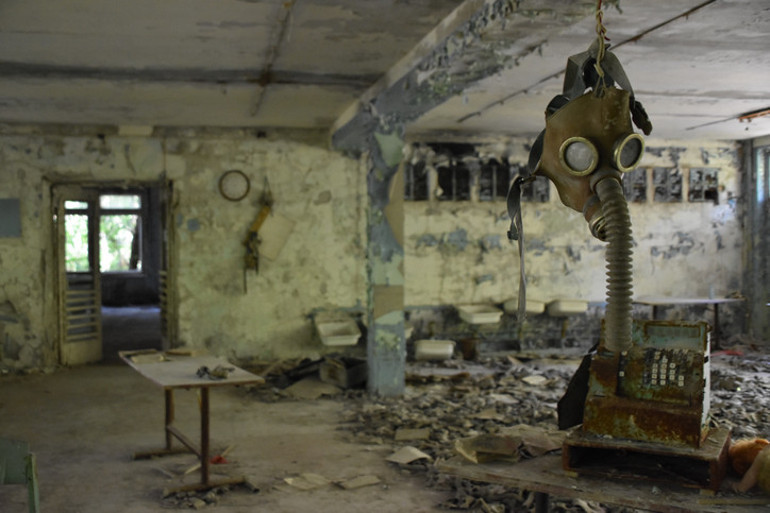
DARK ZONE’S SILENT INHABITANTS: MUTATED AND CANCER-RESISTANT WOLVES
The Chernobyl Exclusion Zone (CEZ), largely uninhabited since 1986 due to health risks, has become a surprising haven for wildlife, including wild horses, dogs, birds, and other animals. Research indicates these animals are also developing resistance to radiation.
In 2014, a team led by evolutionary biologist Cara Love of Princeton University traveled to the CEZ to investigate how wolves were resisting radiation, collecting blood samples from the animals.
Love and her team equipped the wolves with GPS collars and radiation dosimeters to track their locations and radiation exposure in real-time. They then compared the DNA of wolves within the exclusion zone to those outside the area.
Analysis revealed mutations in numerous genes related to cancer in the wolves residing within the zone, suggesting they were adapting to withstand radiation. This discovery offers hope for identifying mutations that could reduce cancer risk in humans.
FROGS CHANGING COLOR SURPRISE SCIENTISTS
Similarly, tree frogs living in the area have been observed evolving darker skin tones. These frogs are significantly darker in color compared to their counterparts elsewhere. Scientists believe this is a response to the high levels of radiation.
Researchers theorize that green frogs have a lower chance of survival in radioactive conditions, leading to a rapid darkening of their skin. Experts refer to this phenomenon as “rapid evolution.”
In highly radioactive areas, the tree frogs with the most protective melanin pigment likely had the highest survival rate, leading to the dominance of darker-skinned frogs. According to a paper led by Pablo Burracco, the “rapid evolution” process occurred during the days immediately following the accident when radiation levels were at their highest.
As stated in a 2022 article published by the researchers in The Conversation:
“Our work shows that tree frogs caught in Chernobyl are much darker in color than those caught outside the zone. Some of the frogs we examined were almost coal black, as we discovered in 2016. This color is not related to the radiation levels the frogs are experiencing today. Dark color is typical of frogs that lived in or near the area where the most fallout occurred.”
HISTORICAL BACKGROUND OF THE DISASTER: THE THREAT PERSISTS 39 YEARS LATER
While briefly under Russian control during the 2022 invasion of Ukraine, the zone remains largely an uninhabited buffer area. This unique environment has become one of the world’s largest open-air laboratories for studying the long-term effects of radiation on living organisms.
This article draws on reporting from Daily Mail’s “Species in Chernobyl disaster zone is mutating to feed on nuclear radiation.”
