
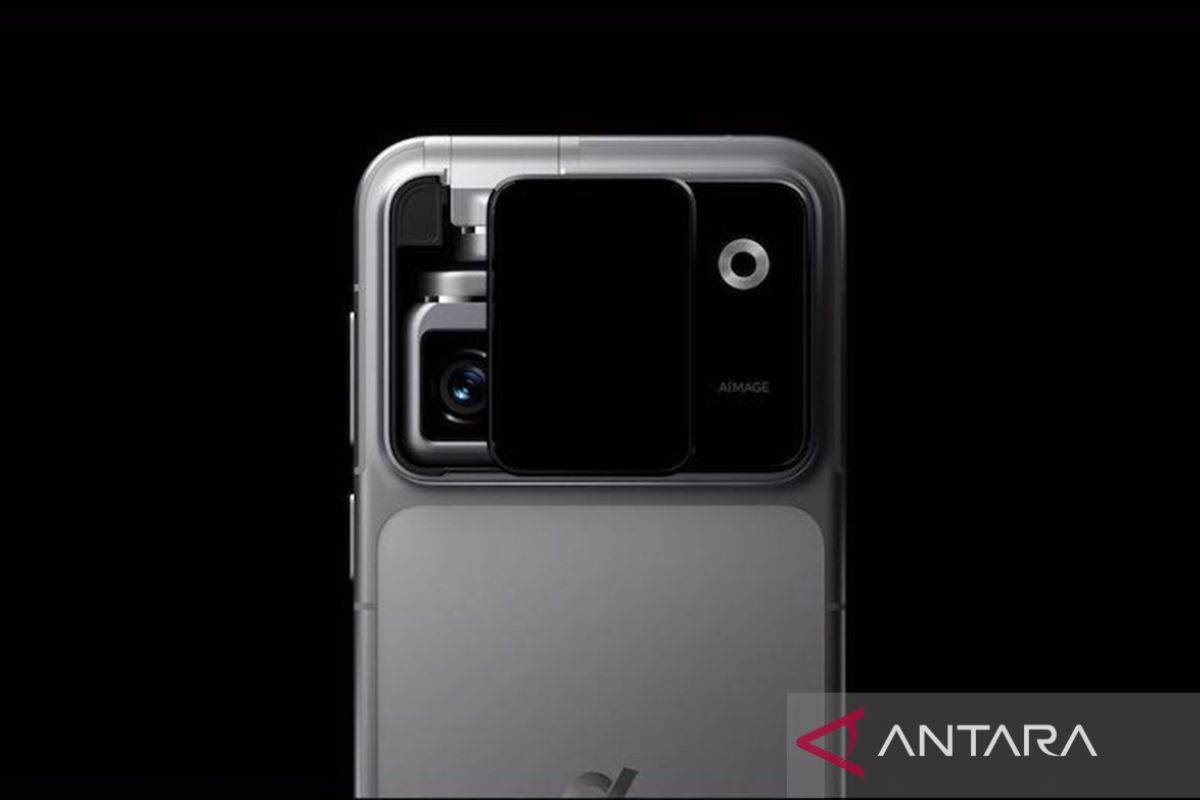
Just over a decade ago, Chinese smartphones were largely dismissed by Western consumers and industry analysts. Now, they dominate the global market, a conversion fueled by innovation, strategic supply chain advancement, and aggressive brand building.This report details the remarkable ascent of Chinese smartphone manufacturers, exploring how companies overcame initial perceptions and leveraged a unique approach to compete – and ultimately lead – on the world stage, with insights from Jakarta-based technology editor Dicky Yuniarto.
The global smartphone market has undergone a dramatic shift, with Chinese manufacturers evolving from being largely dismissed to dominating worldwide sales. This transformation wasn’t accidental, but the result of strategic adaptation, resilience, and a focus on innovation. The rise of Chinese smartphones demonstrates how quickly the tech landscape can change, and how companies can overcome initial perceptions to achieve global leadership.
Dicky Yuniarto, a Jakarta-based editor at a technology publication, recalls the early days of Chinese phones in Indonesia. “I’ve been familiar with Chinese phones since the 2000s, when they first started entering the Indonesian market,” Yuniarto said on Thursday, November 20th.
“In terms of design, they were initially far behind the leading European and American manufacturers like Nokia, Siemens, and Motorola, which controlled the market at the time,” he added.
Yuniarto explained that early Chinese phones prioritized functionality, often including features not found in other brands, such as built-in television capabilities. These features proved popular with Indonesian consumers, particularly those in the middle to lower income brackets.
Data from market research firm IDC shows that before 2010, the global mobile phone market was dominated by non-Chinese vendors with proprietary technology. IDC data for the fourth quarter of 2010 shows Nokia leading with a 28 percent market share, followed by Apple with 16 percent and RIM (BlackBerry) with 14 percent, while Samsung held 11 percent.
“Decolonizing Technology”
Established brands at the time focused on developing high-end devices with significant costs and long lead times. This created a substantial gap in the market, particularly in developing countries where consumers needed affordable, multi-functional devices.
Around 2008-2010, the term “shanzhai” became common, referring to imitation or counterfeit products. While often infringing on trademarks, shanzhai products frequently added features not found in the original designs.
“Initially, Chinese phones tended to copy designs and technology, but what they copied was then further developed, leading to genuine innovation,” Yuniarto said.
Despite a controversial reputation, shanzhai evolved into a symbol of grassroots innovation and creativity, and a challenge to the expensive and complex Western patent system that historically limited innovation to those with significant resources.
Observers have described shanzhai as a force for “decolonizing technology,” enabling countries in the Global South to access technology without relying on costly and often ineffective technology transfer programs.
China’s resurgence was also fueled by structural innovation in the supply chain. A key contributor was MediaTek, a Taiwan-based semiconductor company. MediaTek launched turnkey solutions that included chipsets, software, and ready-to-use reference designs.
These solutions significantly reduced the difficulties of manufacturing phones. MediaTek’s turnkey solutions allowed small and medium-sized vendors to produce high-quality phones with much lower capital investment and faster development times than traditional methods.
This modular business model sparked a surge in product development and presented a significant challenge to established tech giants.
“I believe Chinese phones developed so rapidly because the industry had an extensive supply chain and a solid industrial infrastructure, even back in the early 2000s when they started entering Indonesia,” Yuniarto said at his home in East Jakarta.
The ecosystem supported by MediaTek enabled thousands of small manufacturers to test the market for new features like dual-SIM functionality and large-capacity batteries with minimal risk. This rapid market testing fostered a fast and efficient supply chain in Shenzhen, China’s technology hub, where product iterations occurred in days.
Brand Building
Chinese phones previously suffered from a negative stigma regarding quality, which impacted sales. To overcome this, manufacturers began focusing on brand building to gain consumer trust and demonstrate product quality.
A key step was disruptive pricing.
Xiaomi pioneered the use of online flash sales to reduce distribution and marketing costs, offering high-end specifications at mid-range prices.
“I think the advantage of Chinese phones is their high value for money. The technology they offer matches the price. Sometimes it’s even cheaper than the features offered,” Yuniarto said.
He added that this made consumers realize they didn’t need to pay a premium for fast processors or sharp screens. In addition to overcoming the stigma, this strategy built consumer confidence in Chinese brands.

Another brand-building strategy was collaboration with European technology brands. An example of this is Xiaomi’s partnership with Leica to deliver high-quality camera features.
“The ability to adopt trends is one of the strengths of the Chinese phone industry because they can continue to meet the tastes of each market,” Yuniarto explained.
Yuniarto noted that this collaboration wasn’t simply about leveraging a name, but involved technology transfer in areas like optics and color algorithms, ultimately enabling Chinese manufacturers to become self-sufficient in camera innovation.
Strengthening R&D Investment and Patents
The evolution of Chinese phones has also been marked by a transformation from pure manufacturing to innovation based on research and development. To master core technologies, Chinese manufacturers have strengthened their R&D investment and patent portfolios.
Yuniarto explained that Huawei invested approximately 161.5 billion yuan (1 yuan = Rp2,351) in R&D in 2022. This placed Huawei on par with US tech giants like Alphabet and Meta in terms of R&D investment percentage.
According to the World Intellectual Property Organization (WIPO), Chinese companies such as Huawei, BOE Technology, and Oppo have consistently topped the filing of international PCT (Patent Cooperation Treaty) patents over the past five years.
Yuniarto believes this increased investment has led to technological independence, particularly in semiconductors. When the US restricted sales of its companies’ chipsets to China, manufacturers like MediaTek and Huawei responded by producing reliable chipsets independently.
MediaTek’s Helio chipsets and Huawei’s Kirin chips are now widely used and are strong competitors to Qualcomm and Intel.
Precise Market Segmentation
The expansion of Chinese phones has been carried out through precise market segmentation based on regional demographics. An example is Transsion Holdings, the parent company of TECNO, itel, and Infinix.
Rather than competing directly with Apple and Samsung in the West, the company, founded in 2006, focused on emerging markets, particularly Africa, a region long overlooked by major vendors.
With this strategy, Transsion dominated the African market and became the largest smartphone manufacturer in 2017 through deep product adaptation to local needs.

“The ability to adopt trends is one of the strengths of the Chinese phone industry because they can continue to meet the tastes of each market,” Yuniarto explained.
The executive, who has visited China several times, added that Transsion’s success wasn’t solely about low prices, but about understanding consumer needs that global vendors didn’t address.
“With the advancement of technology in the Chinese phone industry and their ability to quickly adopt new technologies, they can make phones that are priced according to their technology. That’s why, in my opinion, Chinese phones will continue to dominate the global market, especially in developing countries,” he concluded.
Reporter: Xinhua
Editor: Junaydi Suswanto
Copyright © ANTARA 2025
Strictly prohibited to take content, perform automatic crawling or indexing for AI on this website without written permission from ANTARA News Agency.
