
China to Ease Chip Export Ban in Landmark US Trade Deal
China will begin easing an export ban on automotive computer chips, a move critical to global car production, as part of a broader trade agreement reached with the United States, the White House announced today.
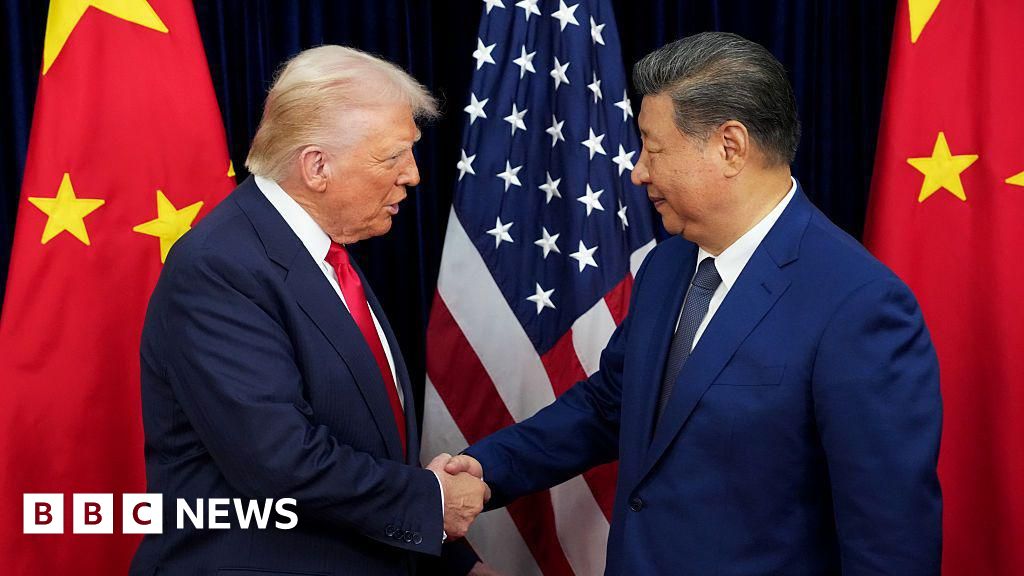
The agreement, finalized following a meeting between President Xi Jinping and Donald Trump in South Korea this week, also includes commitments regarding US soybean exports, rare earth minerals, and the supply of materials used in the production of fentanyl. This de-escalation marks a significant shift after Trump initiated a trade war with China earlier this year, triggering retaliatory tariffs and widespread economic uncertainty. Chinese Embassy spokesperson Liu Pengyu stated that details of the agreements had been shared by “competent authorities,” adding, “China-US economic and trade relations are mutually beneficial in nature.”
A key component of the deal focuses on restoring trade from Nexperia, a Chinese-owned company based in the Netherlands, whose facilities in China are vital for producing legacy automotive chips. Approximately 70% of Nexperia chips manufactured in Europe are sent to China for completion and re-export. The White House fact sheet specifies that China will “take appropriate measures to ensure the resumption of trade from Nexperia’s facilities in China, allowing production of critical legacy chips to flow to the rest of the world.” The automotive industry has been particularly vulnerable to chip shortages, with companies like Volvo Cars and Volkswagen warning of potential plant shutdowns. Understanding the global supply chain is crucial to understanding the impact of this deal.
Beyond chips, Beijing will pause export controls on rare earth minerals – essential for manufacturing cars, planes, and weapons – for one year. The US will also lower tariffs on imports aimed at curbing fentanyl, while China has pledged to take “significant measures” to address the issue, as fentanyl and its precursor chemicals are largely sourced from China and contribute to the ongoing opioid crisis in the United States. Treasury Secretary Scott Bessent acknowledged the agreement but cautioned, “We don’t want to decouple from China… (But) they’ve shown themselves to be an unreliable partner.”
Officials indicated that further details of the agreement will be released in the coming days, and implementation will be closely monitored by both sides.
