
A Chinese startup, Gestala, is pioneering a new approach to brain-computer interfaces (BCIs) by developing technology that aims to access the brain using ultrasound, potentially bypassing the need for invasive surgical implants. The company, founded in Chengdu, is part of a growing wave of investment and innovation in the BCI sector, recently highlighted by OpenAI’s investment in a similar U.S.-based venture. This non-invasive method focuses on stimulating and, eventually, reading brain activity through focused ultrasound waves – a technique already approved for treating some medical conditions – and could offer a less risky alternative to existing BCI technologies.
A Chinese startup is pursuing a novel approach to brain-computer interfaces, aiming to access the brain using ultrasound technology without the need for surgery or implanted chips.
Chinese Startup Plans Non-Invasive Brain Access Using Ultrasound
A new Chinese startup is developing a next-generation brain-computer interface (BCI) that bypasses the need for surgically implanted devices.
Gestala, a recently founded company in China’s rapidly growing BCI industry, intends to access the brain through non-invasive ultrasound technology, according to its founders. This approach represents a significant shift in BCI development, which often relies on more invasive methods.
The Chinese BCI sector is experiencing rapid expansion, and Gestala is among the latest companies aiming to connect with the brain without resorting to physically implanted hardware.
Founded in Chengdu, with offices in Shanghai and Hong Kong, Gestala plans to use ultrasound to both stimulate brain activity and, eventually, read signals from the brain, explained Phoenix Peng, the company’s CEO and co-founder.
The company’s emergence follows a recent surge of investment in the field. Earlier this month, OpenAI announced a substantial investment in Merge Labs, a BCI startup co-founded by Sam Altman, CEO of OpenAI, along with other tech executives and members of Forest Neurotech, a non-profit research organization in California.
Ultrasound is widely recognized as a diagnostic medical tool, utilizing high-frequency sound waves to create images of internal organs and blood flow. A common application is monitoring fetal development during pregnancy. However, researchers are increasingly exploring ultrasound’s therapeutic potential, extending beyond its traditional diagnostic role.
Depending on the intensity of the ultrasound waves, the technology can be used to ablate abnormal tissue, such as blood clots or cancerous cells, or to modulate nerve activity non-invasively. Focused ultrasound has already received approval for treating conditions like Parkinson’s disease, uterine fibroids, and certain tumors.
Initially, Gestala aims to develop a device that delivers focused ultrasound to the brain to alleviate chronic pain. Preliminary studies suggest that stimulating the anterior cingulate cortex – a brain region involved in the emotional aspects of pain – can reduce pain levels in patients for up to a week.
Peng stated that Gestala’s first device will be a stationary, table-mounted unit. Patients would need to visit a clinic to receive treatment. The company is currently in discussions with several hospitals in China interested in testing the technology. For its second-generation device, Gestala plans to develop a wearable headset, allowing patients to use the technology at home under medical supervision.
Image source: hochschule-rhein-waal
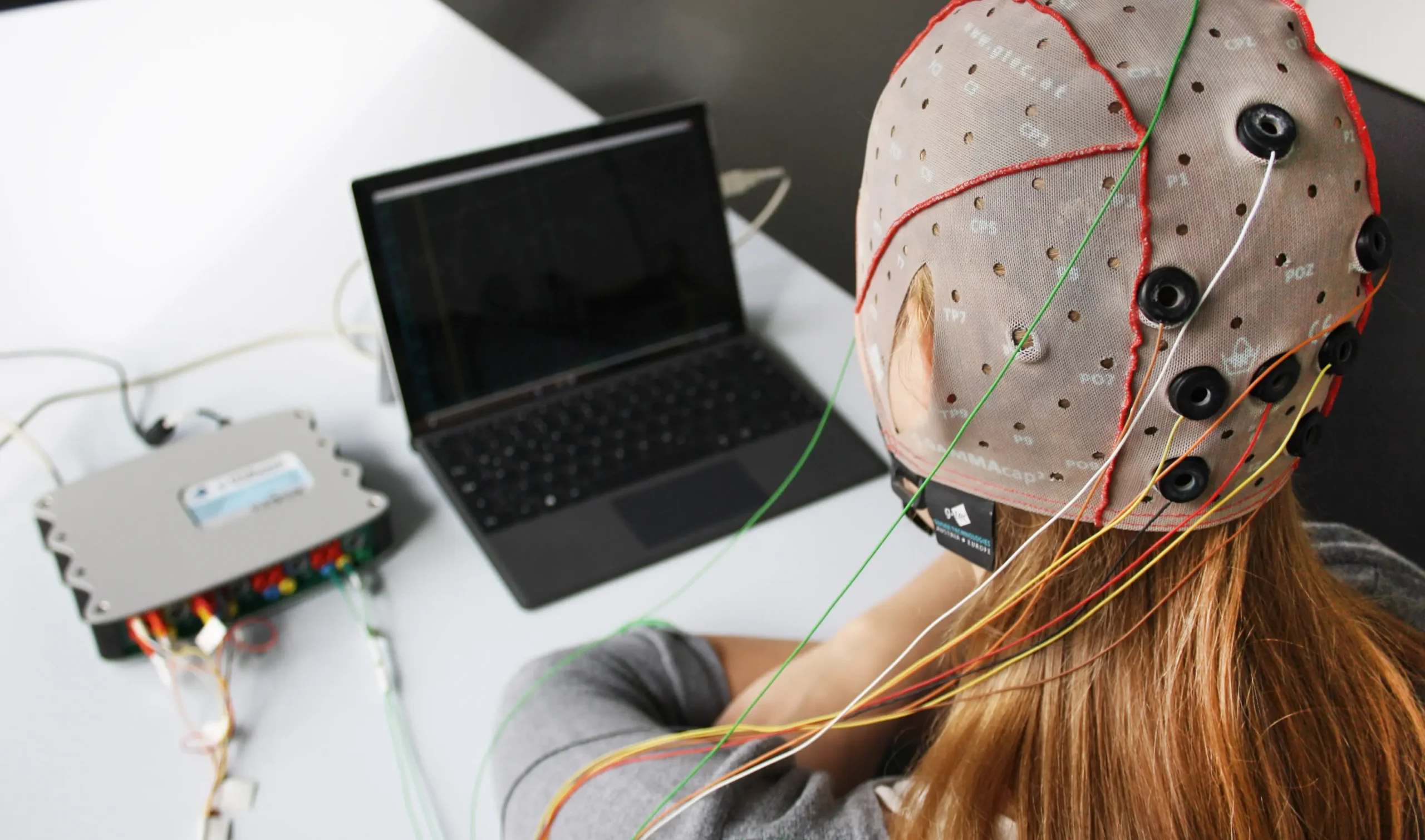
Beyond chronic pain, the company intends to expand into treating other conditions, such as depression and other psychiatric disorders, stroke rehabilitation, Alzheimer’s disease, and sleep disorders. Like Altman’s Merge Labs, Gestala ultimately aims to use ultrasound to “read” brain activity as well.
The ideal scenario, according to the company, would involve a device capable of detecting brain states associated with chronic pain or depression and delivering targeted stimulation to dysfunctional brain regions. Peng emphasized that the goal is not “human enhancement,” but rather to promote healthy neurological function.
Most brain-computer interfaces, including those developed by Neuralink, work by recording electrical signals generated by neurons. In contrast, ultrasound-based interfaces measure changes in blood flow within the brain. This difference in approach could offer unique advantages and challenges.
Previously, Peng served as CEO and co-founder of NeuroXess, a Shanghai-based company that developed implantable devices to read electrical signals from neurons. NeuroXess aimed to enable paralyzed individuals to control digital devices and generate synthetic speech using their thoughts. Peng left NeuroXess last year to join Gestala.
“Electrical brain-computer interfaces can only record signals from certain parts of the brain, such as the motor cortex,” Peng said. “But ultrasound seems to offer the potential to access the entire brain.”
Another co-founder of Gestala is Chen Tianqiao, founder of the online gaming company Shanda Interactive Entertainment and also the founder of the Tianqiao and Chrissy Chen Institute, a non-profit organization in California that supports neuroscience research.
The company’s name, Gestala, comes from Gestalt psychology, a German school of thought known for the phrase “the whole is greater than the sum of its parts.”
However, Maximilian Riesenhuber, a professor of neuroscience and associate director of the Center for Neural Engineering at Georgetown University, cautioned that extracting information from the brain using ultrasound is more challenging than delivering ultrasound to a specific location within the brain. The skull attenuates and distorts ultrasound signals, and currently, researchers can only interpret brain activity with ultrasound when they create a “window” into the brain by partially opening the skull.
“The best researchers have been able to do so far is to read neural activity in humans through implants in the skull, which are more transparent to ultrasound than bone. So, reading signals remains a significant engineering challenge,” Riesenhuber said.
Another consideration is that changes in blood flow occur more slowly than direct neuronal activity, which may not be suitable for certain applications, such as speech decoding.
Merge Labs has not yet specified its intended applications, but its website mentions the potential to “restore lost capabilities, support healthier brain states, strengthen connections, and expand the boundaries of what we can imagine and create with advanced AI.”
However, some of these applications are likely years away. “I don’t expect to see people connecting to ChatGPT through functional brain imaging with ultrasound anytime soon,” Riesenhuber said.
Source: Wired
FB.AppEvents.logPageView();
};
(function(d, s, id){ var js, fjs = d.getElementsByTagName(s)[0]; if (d.getElementById(id)) {return;} js = d.createElement(s); js.id = id; js.src = "https://connect.facebook.net/en_US/sdk.js"; fjs.parentNode.insertBefore(js, fjs); }(document, 'script', 'facebook-jssdk'));
