
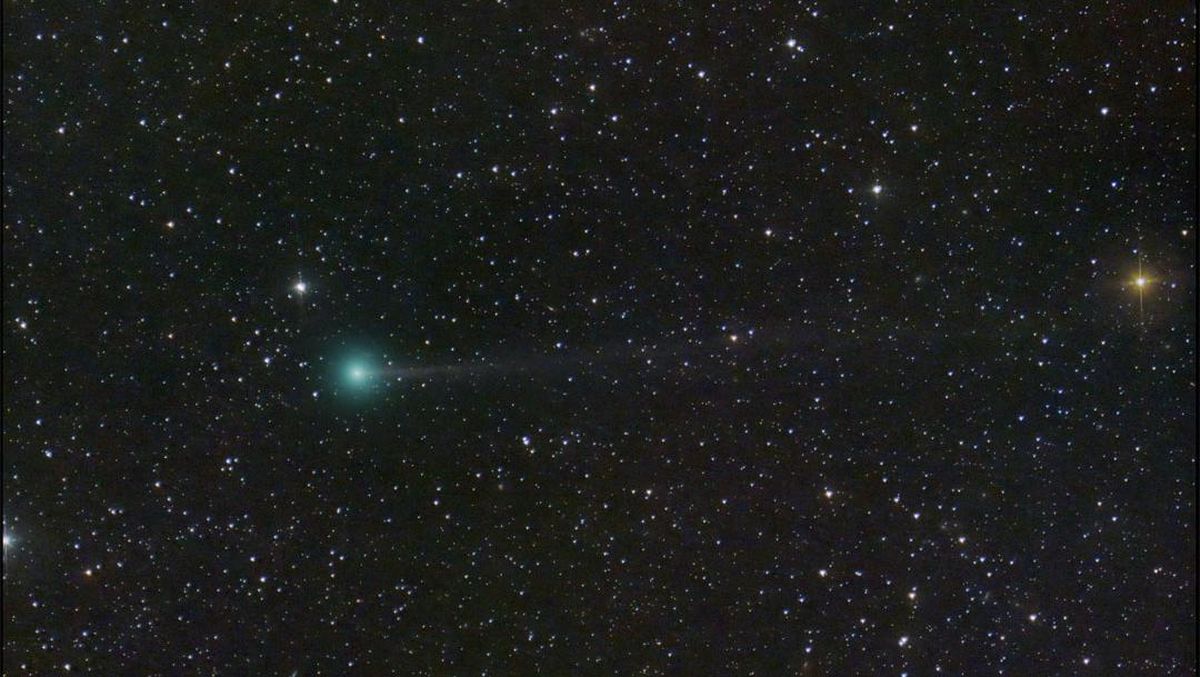
Sungrazing Comet C/2026 A1 (MAPS) Disintegrates During Close Solar Encounter
Astronomers have confirmed that Comet C/2026 A1 (MAPS), which had sparked hopes of becoming a naked-eye spectacle, broke apart during its closest approach to the sun on April 4, 2026. The comet, known as a sungrazer, failed to survive its perihelion passage, ending any chance for the general public to observe it without specialized equipment.
The comet reached its perihelion—the point in its orbit closest to the sun—at 10:22 a.m. EDT (14:22 UTC) on April 4, 2026. According to data from the SOHO spacecraft’s LASCO C3 coronagraph, the celestial body plunged toward the sun, coming within approximately 1% of the distance between Earth and the sun before disintegrating.
The loss of the comet is a significant event for the scientific community, as tracking such objects provides critical insights into the composition of the early solar system and the volatile nature of celestial bodies. Understanding how these objects react to extreme solar heat helps researchers better map the dynamics of our galactic neighborhood.
A Promising Start and a Sudden End
Prior to its destruction, C/2026 A1 (MAPS) showed unusual promise. Researchers noted that the comet was shining at approximately 18th magnitude while still twice as far from the sun as Earth is. While 18th magnitude is far too faint for the naked eye, We see considered exceptionally bright for a comet at that distance. This early luminosity led astronomers to believe the comet had a substantial nucleus, with preliminary estimates suggesting a diameter of up to 1.5 miles (2.4 km).
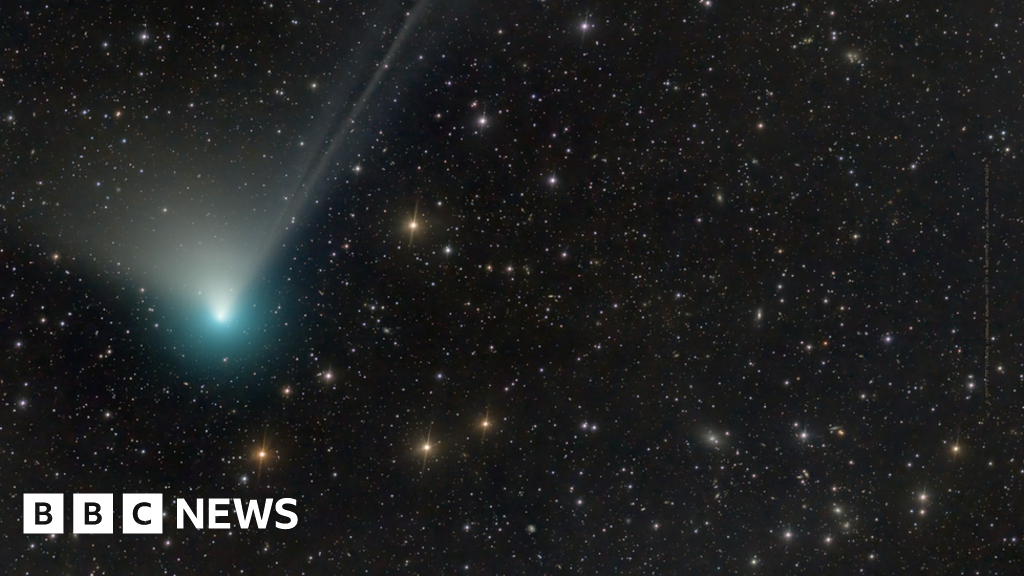
Due to its trajectory, the comet was identified as a member of the Kreutz sungrazer family, a group of comets that follow nearly identical orbits and pass extremely close to the sun. Because of its size and brightness, there was speculation that it could have become visible to the naked eye between April 6 and April 10, 2026, particularly for observers in the Southern Hemisphere.
Observations and Future Outlook
While the main body of the comet has been destroyed, scientists are now monitoring the area to determine if any cometary debris will remain visible in the coming days. The disintegration underscores the extreme risks associated with sungrazing orbits, where the sun’s intense gravitational and thermal forces often overwhelm the structural integrity of the comet’s nucleus.
Despite the loss of C/2026 A1, skywatchers still have opportunities to observe other celestial events this month. Another bright comet, C/2025 R3 (PanSTARRS), is also expected to be visible in April 2026.
