
Czech lawmakers are set to begin debating a proposed state budget Wednesday that critics say violates legal regulations with its projected deficit of 310 billion koruna.
The Czech Republic has been operating under a provisional budget for more than a month and will likely remain in that state until at least Wednesday, when the lower house of parliament is scheduled to begin reviewing the key parameters of the 2024 state budget.
A similar situation occurred at the end of 2021, when a five-party coalition led by Prime Minister Petr Fiala replaced the government of Andrej Babiš and ČSSD. The subsequent cabinet developed its own proposal, and the country operated under a provisional budget until mid-March. That revised budget saw the deficit reduced by nearly 100 billion koruna. This year, following another change in government, the deficit has increased by 24 billion koruna.
A Modest Shift?
Despite the current financial situation, reporter Michal Tomeš of Deník N suggests the new budget isn’t a radical departure from its predecessor. “There’s no major budgetary revolution happening,” he said.
Tomeš noted that key security institutions and the defense ministry saw notable adjustments.
The Ministry of Labor and Social Affairs, the Ministry of Agriculture, the Ministry of Justice, and the Ministry for Local Development are all slated to receive increased funding compared to the previous version of the budget.
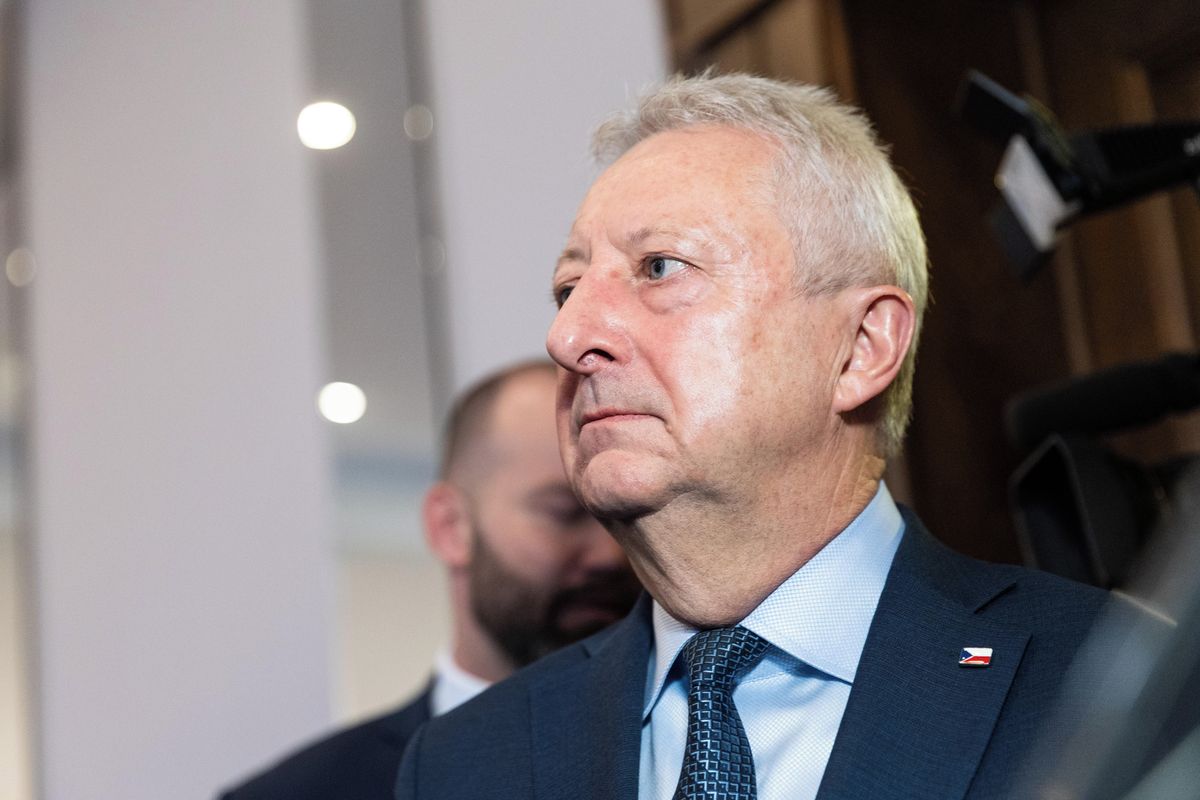
Photo: Renata Matějková, Seznam Zprávy
According to Minister of Defense Jaromír Zůna (for SPD), the proposed budget will allow for the continuation of army modernization.
Funding for transportation projects and the defense ministry, however, will be reduced. The defense ministry is set to receive 21 billion koruna less than originally planned.
“As far as I can inform, it’s not a loss,” Tomeš commented on the proposed funding for the Ministry of Defense, noting that the country is still expected to meet its NATO commitment of spending two percent of its GDP on defense. This target will only be met by including other expenditures classified as defense-related, such as those from the Ministries of Interior and Transport, bringing the total to approximately 185 billion koruna.

Photo: Dominika Kubištová, Seznam Zprávy
Journalist Michal Tomeš of Deník N.
Tomeš also pointed to adjustments in funding for several security organizations. Compared to the Fiala government’s plans, the Babiš government proposes a decrease of 300 million koruna for the Security Information Service and 30 million koruna for the National Security Office. While both institutions will see an overall increase in funding compared to last year, Tomeš questioned whether they will lack resources for long-term development, particularly in technology.
“For me, it’s a bit symbolic, because you’re taking money away from the agency that isn’t critical, the agency can survive without it… but again, we’re getting to the point where these institutions won’t have any perspective,” the journalist said.
Who Benefits From the Budget?
The proposed state budget also raises the question of how well the governing parties have been able to incorporate their pre-election promises and plans. According to Tomeš, this varies from party to party.
“Voters of ANO can probably be relatively satisfied so far,” he said, pointing to the proposed increase of nearly 16 billion koruna for the Ministry of Labor and Social Affairs, which would exceed 1 trillion koruna in spending for the first time. Supporters of the dominant governing party may also appreciate the leaders’ announcement of work on pension reform, which would cap the retirement age at 65.
Those sympathetic to SPD, however, are likely less pleased. Tomeš noted that the proposed defense spending—roughly 2.1 percent of GDP—would be a record high for the Czech Republic. The party’s failure to act on limiting the influx of Ukrainian refugees, a key campaign promise, could also be a source of frustration.
“We’ll see if the anger of (SPD leader) Tomio Okamura—if Okamura expresses it—is reflected in future budgets,” the journalist said.
Finance Minister Alena Schillerová presented the document, which includes expenditures of nearly 2.3 trillion koruna, revenues of almost 2 trillion koruna, and a resulting deficit of 310 billion koruna.
