
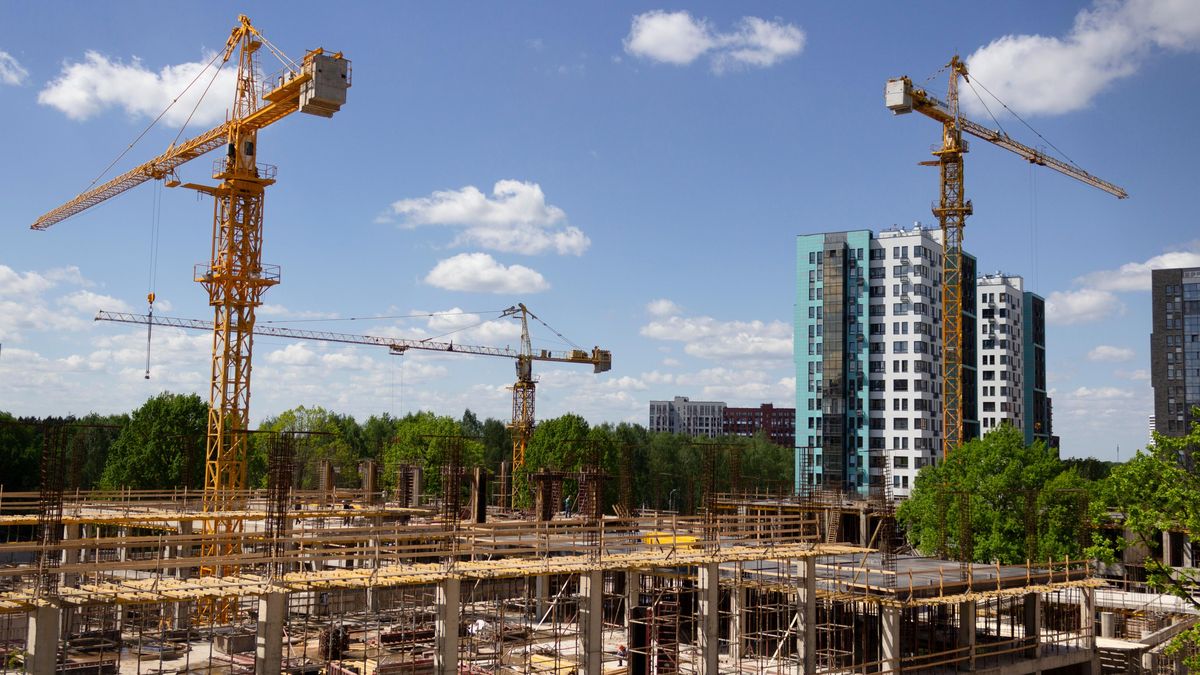
Czech building authorities issued 61,613 permits across the country last year, approximately 10,500 fewer than the previous year. This represents a roughly one-third decline compared to 2021, when the number of approvals last increased.
“The likely reason for this was problems with the digitization of the building permit process. However, this isn’t a one-time fluctuation, but rather a general negative trend,” said Martin Gürtler, an economist at Komerční banka.
The most significant issues are centered around apartment construction. Developers and individuals began building 35,819 apartments last year. In Prague, where estimates suggest between 10,000 and 15,000 apartments are needed annually to meet demand, only 7,380 construction projects were initiated.
Slow permitting is a major driver of rising property prices. Delays in the approval process increase construction costs, and sellers are able to pass those increased costs onto buyers due to limited supply. This creates a situation where potential homeowners have fewer options and are often forced to pay higher prices.
According to data from Sreality.cz, asking prices—those listed in advertisements—rose by 15.6% year-over-year last year. The data focuses on medium-sized apartments, between 50 and 80 square meters, representing price increases of hundreds of thousands of crowns, and over one million crowns in Prague.
Experts agree that increasing the housing supply is the only solution. However, the outlook for this year is not optimistic. “As far as apartment construction is concerned, we shouldn’t expect a boom,” stated Petr Dufek, chief economist at Creditas Bank.
Improvement Expected with New Legislation
The low number of building permits issued is expected to be partially offset in the coming months as developers exhaust their existing stock of projects that already received approvals. Some buildings were approved during the COVID-19 pandemic, but developers delayed construction due to market uncertainty. As this backlog of approved projects diminishes, it will likely exacerbate pressure on prices.
“The situation could improve no earlier than 2027, in connection with the planned amendments to the new building law and the Metropolitan Plan,” said Petr Michálek, chairman of the board of Skanska Residential.
The problem is compounded by insufficient construction over the past two decades. According to data from Central Group, a long-term market observer, the housing deficit in the capital city has increased by nearly 100,000 units in the last twenty years.
Demand for apartments, however, is increasing. A total of 7,800 apartments were sold in Prague from January to December, surpassing the previous record set in 2021.
Strong demand was likewise evident in Brno. According to developer Trikaya, 1,405 new apartments were purchased there in the last 12 months, the highest number since 2016, when 86 more apartments were sold.

