Czech spirits producers are quietly adjusting their recipes as rising excise taxes and evolving consumer preferences reshape the market. stock Plzeň-Božkov, the nation’s largest spirits company, recently lowered the alcohol content of its popular Božkov Republica spirit, a move attributed to both tax increases-up 15% since the start of 2025-and a growing demand for lower-alcohol options [[1]].The shift highlights a broader trend impacting the industry, where regulatory definitions and tax policies are forcing producers to adapt, sometimes blurring the lines of customary classifications like “rum” and *tuzemák*.
Czech Republic’s largest spirits producer, Stock Plzeň-Božkov, lowered the alcohol content of its popular Božkov Republica spirit from 38% to 35% last September. The change affects the Republica Exclusive variety, which is still labeled as rum in some online stores despite the adjustment.
“The reduction in alcohol content was chosen after rigorous tasting tests to ensure the flavor profile of the drinks remained consistent,” said company marketing manager Michal Jakl.
However, according to European Union regulations, Republica Exclusive was not classified as rum even before the change, as it contains a higher sugar content than permitted for the spirit. Rum must contain no more than 20 grams of sugar per liter; exceeding this limit disqualifies a drink from being labeled as such.
The Czech rum and rum-based spirits market has seen increasing competition from Caribbean brands and sugarcane distillates imported and blended domestically. Traditional “tuzemák” brands, often featuring sailboats on their labels, also maintain a strong presence. Fruko-Schulz’s tuzemák from Jindřichův Hradec is another well-known example alongside Božkov.
Stock Plzeň-Božkov attributes the alcohol reduction primarily to rising excise taxes. “The tax increased by ten percent at the beginning of 2025 and by another five percent at the start of this year,” Jakl explained.
Younger Consumers Favor Lower Alcohol Content
Jakl also pointed out that spirits are the only alcoholic beverage in the Czech Republic subject to increasing tax rates, while beer and wine remain unchanged or are exempt altogether.
Excise taxes on spirits have been steadily increasing. “To avoid fully passing these increased costs onto consumers, we decided to reduce the alcohol content,” Jakl said.
Changing consumer preferences are also playing a role. “Reducing alcohol content is a trend. Younger customers increasingly prefer lower-alcohol liqueurs and spirits. Ready-to-drink beverages are also gaining popularity,” he noted, referring to pre-mixed cocktails in cans or bottles.
According to Jakl, the recipe and taste of Republica Exclusive, which is blended from sugarcane distillates from Nicaragua, the Dominican Republic, Barbados, and Jamaica, remain unchanged. The premium Republica Reserva, now at 38% alcohol by volume instead of the original 40%, continues to meet the requirements for rum designation.
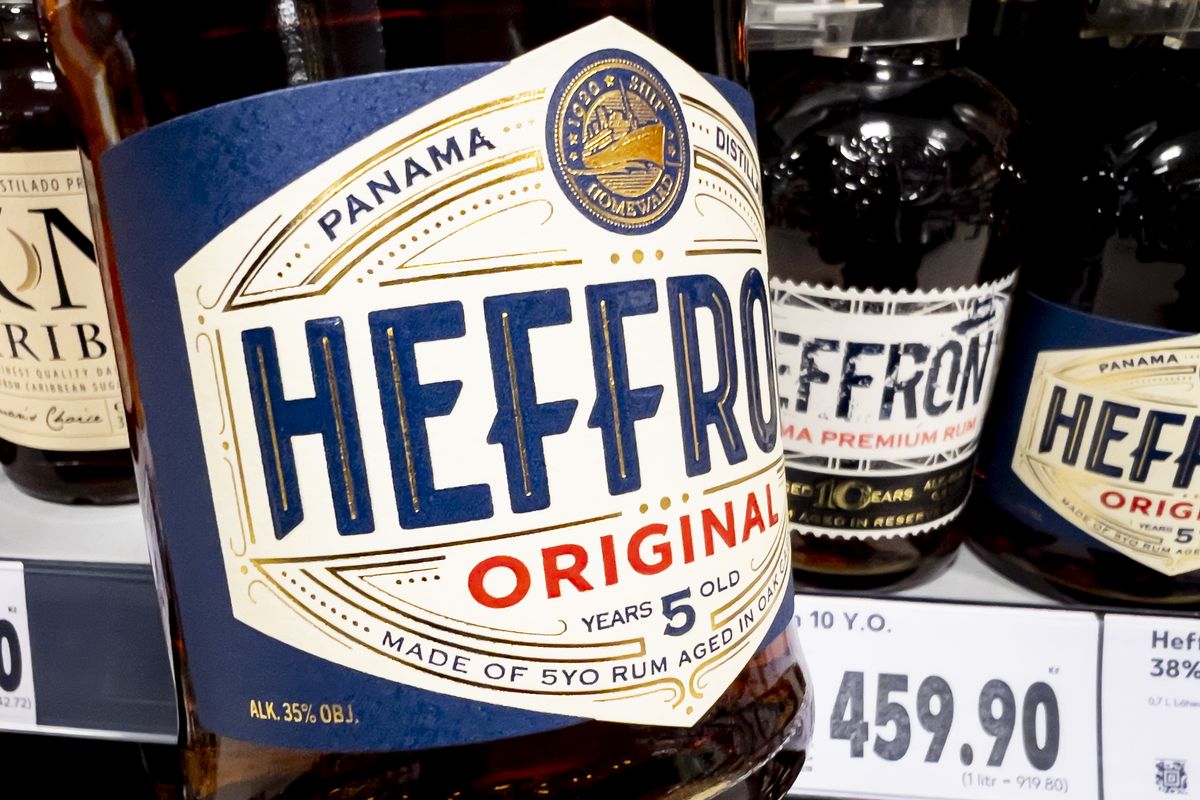
Photo: Jan Handrejch, Novinky
Bottle of Heffron original rum spirit
Palírna U Zeleného stromu has also taken a similar step with its base product, Heffron Original, reducing the alcohol content from 38% to 35%.
“The main reason is a response to the unsustainable tax policy of the state, which significantly burdens spirits manufacturers,” said Ladislav Šimek, the distillery’s general director. He described the move as a general trend in the Czech market, which the company resisted for a long time but ultimately adapted to. “Our most important goal was to keep Heffron Original at an affordable price. It involved a slight adjustment to the alcohol content, and we managed to maintain the quality and taste,” he added.
Šimek also criticized the state’s differing approach to alcohol taxation. “Although alcohol has the same effect regardless of the type, still wine is exempt from excise duty. This unequal approach creates long-term pressure on the hard alcohol sector,” he said.
Pitfalls of European Regulations
Using rum as an example, Šimek highlighted the pitfalls of the European definition. “If a product fails to meet a single parameter, such as the minimum alcohol content, it automatically falls into the broad category of spirit. But this doesn’t tell consumers what type of alcohol it is,” he explained.
Heffron Original, based on five-year-aged Panamanian sugarcane rum, has always been classified as a spirit, primarily due to its higher sugar content, which consumers demand. The premium Heffron Heritage 5 YO and Heffron 10 YO varieties, however, retain their higher alcohol content and rum designation.
Retailers often label standard products that do not meet the requirements of true rum as “spirit with rum flavor,” “rum elixir,” or “rum liqueur.”
The requirement that rum be made exclusively from sugarcane was already impacting the Czech classic, *tuzemák*, previously referred to as Czech rum, as early as 2003. *Tuzemák* is an aromatized spirit made from grains, potatoes, or sugar beets. The term “rum” is no longer permitted for this product officially—though it remains ingrained in common parlance.