
Argentina’s Santa Fe province is forging ahead wiht a phased dengue vaccination campaign amid ongoing concerns about the mosquito-borne virus, which impacted the region considerably during the 2023-2024 outbreak period. [[1]] The province’s health secretary, Andrea Uboldi, recently outlined a strategic and adaptable vaccination plan prioritizing key demographics, including young people, healthcare workers, and those previously infected with dengue. [[2]] The free vaccine is now widely accessible throughout Santa Fe, offering a crucial preventative measure against a disease that continues to pose a global health threat. [[3]]
Health officials in the province of Santa Fe, Argentina, are continuing a phased dengue vaccination campaign launched in September, aiming to mitigate the impact of a significant outbreak experienced during the 2023-2024 period. Dengue fever remains a substantial public health concern globally, and proactive vaccination efforts are crucial for controlling its spread.
Andrea Uboldi, Secretary of Health for the province, detailed the campaign’s scope, implementation stages, and prioritization criteria in a recent interview. The strategy, she explained, is designed to be adaptable and responsive to evolving epidemiological data.
A Staged Vaccination Approach
“Vaccination in Argentina began at different times in different jurisdictions. In the province of Santa Fe, it started in September based on what was called the ‘dengue objective,’” Uboldi stated. From the outset, the province adopted a vaccination strategy that was “segmented, focused, nominalized, progressive, and dynamic.”
The initial phase of the campaign targeted young people between the ages of 15 and 19 residing in the General Obligado, San Cristóbal, and 9 de Julio departments, as well as prioritized areas within the cities of Rafaela, Rosario, and Santa Fe. These areas and age groups were selected based on epidemiological criteria and the need to intervene in zones with higher viral circulation.
The campaign then expanded to include another key group: healthcare workers between the ages of 20 and 39, along with firefighters and police officers. This phase was dubbed “cuidar a los que nos cuidan” – “caring for those who care for us” – recognizing those on the front lines of response to dengue and other health emergencies.
In a third phase, vaccination was extended to the same healthcare personnel, but within the 40 to 59 age range, also incorporating correctional officers. Subsequently, in the fourth phase, municipal and communal employees who participated in territorial operations were included, also between the ages of 20 and 59.
At the same time, a particularly relevant group was added: individuals who had contracted dengue during the 2023-2024 outbreak, provided at least six months had passed since the illness and they fell within the province’s defined age range of 15 to 59 years.

Finally, in the fifth phase, members of federal forces participating in the Banderas Plan in the city of Rosario were included, encompassing personnel from the National Gendarmerie, Naval Prefecture, and Federal Police.
Accessing the Vaccine
Since September and throughout this year, vaccination has remained active. Initially, it was administered in focused centers, but the vaccine is now available to the target population at any health center, Samco, and hospital vaccination clinics in the province. This expanded access aims to increase vaccination rates and protect more individuals.
“The vaccine is free of charge, acquired by the province of Santa Fe, and available to the aforementioned groups,” Uboldi emphasized, highlighting the provincial government’s commitment to ensuring cost-free access.
Regarding the vaccination schedule, the Secretary of Health explained that it consists of two doses. “A first dose and a second dose generally administered three months later,” she detailed. She clarified that if the second dose is delayed, it does not pose a problem.
“There is no inconvenience because even the laboratory has studies demonstrating strong antibody responses even within a year of the first dose,” she affirmed. Furthermore, booster shots are not currently recommended. “With these two doses, the schedule is complete, and future recommendations will depend on ongoing studies,” she added.
Also See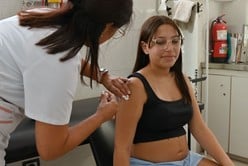
Individuals with Prior Dengue Infection
A central point of the campaign is vaccinating individuals who have previously had dengue. In these cases, it is recommended to wait between three and six months after the illness, with six months being preferable. “There may be an interaction with the antibodies generated by the disease and the response to the vaccine,” Uboldi explained.
In the absence of active cases, it is suggested to postpone vaccination until that time has passed. Individuals can provide their diagnosis to verify a prior infection. This information is often already recorded in the provincial health system through SISA, the National Disease Reporting Registry.
Also See
Regarding who cannot be vaccinated, the Secretary of Health was clear. Individuals with compromised immune systems due to underlying conditions or treatments such as chemotherapy or radiotherapy are excluded. Pregnant women are also excluded, as there are no safety studies during pregnancy, as are breastfeeding women with children under one year of age.
Additionally, individuals experiencing severe illnesses at the time are excluded, such as those hospitalized. “The rest of the population can be vaccinated,” Uboldi clarified, reminding that the 15 to 59 age range corresponds to a health strategy defined by the province.
However, from an individual perspective, the vaccine is approved in Argentina for use from four years of age, with no upper limit. In that case, it can be purchased at pharmacies, and various scientific societies have issued recommendations for groups between 4 and 60 years of age.
