
In a marketing landscape increasingly dominated by artificial intelligence,language-learning app Duolingo has found success in South Korea by embracing a decidedly unconventional strategy. A recent surge in popularity – a 500% year-over-year increase in paid downloads as of Q3 2024 – has positioned Duolingo as a standout in the competitive Korean edtech market, where rivals focus on AI-powered precision and test-score guarantees. This analysis examines how Duolingo’s willingness to abandon traditional marketing norms and lean into meme culture, culminating in a highly visible New Year’s presence at Seoul’s Bosingak Pavilion, has resonated with Korean consumers.
How Duolingo Conquered South Korea with a Threatening Owl: A Marketing Strategy Analysis
A giant green owl appeared among the crowds awaiting the new year at Bosingak Pavilion in Seoul on December 31, 2025. It was Duo, the mascot for language-learning app Duolingo. The Duolingo Korea official Instagram account posted, “Did everyone see Duo’s visit to Gwanghwamun?” The post quickly went viral, with comments ranging from “It was so cold that day my beak almost fell off;;” from the official Duolingo account, to “I would have been in big trouble if I’d gone that day without completing 500 days!” from a user.
The appearance of an English-learning app at one of Korea’s most traditional New Year’s events wasn’t a coincidence. In the third quarter of 2024, Duolingo’s paid downloads in South Korea surged 500% year-over-year. This contrasts sharply with 20% growth in France during the same period. South Korea is a fiercely competitive battleground for edtech companies. Apps like Spic, which uses AI to correct pronunciation, and Santa TOEIC, which promises rapid score improvements, dominate the market with advanced technology and clear objectives. While competitors focused on “more perfect AI” and “higher scores,” Duolingo began to pull ahead, adding 8 million global downloads in just three months. How did this somewhat unusual owl manage to capture the hearts of South Koreans, standing out from sophisticated AI tutors and intensive test-prep programs?
1. Abandoning Authority and Becoming a Meme: The Courage to Forgo the “Good Teacher”
Traditional language-learning apps emphasize authority. They highlight prestigious instructors and proven curricula, maintaining a trustworthy tone. But Duolingo chose a different path. Zaria Parvez, who led Duolingo’s social media strategy, reportedly received a skeptical response from the CEO – “I’m not sure TikTok will really be effective” – when she joined the company as a new hire in September 2021. However, the situation changed when her initial videos generated explosive engagement.
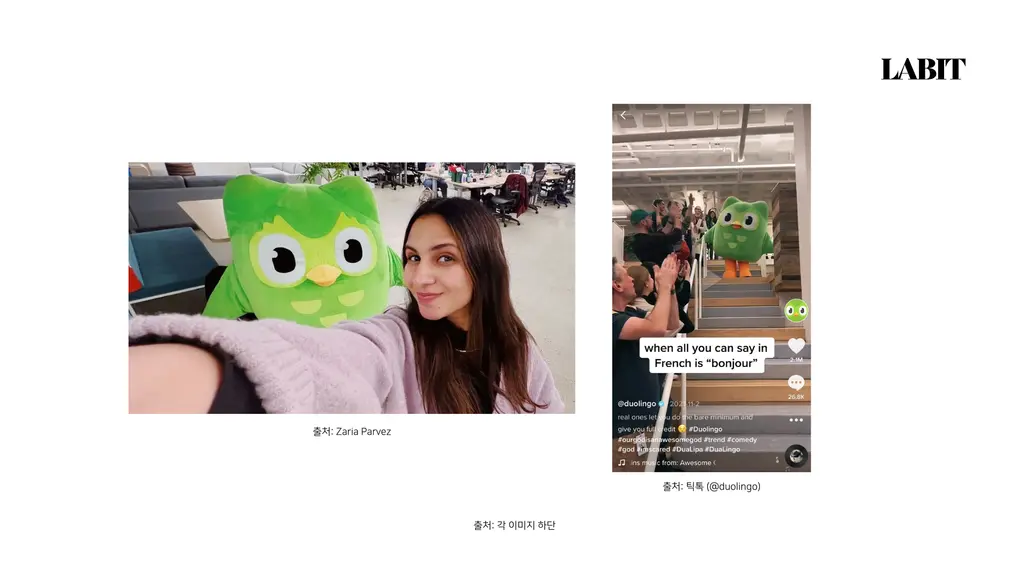
Duolingo’s mascot, Duo, gained notoriety on TikTok for threatening messages like “I’m coming for you if you don’t study” and “I know where you live.” This originated as a meme created by users, but instead of rejecting or ignoring it, Duolingo actively embraced it. The company reinforced a “possessive and intense” character by having Duo express jealousy towards users who used competing apps and even attempt to “kidnap” them for procrastinating.
The Power of Virality Proven on TikTok
Duolingo’s TikTok strategy went beyond simply creating fun content. Parvez’s team maintained a rapid cycle of analyzing trending audio each week and producing content within two days. They were granted the autonomy to post content without legal team approval, enabling a quick response to emerging trends.
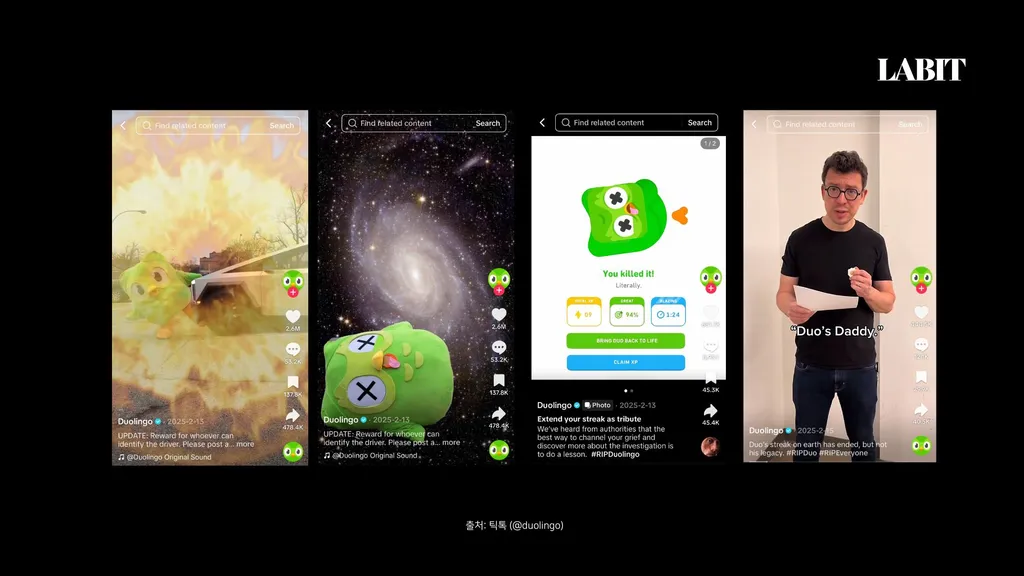
The “Duo’s Death” campaign launched by Duolingo in early 2025 exemplified this strategy. The app icon was changed to Duo with X-shaped eyes, and a video depicting Duo being hit by a Tesla Cybertruck was released. Planned in just six days, the campaign garnered millions of views and led to a surge in new user sign-ups. “Every time a viral video comes out, we see an increase in new users,” Parvez said. This demonstrates the growing importance of social media in driving app adoption.
Localization Perfected: The Green Owl at Bosingak
Duolingo’s Korean localization strategy culminated on December 31, 2025, at the Bosingak Pavilion bell-ringing ceremony in Seoul. During this iconic New Year’s moment in Korea, Duo, Duolingo’s mascot, appeared in a large costume. Duolingo characters collectively appeared among the citizens filling Bosingak Square and Gwanghwamun.
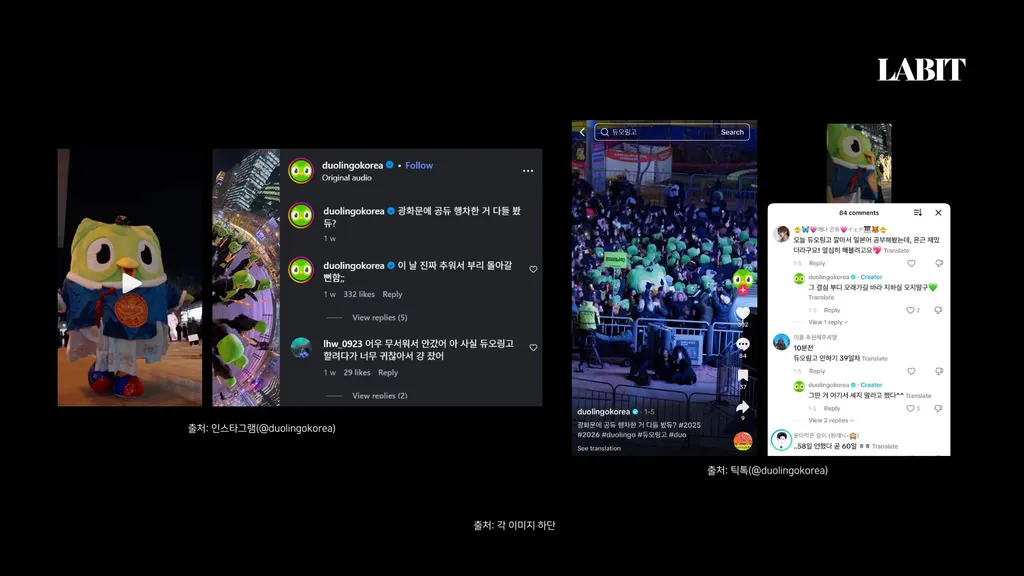
The Duolingo Korea official Instagram account (@duolingokorea) posted a video of the event with the caption, “Did everyone see Duo’s visit to Gwanghwamun?” The post went viral, with comments like “It was so cold that day my beak almost fell off;;” from the official Duolingo account and “I would have been in big trouble if I hadn’t completed 500 days!” from a follower. Jugan Dong-a magazine noted that the campaign successfully associated the app with New Year’s resolutions. The physical presence of a global edtech brand at a traditional Korean event created a viral moment on social media, extending beyond a simple offline event.
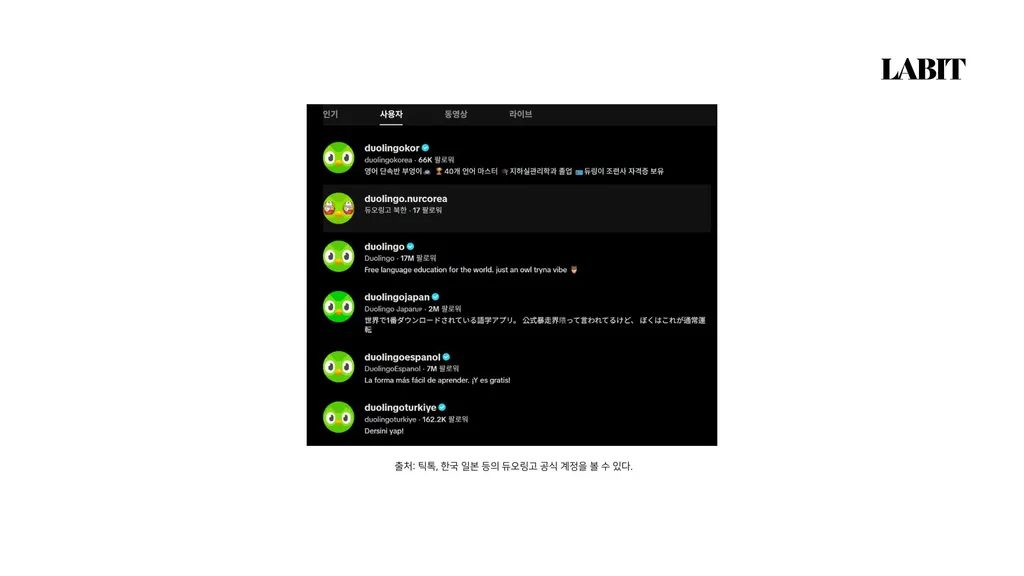
Starting in 2024, Duolingo began hiring country-specific marketing managers for key markets including Korea, Japan, China, and Brazil. Their role isn’t simply translation, but integrating local humor and culture into social media content. The Bosingak event was the culmination of this localization strategy. Based on data showing that Koreans are most likely to make New Year’s resolutions to study English on January 1st, the company chose the most Korean location and moment. Duo has now become a friend who celebrates the New Year with Korean users, rather than a foreign app character.
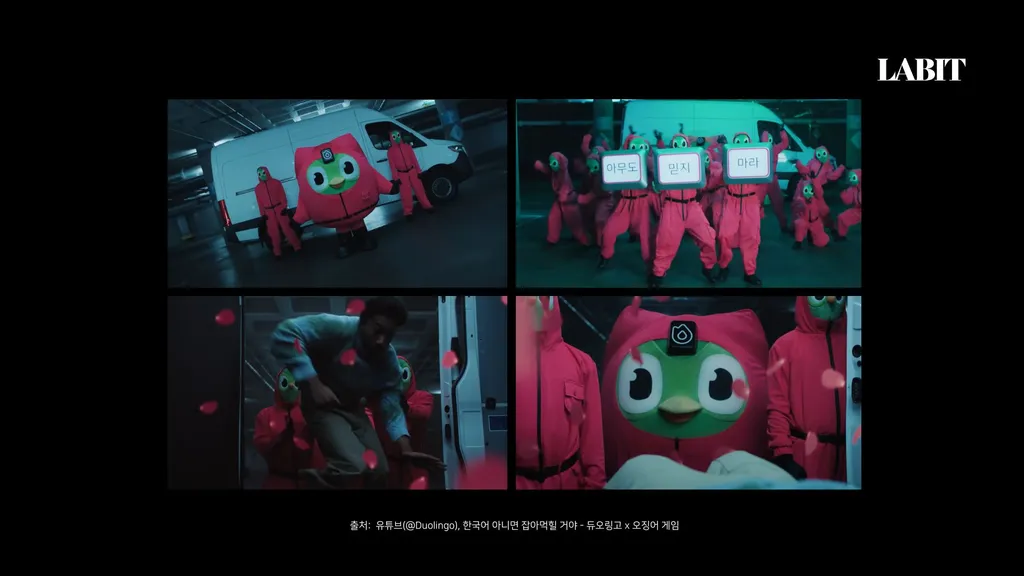
During the promotion of Netflix’s Squid Game Season 2, Duolingo added over 40 Squid Game-related keywords to its Korean language course and created a K-pop remix music video. This collaboration resulted in a 40% increase in Korean language learners.
2. Designing ‘Obsession’ Instead of Motivation: “Your 365 Days Could Disappear”
Duolingo’s most powerful retention mechanism is undoubtedly continuous learning. As of 2024, it’s estimated that over 6 million users have studied for 365 consecutive days or more.
2026 Marketing’s New Standard: “Steal Time, Don’t Sell Features”
Duolingo’s success isn’t accidental. It successfully transformed the tedious task of studying English into a dopamine-inducing game. The 500% growth Duolingo experienced in the Korean market is the inevitable result of three key strategies.
1. Choosing Madness Over Safety
The company boldly abandoned a formal, educational tone. It didn’t just follow meme culture; it aspired to *become* a meme. While everyone else touted “trust,” Duolingo confessed to being “a little weird” and befriended consumers.
2. Designing Instincts Stronger Than Willpower
Human willpower isn’t reliable. Duolingo integrated primal human instincts – loss aversion, competitiveness, and the desire for collection – into its system. The carefully designed continuous learning and leaderboard features created a habit loop that users couldn’t resist breaking.
3. Disrupting the Competition
Duolingo didn’t confine itself to the education category. Its competitors weren’t just other language schools, but TikTok and Netflix, which compete for users’ 15 minutes before bed. By approaching learning as “entertainment” rather than “study,” it transformed a saturated market into a blue ocean.
The courage to abandon safe corporate messaging and dive into the heart of popular culture has resulted in a revenue of over $1 billion and 100 million users. In 2026, consumers don’t just buy features; they buy fun and experiences. The development of AI technology has leveled the playing field in terms of functionality. Now, the differentiator for brands is not “how much smarter” but “how much more engaging.”
How prepared is your brand to get a little messy in order to capture your customers’ time?
