
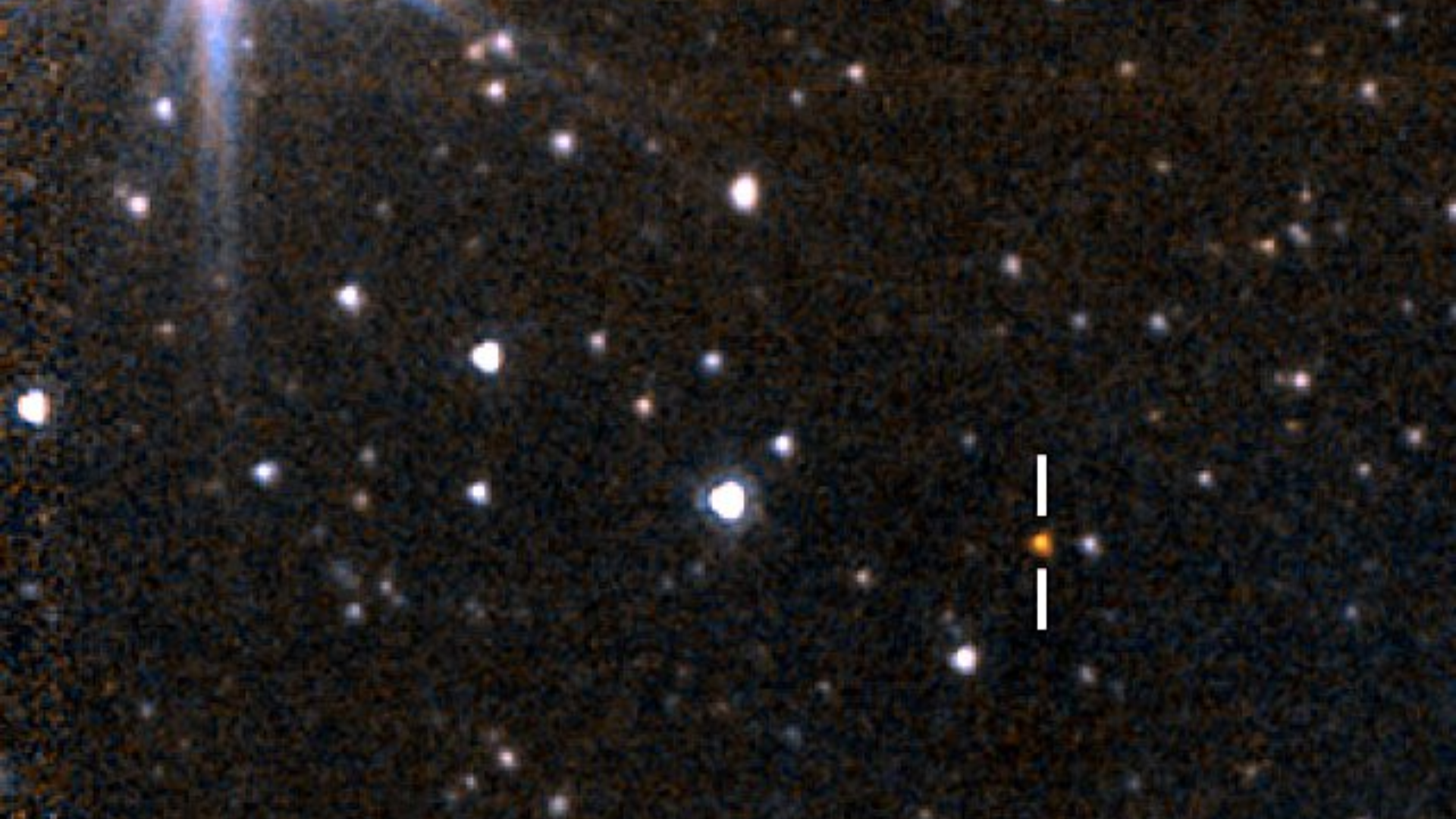
Astronomers Detect Record-Breaking Rogue Planet Growing at Unprecedented Speed
In a discovery that challenges traditional models of planetary evolution, astronomers have identified a “rogue” planet exhibiting a growth rate never before seen in celestial bodies of its kind. The object, designated Cha 1107-7626, is not orbiting any star but is instead drifting freely through interstellar space even as rapidly accumulating mass.
Located approximately 620 light-years from Earth in the constellation Chameleon, the planet is currently in its infancy. Researchers estimate the body to be between 1 million and 2 million years old—a mere fraction of the 4.5 billion years associated with the planets in our own solar system. This early stage of development is characterized by a violent and rapid expansion process known as accretion.
The discovery, published in The Astrophysical Journal Letters, reveals that Cha 1107-7626 is absorbing gas and dust from its surrounding disk at a staggering rate. According to the study, the planet is consuming material at a record pace, with estimates placing the growth at approximately 6 billion to 6.6 billion tons per second. Recent observations indicate that this process has accelerated, with the planet adding material roughly eight times faster than it was just a few months ago.
This landmark finding was made possible through the integration of high-precision astronomical instrumentation. The team utilized the Very Large Telescope (VLT) of the European Southern Observatory (ESO), located in Chile’s Atacama Desert, specifically leveraging the X-shooter and SINFONI spectrographs. To further validate the findings, the researchers incorporated follow-up data from the James Webb Space Telescope (JWST), operated by the NASA, ESA and CSA agencies.
With a mass estimated between five and ten times that of Jupiter, Cha 1107-7626 represents a significant shift in how scientists perceive the stability of planetary-mass objects. The ability to track such rapid growth in a free-floating body highlights the increasing precision of modern spectroscopic technology and its role in uncovering the hidden dynamics of the galaxy.
“People may think of planets as quiet and stable worlds, but with this discovery, we see that planetary-mass objects floating freely in space can be exciting places,” stated Víctor Almendros-Abad, the study’s lead author and an astronomer at the Palermo Astronomical Observatory (INAF) in Italy.
The research, which included contributions from co-author Aleks Scholz of the University of St. Andrews in Scotland, suggests that rogue planets may behave more like stars in certain developmental aspects than previously assumed. By studying how these isolated objects form and grow, astronomers can gain critical insights into the broader mechanisms of planetary birth and the distribution of matter across the universe.
