
42
Fiat Panda - 45 rokov Panda was born in 1980 as a planned successor to the Fiat 126. For many years, however, the two models overlapped.
In the 1970s, the Fiat 126 was the smallest model in Fiat’s lineup. However, its roots stretched back to 1957, as the rear-engine, air-cooled design was essentially a modernized version of the Fiat 500. In the segment of affordable cars, the competition had a slight edge. The Citroën 2CV remained popular, and Renault was selling the revolutionary R4 hatchback rapidly. Fiat simply lacked an effective response to these vehicles. Consequently, in 1976, the Italian automaker began development of an entirely new affordable car under the code name 141. Fiat’s then-CEO Carlo de Benedetti tasked engineer Aldo Mantovani with the project and entrusted the design to the renowned Giorgetto Giugiaro, who was also behind the groundbreaking Volkswagen Golf.
 Foto: Fiat
Fiat Panda - 45 rokov Behind the simple but fresh design of the Panda stood the renowned Giorgetto Giugiaro. A distinctive feature was the plastic underbody protection, similar to that found on today’s SUVs.
Table of Contents
The brief was straightforward: design a kind of “container on wheels” that would be inexpensive, small on the outside, and practical on the inside. After two years of work, 20 functional prototypes were created. In the same year, Carlo de Benedetti stepped down as head of Fiat, and Nicola Tufarelli took his place. Although marketing chief Luigi Maglione was initially surprised by the Panda and thought its interior was unfinished, the new CEO backed the project. Its simplicity was its core DNA. Costs were reduced through the use of flat windows, with the side windows even being interchangeable. While the Panda utilized many components from older Fiat models, it represented a revolutionary step forward compared to the 126. The 3.38-meter-long, three-door hatchback finally featured a front-mounted engine and front-wheel drive.
 Foto: Fiat
Fiat Panda - 45 rokov The interior was very spartan, but the upholstery inspired by home design gave it a friendly atmosphere.
Despite cost reductions, Giugiaro did excellent work. The Panda looked appealing, and its modern feel was enhanced by the substantial plastic protection of the lower body, the asymmetrical front grille, and the large glazed areas. Giugiaro stated that the Panda was like jeans – simple, practical, and unpretentious. The cubic shapes and high roof also allowed for a surprisingly spacious cabin. This was also aided by the flat sides of the body. Two demijohns of wine could be loaded into the trunk without having to fold down the rear seats. Incidentally, the thin seats resembled beach loungers, or rather folding chairs. This was reflected in the removable fabric cover inspired by home design. It could easily be washed in a washing machine. The rear seat could be adjusted in seven positions, folded flat, and even used as an emergency bed or removed completely to enlarge the luggage space.
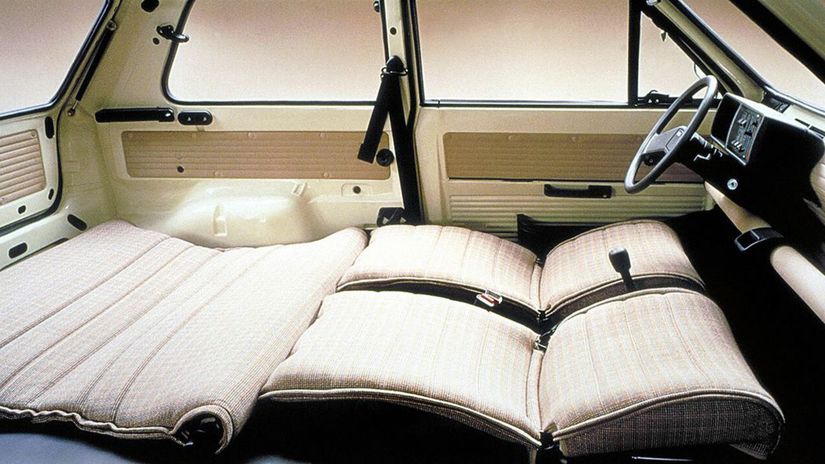 Foto: Fiat
Fiat Panda - 45 rokov The Panda's versatility knew no bounds. It even allowed for a bed conversion.
Despite the cost-cutting measures, Giugiaro delivered a compelling design. The Panda projected a friendly image and a sense of modernity thanks to its substantial plastic underbody protection, asymmetrical front grille, and large glass surfaces. Giugiaro argued that the Panda was like a pair of jeans – simple, practical, and without pretense. The cubic shapes and high roof also allowed for a surprisingly spacious cabin, further enhanced by the flat sides of the body. The trunk could accommodate two demijohns of wine without needing to fold down the rear seats. Moreover, the thin seats resembled beach loungers, or folding chairs, and were complemented by a removable fabric cover inspired by interior design, which could even be machine washed. The rear seat offered seven adjustable positions, could be folded flat for use as an emergency bed, or even removed entirely to maximize cargo space.
 Foto: Fiat
Fiat Panda - 45 rokov Despite its modern appearance, the Panda was assembled from end-of-life Fiat technology. It used old engines and even leaf springs.
The premiere was planned for 1979. However, Fiat failed to meet this deadline. Sicilian unions intervened when they learned that the new model was not to be produced at the local plant in Termini Imerese, a facility the automaker had opened in 1970 in collaboration with the Sicilian region. Eventually, an agreement was reached whereby the Sicilian plant would secure a portion of Panda production. This occurred in 1980.
The Panda had its world premiere that same year at the Geneva Motor Show. Its name was inspired by Roman mythology. Empanda was the goddess of openness, hospitality, and protection of travelers, a fitting association with the car’s character. The name also evoked the “bear,” known for its friendliness, playfulness, and exclusively vegetarian diet. This drew opposition from the World Wide Fund for Nature (WWF), which used a panda in its logo. The dispute was reportedly resolved by a financial donation to the organization, so the conflict never went to court, and Fiat continued to support the WWF. It is said that Fiat issued a check for the agreed-upon amount directly on the body of an actual Panda.
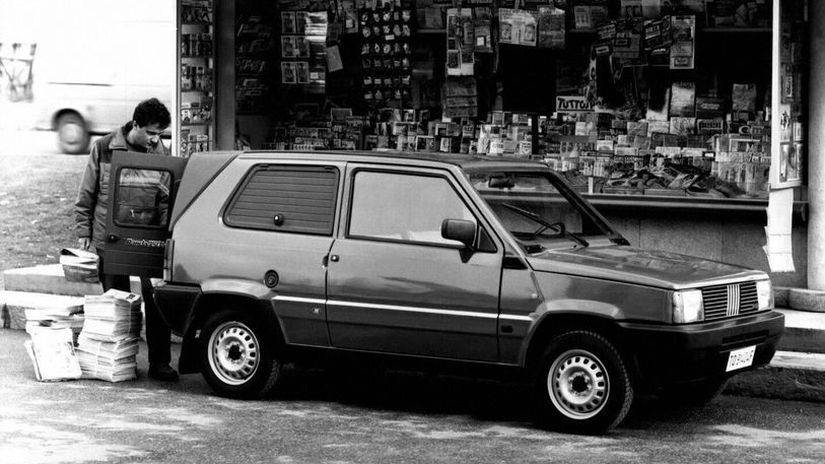 Foto: Fiat
Fiat Panda - 45 rokov Utility version Panda Van did not stop at removing the rear seats. It received a plastic rear part, which increased its useful volume to 800 liters.
The Panda made an immediate strong impression on the public during its premiere. Compared to the Renault 4 and Citroën 2CV, it was a significantly more modern car. The industry also responded positively. In the following year, the Panda took second place in the prestigious European Car of the Year 1981 competition. This was despite the fact that it did not bring anything truly groundbreaking from a technical point of view. On the contrary. The Tipo Zero platform used a rigid rear axle suspended by leaf springs, which was considered a “medieval” construction even at that time. The Panda was initially available with two engines. The Panda 30 was powered by an air-cooled twin-cylinder engine (652cc) from the Fiat 126, producing only 20 kW. The more powerful Panda 45 used a water-cooled 4-cylinder engine from the Fiat 850, with an output of 33 kW. This is further evidence that Fiat utilized everything it had in stock during development.
 Foto: Fiat
Fiat Panda - 45 rokov The Panda 4x4 is a true legend. In its time, it was a real unique and the best-selling all-wheel drive car in Europe.
Thanks to this, the price of the Panda was kept below that of the competition, including the 2CV and R4. The base version cost just 3,970,000 lire in Italy and approximately 6,000 marks in West Germany. Converting this to euros using a later exchange rate, Italians would have paid around 2,000 euros, while Germans would have paid a little more – approximately 3,000 euros – due to customs duties. The top-of-the-line model was the Panda Tetto Apribile from 1981, featuring two retractable sunroofs. In 1982, the basic twin-cylinder engine was replaced by a 4-cylinder engine with a displacement of 843cc and an output of 25 kW. However, this was still an archaic OHV engine from the 850. In the same year, a new plastic front grille with five diagonal stripes appeared on the Panda. Initially, this was only on the 45 Super version, but two years later it was extended to the entire production program.
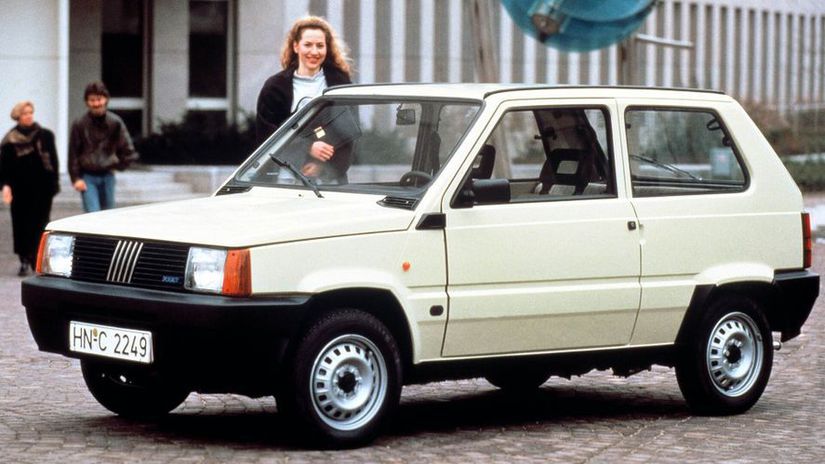 Foto: Fiat
Fiat Panda - 45 rokov The modernization brought the Panda a plastic front mask and larger cutouts of the rear fenders.
In 1986, the Panda underwent its first major revision. Its old engines were retired and replaced by new 4-cylinder engines from the Fire family (Fully Integrated Robotized Engine) with a modern OHC valve train. Incidentally, these were the first engines where designers worked on the appearance. They had a displacement of 0.8 or 1.0 liters and an output of 25 and 35 kW. The Panda 4x4 boasted an output of 37 kW, which compensated for its higher weight. Changes were also made to the chassis. Archaic leaf springs were finally replaced by coil springs and an independent suspension for the rigid rear axle. The body boasted increased rigidity, and galvanization eliminated rapid corrosion. The rear fenders had larger cutouts, and the triangular side windows were a thing of the past. In the same year, an economical atmospheric diesel engine with a displacement of 1.3 liters (27 kW), developed by the Brazilian branch, appeared under the hood of the Panda.
The Panda Van utility vehicle came with a black plastic superstructure in the rear and wing doors, allowing up to 850 liters of cargo to be loaded into its interior. This was far more successful than the Panda Elettra from 1990, powered by a 14 kW electric motor that worked with a standard gearbox and clutch. Simply put, Fiat transplanted an electric heart into the Panda. However, the rear seats and part of the trunk were sacrificed to accommodate the heavy batteries. The weight immediately increased from 700 to almost 1,150 kg, requiring Fiat to adapt the chassis and braking system. A range of 100 km and a high price, however, sealed the Panda Elettra’s fate. Its production ended in 1992.
This was certainly not the case with the standard Panda. In 1991, it underwent its second major modernization. The revised grille featured a smaller logo, and single-point fuel injection became standard on the 1.0 FIRE and new 1.1 FIRE engines. A three-way catalytic converter reduced emissions. The CLX version represented the flagship. The following year, the Panda discontinued the diesel engine. Although Fiat introduced the more modern Seicento in 1997, the Panda’s popularity did not wane. At least in Italy, where the automaker continued to produce it until 2003, which required further modernization under the hood. Thanks to the 1.1 FIRE engine with multi-point fuel injection, it met the Euro 3 emission standard.
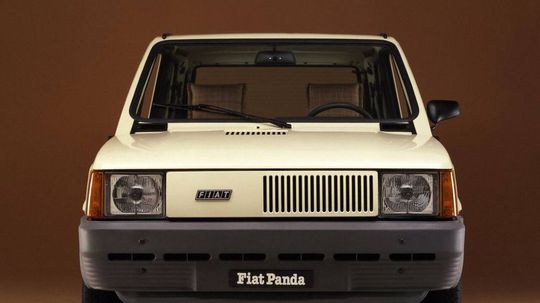
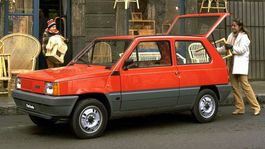
The last first-generation Panda rolled off the assembly line at the Mirafiori plant in September 2003, an incredible 23 years after its debut. A total of over 4.5 million customers chose the Panda. This does not include the Seat Marbella, manufactured under license by the Spanish brand near Barcelona until 1998. Simply put, the Panda was a great success for Fiat. The second generation followed in 2003 with a five-door body, and the third in 2011, which is still in production today. However, neither of them managed to match the number of units produced by its famous predecessor. And it is unlikely that the expensive electric Grande Panda will succeed either.

Bio: Michael Brown is the Business Editor at Headlinez.News, specializing in financial markets, economic policy, and corporate developments. A seasoned business journalist with more than 14 years in the field, Michael has covered Wall Street, global trade, and the evolving tech-economy interface. His data-driven approach and accessible analysis help readers understand complex economic issues with clarity and depth. Expertise: Financial markets, economic poli
Headlinez News is an independent digital newsroom delivering accurate, timely, and trustworthy reporting across the U.S. and worldwide. Our mission is to keep readers informed with verified facts, expert analysis, and credible journalism that puts truth first.
@2025 – Hosted by ByoHosting – Most Recommendeed Webhhosting. For complains, abuse, advertising contact: [email protected]
This website uses cookies to improve your experience. We'll assume you're ok with this, but you can opt-out if you wish. Accept Read More