
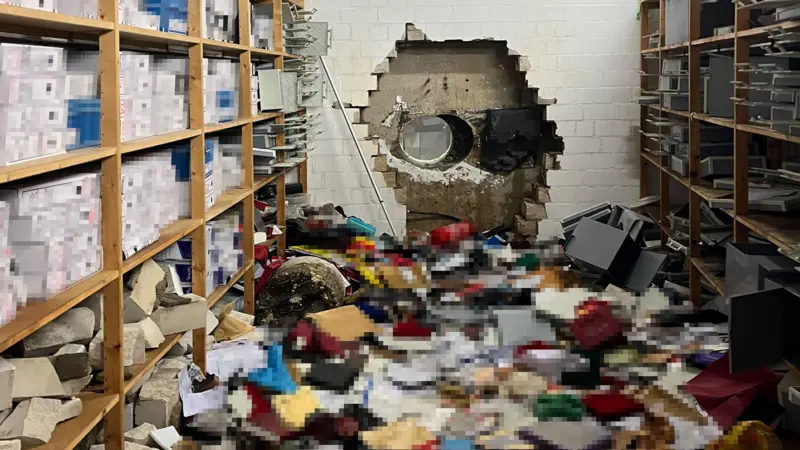
Ha sido descrito como el robo bancario más espectacular de Alemania en años.
Authorities in Germany are investigating a sophisticated bank robbery in Gelsenkirchen that went undetected for over a month, raising questions about security protocols and institutional trust. The incident, which took place during the quiet post-Christmas weekend of December 27, 2025, involved a meticulously planned operation to breach a bank vault.
A group of thieves used an industrial drill to bore through a wall, gaining access to over 3,000 safety deposit boxes. Millions of euros worth of valuables were stolen, including cash, gold, and jewelry. More than a month later, police have yet to make any arrests.
The scale of the theft has left customers reeling, with some reporting the loss of life savings and irreplaceable family heirlooms. The incident has sparked widespread anger, confusion, and a growing sense of eroded confidence in financial institutions.
Herbert Reul, the Minister of the Interior for the state of North Rhine-Westphalia, has questioned how the robbery could have gone unnoticed for so long and whether the incident involved inside knowledge. “Why did no one notice what was happening? Was this an inside job?” he asked.
Investigators believe the thieves gained entry to the Sparkasse savings bank on Nienhofstrasse through a multi-story parking garage. They reportedly manipulated an emergency exit door between the parking garage and the bank, disabling its locking mechanism to allow unobstructed access.
Once inside, the thieves bypassed multiple security systems and reached a file room adjacent to the vault. There, they used the drill to create a 40-centimeter wide hole in the wall leading to the safety deposit boxes.
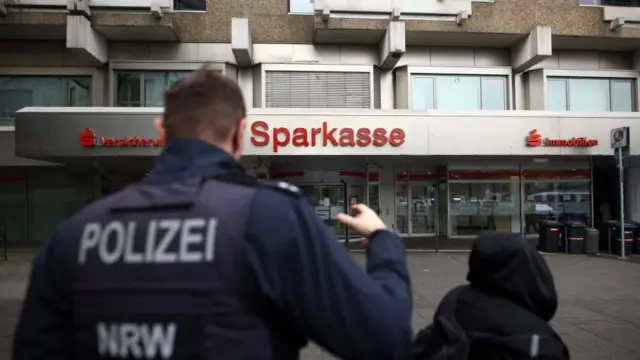
The robbery likely occurred between December 27 and December 29, authorities said, noting that the thieves were nearly discovered shortly before reaching the vault. At approximately 6:00 a.m. On December 27, firefighters in Gelsenkirchen and a private security firm received a fire alarm from the bank, which may have been triggered by the robbers.
Police and 20 firefighters arrived at the bank at 6:15 a.m., but found no evidence of fire or damage. The alarm originated in the vault area, according to Reul, but firefighters were unable to enter because a shutter was closed. They reported no smoke, smell of fire, or damage, and concluded it was a false alarm – which Reul noted was not unusual.
Reul explained to a parliamentary committee that police lacked the authority to search the bank at that time, as it was the responsibility of the fire department. A search warrant would have been required.
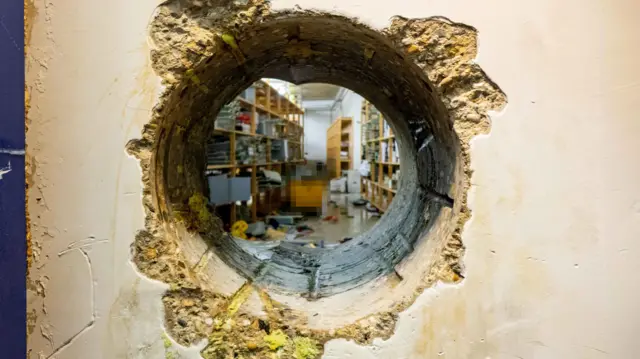
The thieves proceeded to force open nearly all 3,250 safety deposit boxes, making off with cash, gold, and jewelry. The bank’s computer systems display the first box was breached at 10:45 a.m. On December 27 and the last at 2:44 p.m. It remains unclear whether they were able to open the majority of the boxes within those four hours or if the technology stopped recording data.
Witnesses later told police they saw several men carrying large bags up the parking garage stairs on the night of December 28. Authorities have not determined the exact amount stolen, but German media estimates the haul could reach up to 100 million euros (approximately $120 million USD).

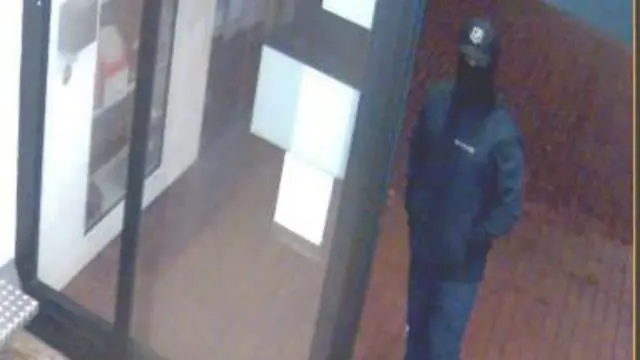
Police released photos and videos from the parking garage’s security cameras, showing men with covered faces and two vehicles: a black Audi RS 6 and a white Mercedes Citan, both with false license plates.
The robbery was not discovered until December 29, when another fire alarm was activated at 3:58 a.m. Firefighters returned to the bank and found a scene of chaos. Herbert Reul described the interior as “a garbage dump,” with over 500,000 items scattered across the floor – the contents of the emptied safety deposit boxes.
Police said many items were damaged after the thieves threw water and chemicals on them. They have since been meticulously reviewing the debris, searching for clues and attempting to determine ownership of each item.
As details of the robbery emerged, approximately 200 customers gathered outside the Sparkasse, demanding access to the bank. Police arrived with several patrol cars and secured the entrance.
Joachim Alfred Wagner, 63, said he had lost not only gold valued at tens of thousands of euros, but similarly jewelry that belonged to his father and grandfather. He had rented the safety deposit box after several burglaries at his apartment, believing his valuables would be safe there. “I cried with rage,” he said.
The bank stated that the contents of the safety deposit boxes were typically insured for up to 10,300 euros each. Wagner was among the first to file a lawsuit against the bank, seeking compensation for what his lawyer, Daniel Kuhlmann, described as a lack of security.
The incident highlights the vulnerabilities of even established financial institutions and raises concerns about the effectiveness of security measures. The investigation remains ongoing as authorities attempt to unravel the details of this audacious and meticulously planned crime.
