
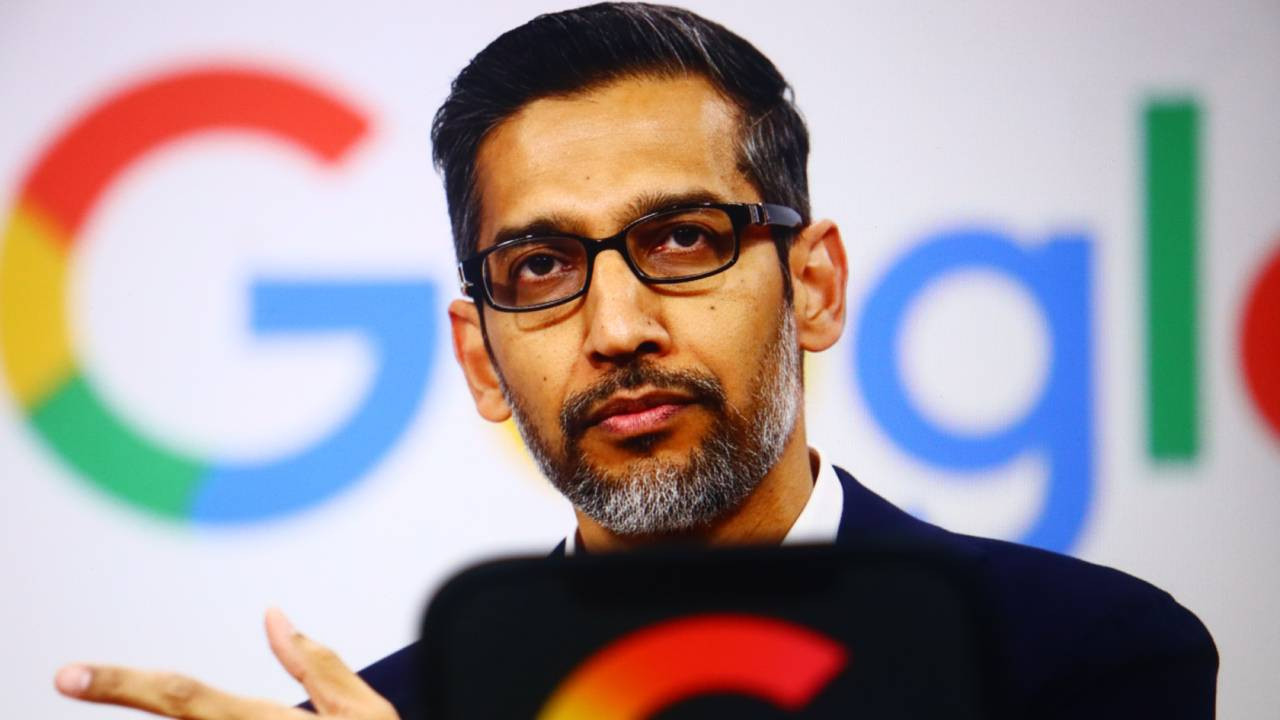
Google CEO Sundar Pichai recently addressed both the immense potential and emerging risks surrounding artificial intelligence, acknowledging a degree of market “irrationality” in the rapidly evolving sector. In a wide-ranging BBC interview, Pichai outlined Google’s strategy for navigating this landscape, including important investments in both infrastructure and research – notably a new £5 billion commitment to the united Kingdom – as investors and policymakers grapple with the long-term societal and economic impacts of AI [[2]]. The company is also confronting the substantial energy demands of AI advancement, an issue impacting its climate goals, and preparing for the anticipated shifts in the global workforce.
Google’s parent company, Alphabet, is navigating a period of rapid growth and potential instability in the artificial intelligence (AI) sector, according to CEO Sundar Pichai. In a recent interview with the BBC, Pichai acknowledged the significant opportunities presented by AI while also cautioning about inherent risks and what he described as “irrational” behavior in the market.
The surge in valuations for AI companies, particularly in Silicon Valley, coupled with substantial investment in the sector, has fueled concerns about a potential market bubble. While Pichai expressed confidence that Google is relatively insulated from such a bubble, he conceded that no company is entirely immune.
‘No company is immune to this danger, including Google’
Google Prepares for Energy and Workforce Shifts
Table of Contents
During an extensive interview at Google’s headquarters in California, Pichai addressed a range of topics including the increasing demand for energy, the pace of climate goals, the company’s investments in the United Kingdom, the accuracy of AI models, and the broader impact of AI on the workforce.
Pichai emphasized that AI represents one of the most significant technological advancements in human history, predicting it will drive substantial societal changes and require individuals to adapt to evolving job landscapes. The comments come as investors weigh the long-term economic implications of widespread AI adoption.
A Mix of Rationality and Irrationality in AI Investment
Pichai noted that investment cycles can be prone to excess, and the AI sector sometimes exhibits “overly optimistic” tendencies. Drawing a parallel to comments made by former Federal Reserve Chairman Alan Greenspan during the dot-com bubble of the 1990s, Pichai suggested that AI will likely experience a similar blend of rational and irrational investment patterns.
‘Looking back at the internet, there were excesses in investment, but no one questions how important the internet is. I expect the same thing for AI’
Google’s comprehensive “full stack” of technology – encompassing chips, YouTube data, AI models, and advanced scientific research – positions the company to better withstand potential risks associated with an AI bubble, Pichai stated.
Expanding AI Investments in the UK
Alphabet is increasing its AI investments in the United Kingdom, announcing in September a planned £5 billion investment over the next two years in infrastructure and research. Pichai highlighted that DeepMind’s London-based center will be at the forefront of “state-of-the-art” research activities.
These investments are intended to establish the UK as a leading AI power, ranking third globally behind the United States and China.
AI’s Energy Demands and Climate Objectives
Pichai acknowledged that AI accounted for 1.5% of global energy consumption last year, underscoring the importance of developing energy infrastructure and new resources. He also noted that Alphabet’s climate goals have faced delays due to the energy intensity of AI, but affirmed the company remains committed to achieving net-zero emissions by 2030.
The Future of Work in the Age of AI
Addressing concerns about job displacement, Pichai stated that AI will transform professions rather than eliminate them entirely.
‘Whether you’re a teacher, a doctor, or in another profession, these jobs will continue to exist, but those who succeed will be those who learn to effectively use AI tools’
Caution Against Blind Faith in AI
Pichai cautioned that AI models are “prone to making mistakes” and emphasized the importance of using AI in conjunction with other sources of information.
“That’s why people also use Google Search, and we have other products that are more focused on providing accurate information,” he said.
While acknowledging the benefits of AI tools for tasks like creative writing, Pichai stressed the need for users to understand the limitations of these tools and avoid blindly trusting their outputs.
“We are proud of the work we are putting in to provide as accurate information as possible, but even the most advanced AI technology available today is susceptible to errors,” Pichai concluded.
Source: Gazete Oksijen
