
As global travel rebounds, the strength of a nation’s passport – and the freedom it affords its citizens – remains a key indicator of international access and influence. The annual Henley Passport Index, a widely-respected ranking based on visa-free access to 227 destinations, has released its 2026 findings, revealing a shifting landscape of travel freedom amid forecasts of a record 5.2 billion air passengers this year. This year’s index highlights a surge in power for several nations, while also underscoring the significant travel limitations faced by citizens of others.
While some individuals enjoy nearly unrestricted global travel, others face significant limitations based on their nationality. The Henley Passport Index, a long-running analysis, has for two decades revealed how different countries rank in terms of travel freedom.
The index compares the accessibility of 227 destinations worldwide, factoring in visa-free and visa-on-arrival access for passport holders. With the International Air Transport Association (IATA) predicting over 5.2 billion air passengers globally this year, understanding passport strength is more crucial than ever.
“We expect 2026 to be a record-breaking year for travel,” said Willie Walsh, IATA’s Director General. “Many governments are focused on tightening border security, but they shouldn’t overlook the advancements in technology, such as digital identity and digital passports. Seamless travel and secure borders are achievable.”
(Zdroj: SITA/AP)
The latest ranking reveals that Asian nations dominate the top spots. Singapore once again holds the number one position, granting its citizens visa-free access to 192 destinations – a slight decrease from the 195 countries accessible last year. Japan, a long-time leader, has seen a more significant drop, falling from 193 to 188 accessible countries, but still shares second place with South Korea (which scored 192 last year).
Denmark, Luxembourg, Spain, Sweden, and Switzerland are tied for third place, each with a score of 186. Austria, Belgium, Finland, France, Germany, Greece, Ireland, Italy, the Netherlands, and Norway follow closely behind with a score of 185.
Slovakia has achieved a notable improvement, maintaining a score of 184, but rising from 11th place last year to 5th place in the current ranking, alongside Hungary, Portugal, Slovenia, and the United Arab Emirates.
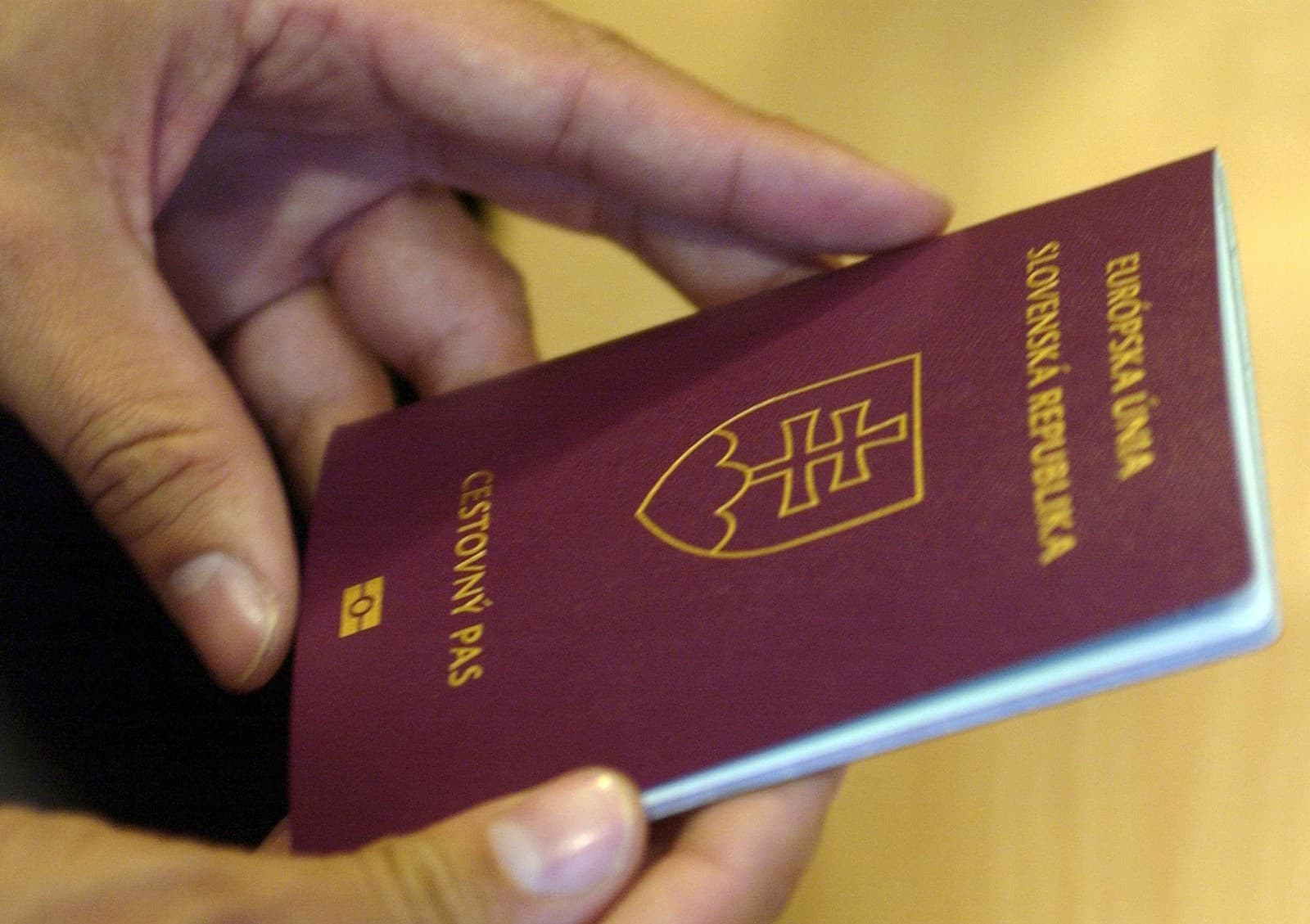
Cestovný pas (Zdroj: TASR – Štefan Puškáš)
The United Arab Emirates has experienced the most dramatic climb in the index’s history. In 2006, UAE passport holders had visa-free or visa-on-arrival access to 35 countries. That number now stands at 184, representing an unprecedented 57-place leap. This surge has propelled the UAE to fifth place, surpassing traditionally strong passports from New Zealand (6th place), the United Kingdom and Australia (7th place), Canada (8th place), and the United States (10th place). This shift highlights the UAE’s growing global influence and diplomatic efforts.
For comparison, neighboring countries fare less well in the ranking. Saudi Arabia is 54th, Oman 57th, and Iran ranks 92nd. Pakistan and Yemen are among the lowest-ranked, offering access to only 31 countries, while Iraq is slightly higher at 29. Syria’s passport is the second-weakest, providing access to 26 destinations, and Afghanistan’s passport remains the world’s least powerful, allowing travel to just 24 countries without prior visa arrangements.
