
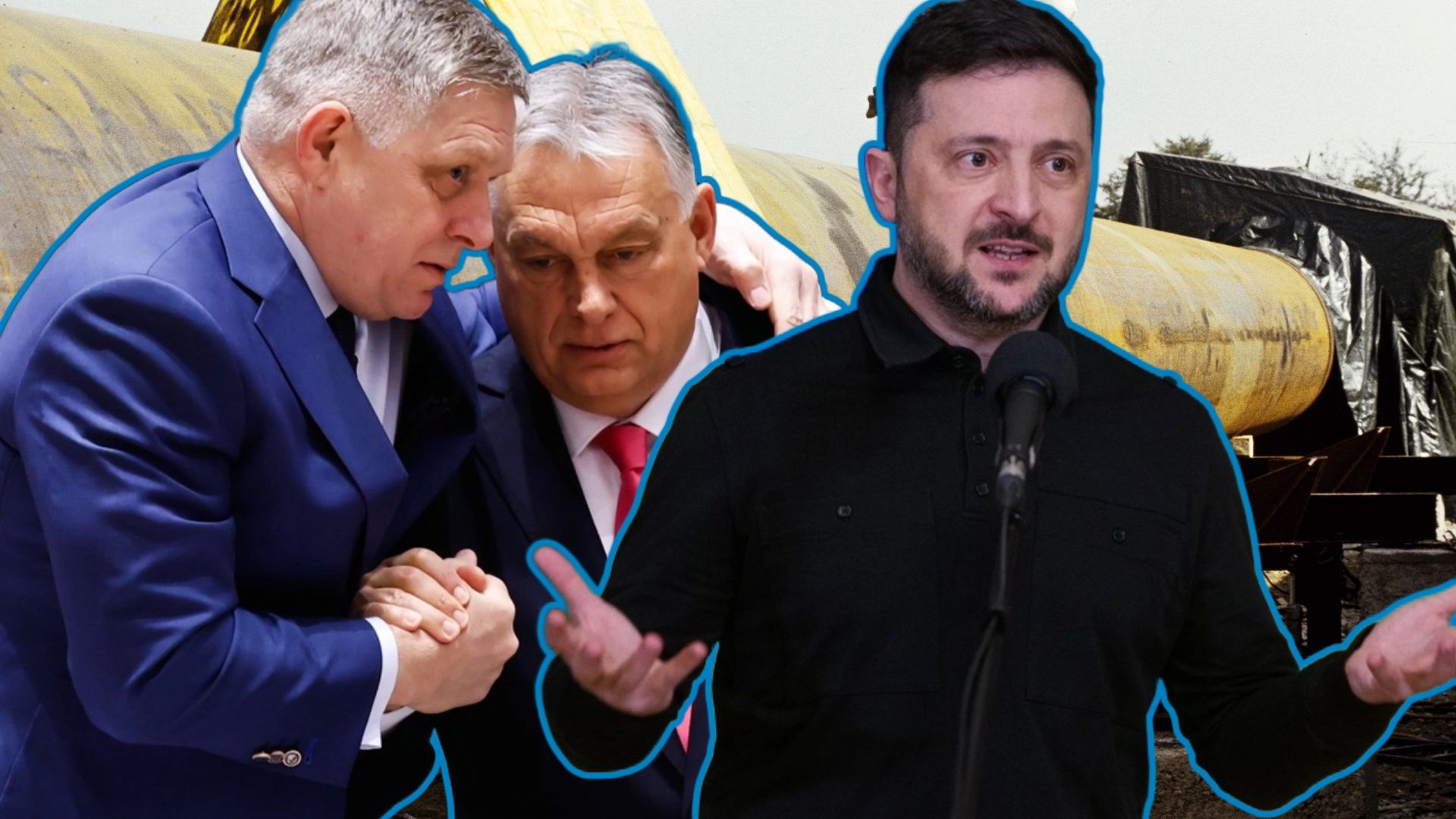
Deliveries of Russian oil to Hungary and Slovakia via the Druzhba pipeline have been suspended since January 27 due to damage caused by Russian attacks.
Ukrainian officials state that repairs to the pipeline are underway. While, Budapest and Bratislava accuse Kyiv of deliberately delaying the process. Slovakia’s Ministry of Economy announced on Wednesday that the resumption of oil deliveries to Slovakia via the Druzhba pipeline has been postponed until Thursday. Ukrainian authorities have not provided a reason for the delay.
Hungary and Slovakia maintain that the disruption of supplies through the Druzhba pipeline threatens their energy security, and that deliveries from Russia are necessary due to a perceived lack of alternatives. This situation highlights the ongoing complexities of European energy dependence and geopolitical tensions in the region.
French Millionaire Warns Poles. “I Don’t Recommend”
“Friendship” Divides Europe
In response, the authorities in Hungary and Slovakia have suspended deliveries of diesel fuel to Ukraine, and threatened to halt the transmission of electricity (with Slovakia implementing this threat on Tuesday), as well as – in the case of Hungary – gas. Slovak Prime Minister Robert Fico has previously threatened Ukraine with cutting off energy supplies. He foreshadowed such steps as early as December of last year.
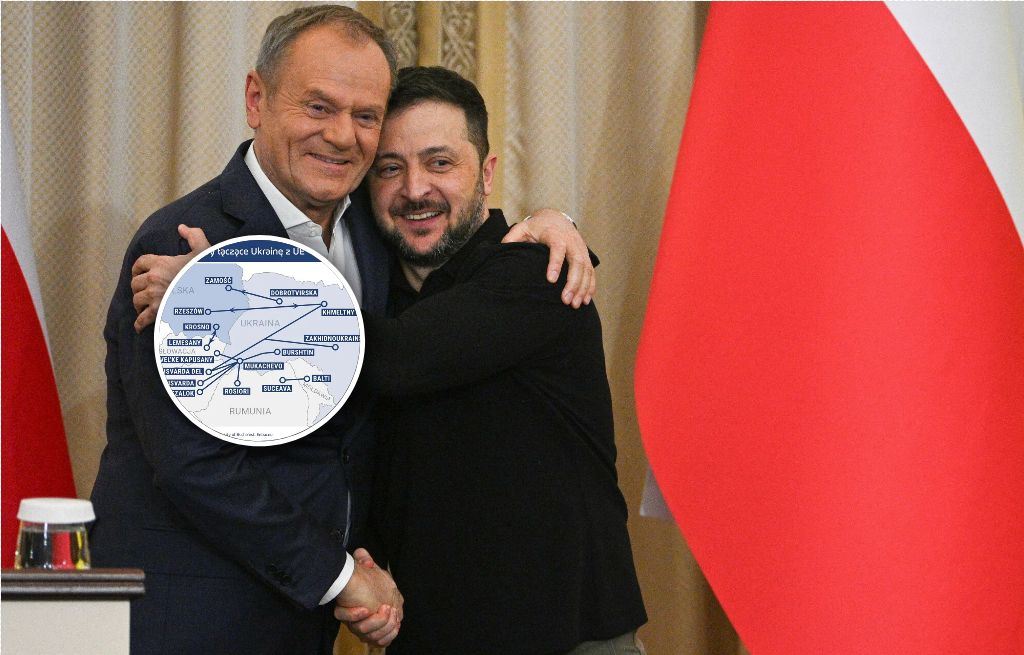

To recall, the capacity for transmitting energy from European Union countries to Ukraine and Moldova is determined by the so-called synchronous profile and amounts to 2100 MW (megawatts). According to EU agreements overseen by the Agency for the Cooperation of Energy Regulators (ACER), four countries are jointly able to provide this capacity. In addition to Slovakia, these are Hungary, Romania, and Poland (accounting for approximately 15 percent, or around 315 MW).
However, the escalation didn’t end there, as the Hungarian government also issued a demand. The Hungarian Minister of Foreign Affairs stated on Monday that, unless Kyiv resumes the transit of oil, Budapest will block the 20th package of EU sanctions and its loan to Ukraine.
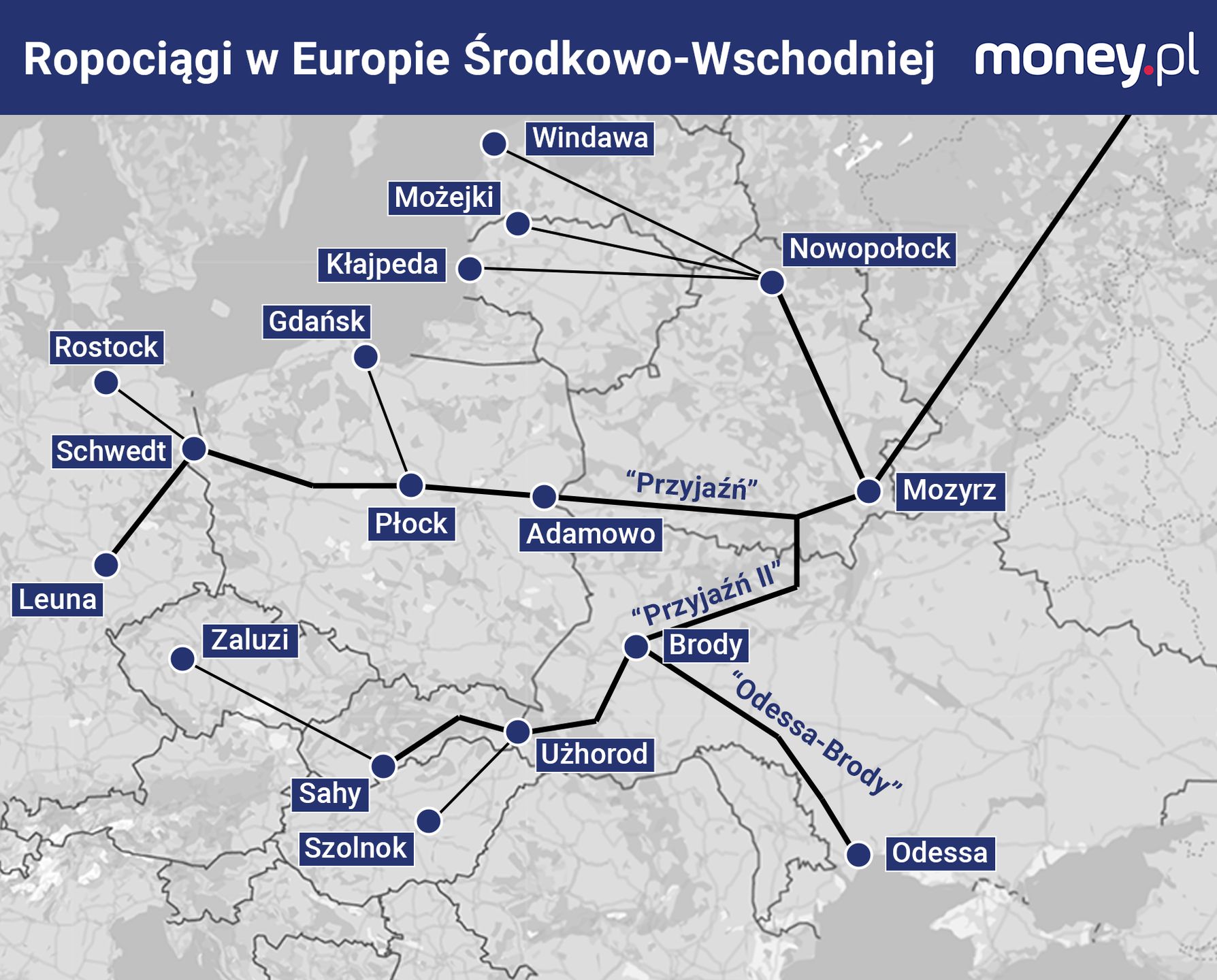
Ukraine assures that repairs are ongoing, but that the scale of the damage is slowing the process. According to the Ukrainian Pravda news portal, Kyiv has proposed using alternative routes, including other elements of its transmission infrastructure, such as the Odessa-Brody pipeline, which connects the Black Sea to the Druzhba pipeline, until the latter is repaired.
Hungary and Slovakia Cut Off? “That’s Not True”
“It is not true that Hungary and Slovakia have no other options. The capacity of the modernized Adria pipeline from Croatia, with the terminal on the island of Krk, can cover the full oil supply needs of Hungary and Slovakia,” Tymon Pastucha, an analyst at the Polish Institute of International Affairs (PISM), told money.pl.
This was confirmed on Wednesday, with the European Commission announcing that Croatia had begun the transit of non-Russian oil to Hungary and Slovakia via the Adria pipeline. “Croatia can ensure long-term and reliable supplies to Hungary and Slovakia via the Adria pipeline,” Croatian Prime Minister Plenković stated during a visit to Kyiv on Tuesday, urging Budapest and Bratislava to inform their citizens of this fact.
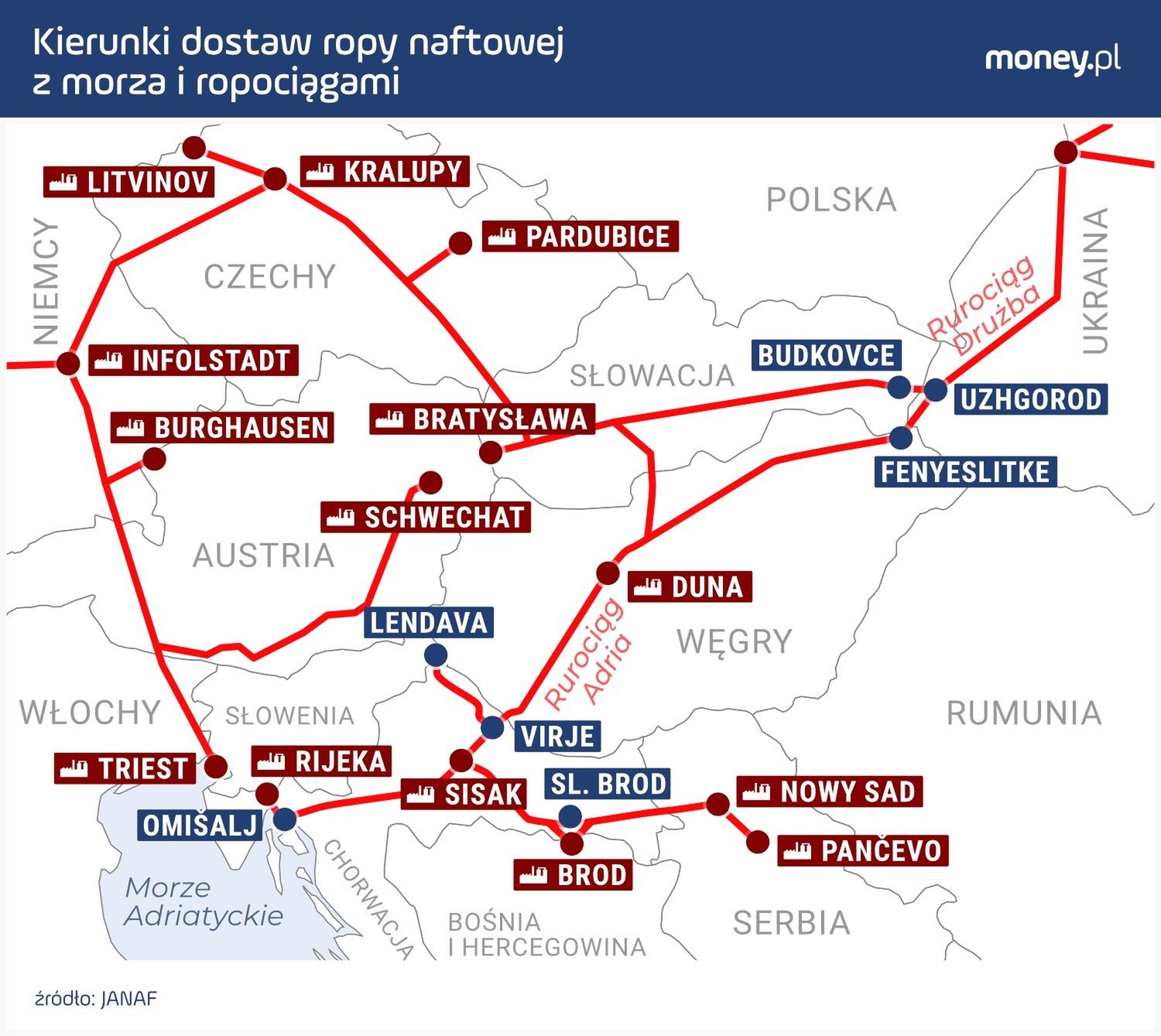
As money.pl previously reported, the possibility of supplies to Hungary and Slovakia from other sources has been widely discussed. Purchasing oil from Russia was always a political choice. “The technical capabilities have existed from the beginning. Hungary can at any time utilize the southern corridor via the Adria pipeline through Croatia,” Dr. Szymon Kardaś, an analyst at the European Council on Foreign Relations, explained last fall.
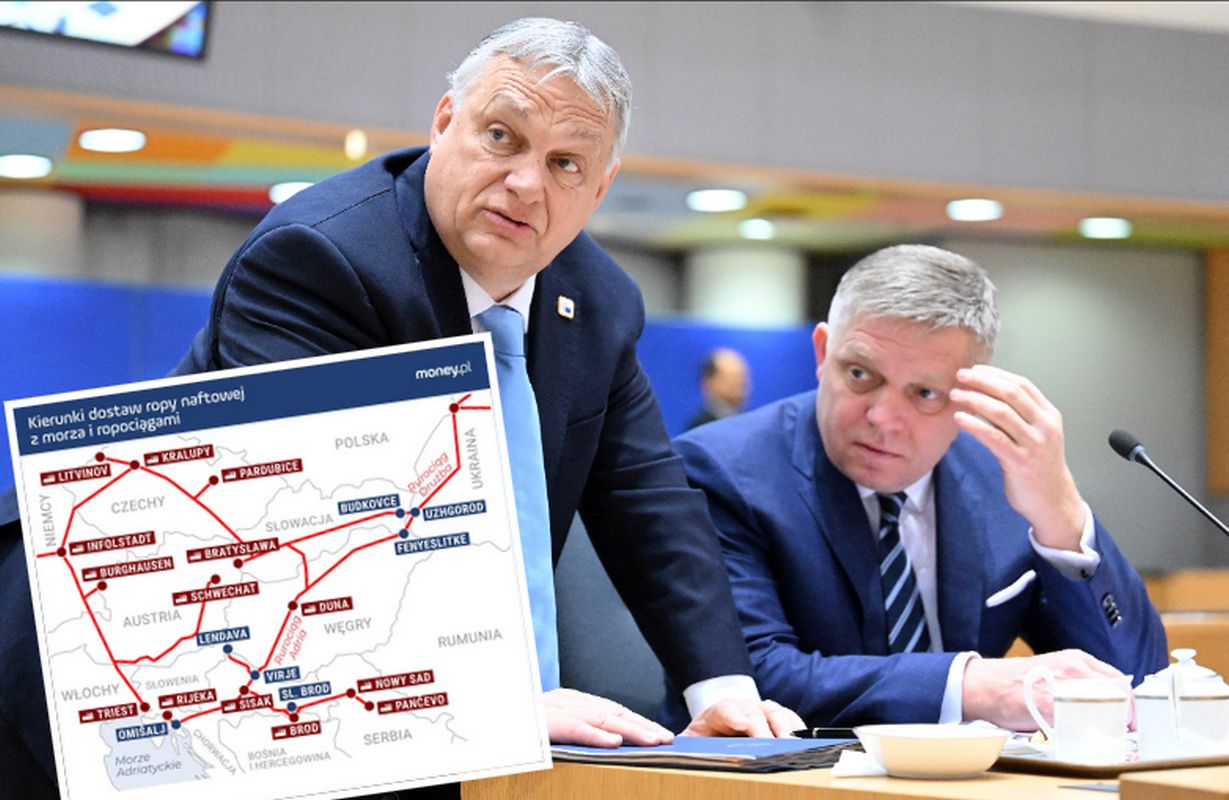
As Pastucha notes, the challenge is that the Slovak and Hungarian refineries have not been fully adapted to lighter grades of oil. “MOL did not make the necessary investments in recent years, aware of the risks. This does not mean they cannot process it, but it will affect margins, among other things. Processing lighter oil in refineries geared towards Russian oil will be more expensive and less efficient, but will not affect the availability of products.”
The Hungarian government has requested permission from Croatia to transport Russian oil via the JANAF pipeline. “The Hungarians wanted to take advantage of the exemption from EU sanctions on maritime deliveries of Russian oil; MOL had already contracted them. However, Croatia firmly opposes this, as it would expose itself to secondary US sanctions and is inconsistent with its policy of supporting Ukraine,” Pastucha explains.
As money.pl reported, as early as March 2023, the Hungarian government touted deliveries of oil from another source – from Azeri fields acquired by MOL. Azeri Light oil extracted from the Azeri-Chirag-Gunashli field, in which MOL Group holds a 9.57 percent stake, travels to Hungary and Slovakia via the port of Ceyhan in Turkey to Omisalj in Croatia, and then through the aforementioned Adria pipeline, 90,000 tons of oil are transported to the only refinery in Hungary – in Duna near Budapest – and to Bratislava.
Why are both countries so insistent on Russian oil? “They want to restore deliveries of Russian oil via the Druzhba pipeline because they buy the raw material at favorable prices. It is also no secret that this has a political basis. The dependence of Slovakia, and especially Hungary, on Russia, as well as joint energy projects, is the reason why Orbán and Fico are pushing for the restoration of supplies, even going so far as to blackmail,” explains Tymon Pastucha.
Ukraine Deliberately Delays? Has Other Priorities
As our analyst points out, the deliveries via the Druzhba pipeline have been suspended for more than three weeks, which is a long period. “Previous repairs on the Russian side usually took about a week, up to 10 days. Of course, it is difficult to verify the extent of the damage, and Ukraine is also facing a shortage of repair crews and electricity, which is essential for the operation of the pumping stations in Brody,” Pastucha recalls.
However, the prolonged repairs may benefit Ukraine. “Firstly, the station in Tatarstan was destroyed by Russia, which is carrying out a gradual shelling of Ukrainian infrastructure. This time, the effects of the Russian attacks affected not only Ukraine, but also Hungary, and Slovakia. Russia should be held legally, financially and politically responsible for this,” Pastucha assesses. “Secondly, suspending deliveries results in a real decline in foreign exchange earnings for Russia. Thirdly, Russia is using Hungary and Slovakia’s dependence on energy imports to block sanctions or decisions unfavorable to the Kremlin in the EU.”
Ukraine, grappling with widespread damage to its energy sector and the need to carry out critical repairs necessary to function in wartime conditions, may not prioritize repairing the pipeline. “In the face of serious electricity shortages for the population, there is growing opposition in Ukrainian society to transferring energy to the needs of transit of Russian oil,” our analyst notes.
Oil Will Flow. Orbán Exposed
The conflict between Hungary and Ukraine with the EU has been ongoing for some time, and the prolonged lack of Russian oil deliveries has revealed the weakness of Orbán’s energy policy, which is dependent on a single supplier.
“MOL and Slovnaft are already drawing on reserves, and may soon be forced to order oil from other sources through spot purchases,” Pastucha notes. “This proves how fragile energy security is when based on a single pipeline and a single supplier, exposing the weakness of Orbán’s policy and just before the elections. It should be recalled that since 2022, the import of oil from Russia to Hungary and Slovakia has not decreased, but increased,” the PISM analyst emphasizes.
As the analyst assesses, oil will likely flow through the Druzhba pipeline again, but this will be a temporary delivery to calm the situation and withdraw Hungary’s veto regarding the next package of sanctions. This route, as it was, will be a target for attacks. The pumping station in Tatarstan, and therefore the source of this pipeline, has already been attacked by Ukrainians.
“An compelling possibility would be for Ukraine to invoke so-called force majeure, the grounds for which have arisen as a result of the attacks. This would allow for the temporary suspension of oil deliveries to Hungary and force Budapest to accelerate diversification of imports even before the expiration of the current transit contract, which is valid until the end of 2029. Such a risky step would, however, require political decisions in Kyiv and support from the European Union,” Pastucha assesses.
Przemysław Ciszak, money.pl journalist
