
A newly observed interstellar comet,designated 3I/ATLAS,is exhibiting unexpected activity as it journeys through our solar system. The comet, only the third of its kind detected to date, is displaying evidence of potential cryovolcanic activity – icy eruptions – prompting scientists to re-examine theories about the formation of planetary systems and the potential delivery of materials essential for life. Preliminary findings suggest the comet’s composition shares surprising similarities with objects found within our own solar system, offering a unique possibility to study building blocks from another star.
An interstellar comet, originating from outside our solar system, is puzzling astronomers with unexpected activity. Designated 3I/ATLAS, the comet exhibits icy plumes that researchers suggest could be evidence of active cryovolcanoes, offering clues about the formation of worlds in distant regions of the galaxy.
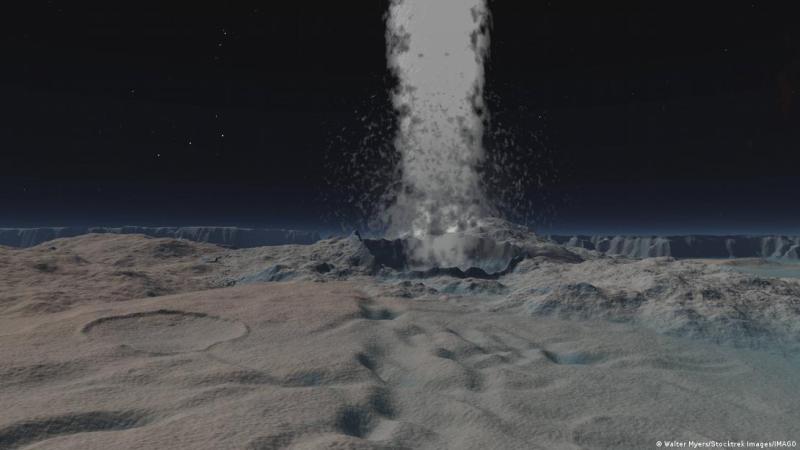
3I/ATLAS, only the third interstellar object scientists have detected to date, is proving to be far more dynamic than anticipated. A preliminary study published on the arXiv server proposes that its surface may be covered in cryovolcanoes, actively erupting and adding to the mystery surrounding this interstellar traveler. This discovery is significant as it provides a rare opportunity to study materials from beyond our solar system and potentially understand the conditions in which other planetary systems form.
The study, which is currently awaiting peer review, indicates that despite forming in a remote planetary system, the comet may share characteristics with trans-Neptunian objects found in our own solar system. “We were all surprised,” said Josep Trigo-Rodríguez, lead researcher at the Institute of Space Sciences (CSIC/IEEC) in Spain, to Live Science.
“Given that this comet formed in a remote planetary system, it’s surprising that the mixture of materials forming the body’s surface resembles those of trans-Neptunian objects,” he added.
Volcanic Activity on the Interstellar Visitor
Table of Contents
Using the Joan Oró telescope at the Montsec Observatory, the CSIC/IEEC team captured the highest-resolution images yet of the gas and particle jets erupting from the comet during its closest approach to the Sun on October 29. The detailed imagery is allowing scientists to analyze the comet’s composition and behavior with unprecedented clarity.
At approximately 378 million kilometers from the Sun (2.53 astronomical units), the comet exhibited a noticeable increase in brightness, accompanied by a more active phase of sublimation. Rather than a single burst, the activity appeared to unfold gradually and consistently, a behavior the team interprets as potentially indicative of ongoing cryovolcanic activity.
This activity also produced visible jets, forming a broad tail and a counter-tail oriented towards the Sun, as previously reported by DW.
Metallic Composition of Comet 3I/ATLAS
To understand the comet’s composition, the team performed spectroscopic analysis – observing how light interacts with its surface – and compared the results with pristine meteorites recovered by NASA in Antarctica since 1976. These samples, part of the ANSMET program, include primitive carbonaceous chondrites, ancient rocks rich in iron, nickel, and other metals.
The similarities between the two materials were striking. The spectrum of 3I/ATLAS closely resembles that of these meteorites, suggesting an unusually metal-rich interior. One Antarctic sample even contained a fragment researchers suspect may have originated from a trans-Neptunian object, though this conclusion remains unconfirmed.
This metallic composition offers a plausible explanation for the intense activity observed. According to the study’s authors, when sunlight heats the surface and solid carbon dioxide begins to sublimate, it overcomes the threshold allowing an oxidizing liquid to flow into the comet’s interior, where it reacts with fine grains of metallic iron, nickel, and sulfides. This chemical process would release energy and additional gases, contributing to the sustained cryovolcanism described in the study.
Implications for the Origin of Life
The findings also suggest a broader connection to the history of materials that may have favored the origin of life on Earth. Carbonaceous chondrites – the same ones studied in ancient, pristine meteorites – delivered essential volatile compounds to our early atmosphere, according to Live Science.
If 3I/ATLAS exhibits spectral affinities with this type of meteorite, it doesn’t imply a direct role in the origin of life, but it does suggest that fundamental materials can form in a variety of planetary environments, even far from our solar system.
“Interstellar visitors like 3I/ATLAS continue to challenge and refine our understanding of planetary system formation,” “Each newly discovered object reveals unexpected properties that test and expand current models.”
Trigo-Rodríguez emphasized, as he told Live Science, that this interstellar visitor represents a “space capsule containing valuable information about the chemistry taking place elsewhere in our galaxy.”
Trajectory and Future of the Interstellar Object
In terms of size, uncertainty remains. Estimates from the Hubble Space Telescope suggest the comet’s nucleus could be between 440 meters and 5.6 kilometers wide, although the scientific team estimates it to be around 1 kilometer, with a mass of over 600 million tons.
What is certain is that this is not a local neighbor. Its entry speed of approximately 221,000 kilometers per hour and its hyperbolic trajectory rule out an origin within our solar system.
Thus, according to the scientific consensus, it is a visitor from another star system, likely formed billions of years ago. Live Science notes that after traveling through interstellar space for an extremely long time, its surface may be heavily irradiated, making it even more difficult to accurately reconstruct its history and place of origin.
The comet will reach its closest point to Earth later this month and will pass near Jupiter in March 2026 before leaving our solar system forever. Researchers are urging that projects like become a priority, with the goal of directly sampling future interstellar visitors.
