
Apple’s iPhone 17 is expected to launch with a new Ceramic Shield 2 display boasting improved scratch resistance and anti-reflective properties. However, new research indicates a potential trade-off for users who opt for traditional screen protectors.A study by Astropad reveals that common screen protectors may significantly diminish the anti-reflective benefits of the new display technology, possibly negating a key feature of the upcoming iPhone models.
Apple’s upcoming iPhone 17 lineup is poised to introduce a new Ceramic Shield 2 display with enhanced anti-reflective properties, but a recent study suggests that standard screen protectors could negate these benefits.
iPhone 17’s Advanced Display May Render Common Screen Protectors “Useless”
The iPhone 17, along with the iPhone 17 Pro, iPhone 17 Pro Max, and iPhone Air models, will feature Ceramic Shield 2, Apple’s latest advancement in display technology. The company claims the new material offers up to three times improved scratch resistance and incorporates anti-reflective properties designed to minimize glare.
This innovation aims to provide users with a more durable and visually comfortable experience, potentially reducing the need for additional screen protection. However, research indicates that applying conventional screen protectors could undermine the anti-reflective capabilities of Ceramic Shield 2.
A recent study by Astropad details the impact of screen protectors on the iPhone 17’s display, revealing a significant increase in reflectivity when standard protectors are applied. This finding is particularly relevant as consumers often prioritize screen protection despite the increasing durability of smartphone displays.
The testing revealed the following reflectivity rates:
- iPhone 16 Pro: 3.8%
- iPhone 17: 2.1%
- iPhone 17 Pro, Pro Max, Air: 2.0%
- iPhone 17 with screen protector: 4.6%
These results demonstrate that an iPhone 17 without a screen protector exhibits nearly double the anti-reflective performance of the iPhone 16 Pro. The improved display technology is designed to enhance visibility in bright conditions, a feature that is diminished by the addition of a standard screen protector.
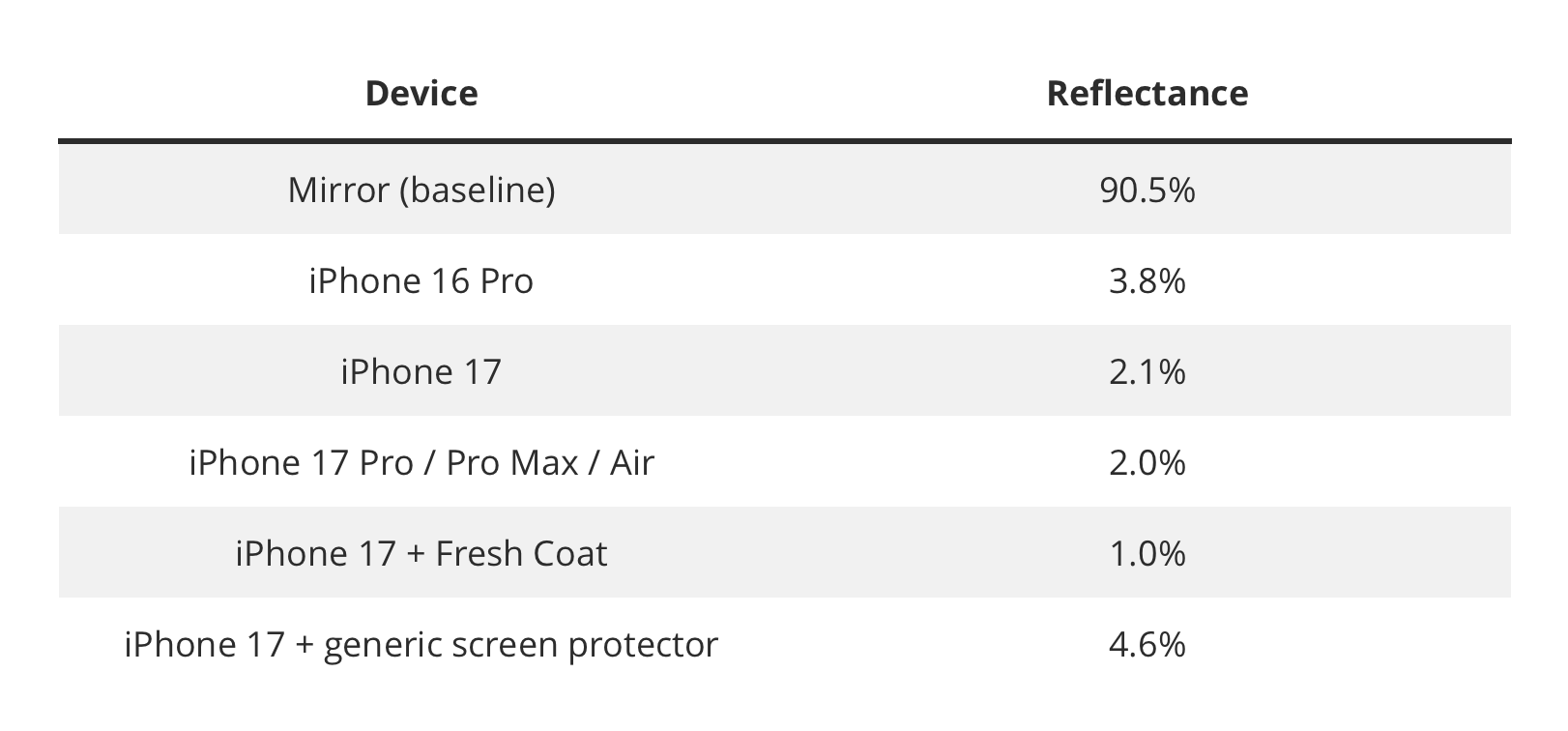
How Screen Protectors Impact Anti-Reflectivity
Giovanni Donelli of Astropad explained, “In the iPhone 17, the anti-reflective coating is directly on the screen. When a screen protector is applied, it adheres via a thin layer of adhesive. The AR coating works best when exposed to air directly. When covered with adhesive, the anti-reflective performance is lost, even though the coating is still there, it can’t function as intended.”
“In our testing, screen protectors without their own anti-reflective properties increased the screen’s reflectivity to levels comparable to having no anti-reflective coating at all. The AR coating simply can’t function effectively when it’s not directly exposed to air.”
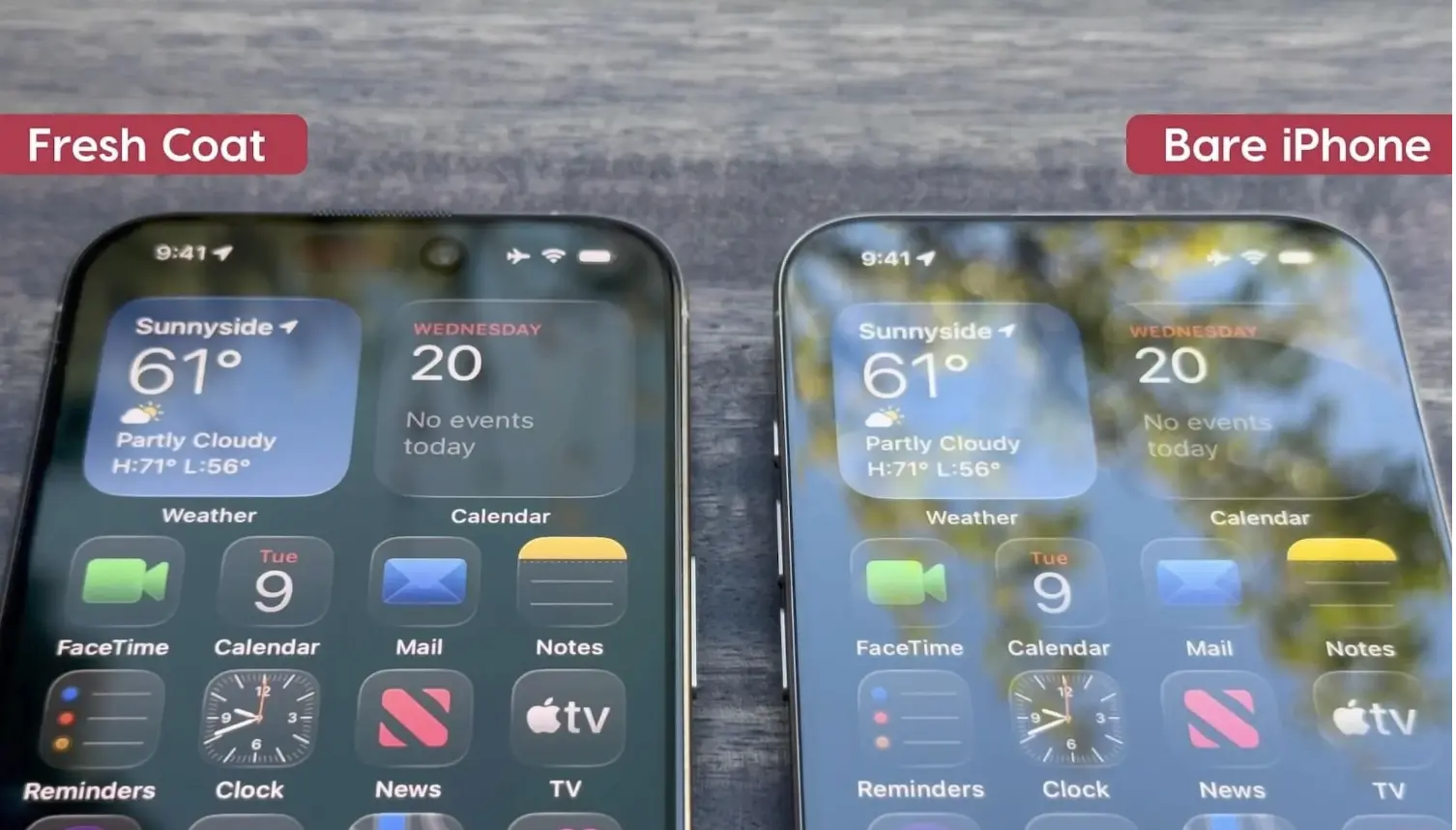
Astropad’s research was partially motivated by the promotion of its own Fresh Coat AR film, suggesting that users seeking both protection and anti-reflective benefits should opt for a screen protector specifically designed with AR technology. This highlights a growing market for specialized screen protection solutions that complement advanced display features.
Source: 9to5mac
FB.AppEvents.logPageView();
};
(function(d, s, id){ var js, fjs = d.getElementsByTagName(s)[0]; if (d.getElementById(id)) {return;} js = d.createElement(s); js.id = id; js.src = "https://connect.facebook.net/en_US/sdk.js"; fjs.parentNode.insertBefore(js, fjs); }(document, 'script', 'facebook-jssdk'));
