
Japan is making a bold push to secure its supply of critical rare earth minerals, announcing the prosperous extraction of valuable sediment from the Pacific Ocean floor at a depth of 6,000 meters [[1]]. This groundbreaking, first-of-its-kind expedition, utilizing the research vessel *Chikyu*, comes as geopolitical tensions rise and China tightens export controls on these essential materials [[3]]. The move reflects a broader strategy by Tokyo, which has increasingly focused on diversifying its sources of rare earths and lessening its reliance on Beijing, currently the dominant global supplier [[1]].
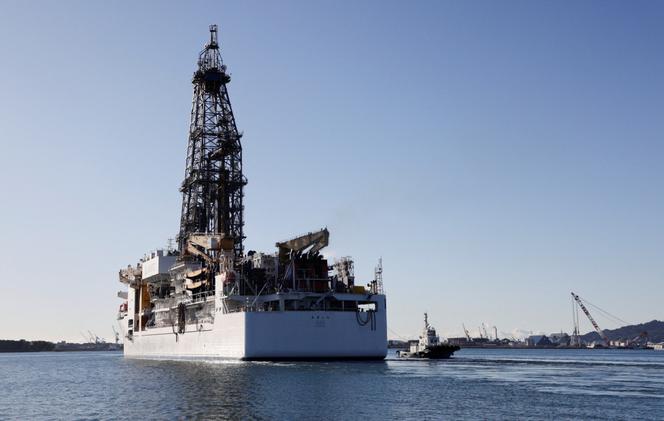
Japan announced on Monday, February 2nd, that sediment containing rare earth elements was successfully extracted from a depth of 6,000 meters during a recent exploratory mission. The exact quantity of rare earths within the sample is currently undergoing analysis, according to Kei Sato, a government spokesperson. He described the discovery as a “significant achievement” for both economic security and marine development.
This marks the first global attempt to commercially extract rare earths from such depths, according to officials in Tokyo. The sample was collected by the Japanese research vessel Chikyu, which departed in mid-January for the remote Japanese island of Minami Torishima in the Pacific Ocean. The waters surrounding the island are believed to hold substantial deposits of these valuable minerals.
The announcement comes amid escalating tensions with China, the world’s leading supplier of rare earths, following comments in November by Japanese Prime Minister Sanae Takaichi suggesting a potential military response to an attack on Taiwan, an island claimed by Beijing. This development underscores the growing geopolitical importance of securing access to critical minerals.
In response, China has restricted exports of “dual-use” products to Japan, raising concerns about potential disruptions to rare earth supplies. Several rare earth elements are included on China’s list of controlled goods, fueling anxieties about a possible cutoff.
Challenging and Costly Extraction
Rare earth elements – a group of 17 metallic elements that, despite their name, aren’t particularly scarce, but are difficult and expensive to extract – are vital components in a wide range of industries, including automotive, renewable energy, electronics, and defense. They are essential for manufacturing high-strength magnets, catalysts, and electronic components.
Estimates suggest the area around Minami Torishima, located within Japan’s exclusive economic zone, contains over 16 million tons of rare earth elements. According to the Nikkei economic newspaper, this would make it the third-largest deposit globally. These rich deposits are estimated to contain the equivalent of 730 years of current global dysprosium consumption – a key component in high-performance magnets used in smartphones and electric vehicles – and 780 years of yttrium consumption, used in lasers.
Beijing has long leveraged its dominance in rare earths as a geopolitical tool, including during its trade war with the Trump administration. The International Energy Agency (IEA) reports that China accounts for nearly two-thirds of the world’s rare earth mining production and 92% of refined output.
