
European farmers are mounting a sustained challenge to European Union agricultural policy, escalating tensions over import regulations and subsidy allocations. Recent protests in Brussels, marked by increasingly assertive tactics, follow ongoing discussions – like those between Latvian officials and the EU Commission regarding the 2028-2034 planning period – that highlight deep divisions within the 27-member bloc. The core of the dispute centers on a proposed trade deal with Mercosur and the potential impact of cheaper imports on European agricultural sectors,raising questions about the future of the EU’s commitment to its farming communities and food security.
Latvian Agriculture Minister Armands Krauze informed officials at a conference in Jelgava on December 17 about the ongoing discussions between Latvia and the European Commission regarding the EU’s planning period for 2028-2034.
The event in Jelgava took place just before larger demonstrations in Brussels, the capital of the European Union. Those protests involved thousands of farmers utilizing agricultural machinery in a striking visual display against the backdrop of the city’s high-rise buildings. While protests are common in Brussels, the December 18 demonstration escalated with the burning of tires, resembling scenes more often associated with cities in Africa or the Caribbean.
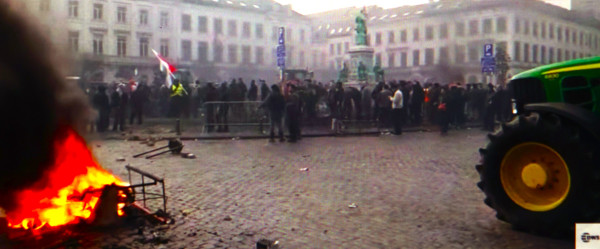
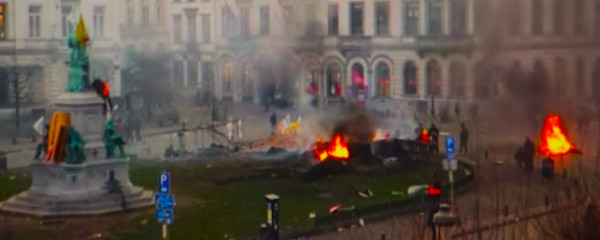
European Farmers Face Competition from Cheaper Argentinian Steaks
Table of Contents
It appears that certain boundaries traditionally limiting farmer protests, such as the dumping of manure in public spaces, were crossed on December 18. There is a growing belief that farmers were leveraged in a dispute between EU bureaucracy and the governments of established EU member states, potentially receiving unofficial support that allowed for a more assertive demonstration. The core of the conflict centers on the European Commission’s desire to lower inflation by easing food import regulations, a move several EU governments fear will threaten their agricultural sectors. This could lead to instability for national governments, and ultimately impact the European Central Bank’s mandate to maintain price stability within the Eurozone.
Specifically, the disagreement revolves around a proposed free trade agreement between the EU and Mercosur – a trade bloc comprised of Brazil, Argentina, Paraguay, and Uruguay.
On December 20, reports from Brussels indicated that the protests had indeed disrupted the planned signing of the agreement in Brazil. The signing has been officially postponed to next year, providing additional time for negotiations regarding resources to support European farmers. The situation highlights the increasing pressure on the EU to balance economic goals with the concerns of its agricultural communities.
EU Funding May Shift to Consumer Costs
EU member states, and the EU itself, appear to be encouraging protests as a means of drawing attention to agricultural issues. Latvia’s conference revealed that approximately 45,000 small and medium-sized farms derive 80-95% of their income from EU support payments. Meanwhile, 5,200 larger farms in Latvia have increased their revenue from product sales to 35-40%, though this still represents a smaller portion of their overall income. This suggests a reliance on EU subsidies to maintain the viability of many European farms.
Essentially, the EU is asking its citizens to pay for the European portion of their food supply. Europeans are already covering the costs of processing, sorting, storing, transporting, and serving food, with the price of meat and potatoes often marked up significantly from what the farmer receives from both the EU and buyers.
The EU’s financial support for farmers is funded by contributions from European citizens through national budgets. By guaranteeing food security, a responsibility has been placed on urban populations to pay for food twice – through taxes and with each purchase. However, the European Commission may be unable or unwilling to maintain the same level of funding for farmers as in the past. Consequently, farmers may need to seek higher prices from buyers, ultimately passing the cost on to consumers. This raises concerns that a 24% reduction in EU funding could translate to a 24% increase in food prices. This underscores the European Commission’s efforts to curb food price increases through imports, but also the potential consequences feared by EU member states.
The European Union: A System of Inequality
Latvia began 2025 by acknowledging a report from the Ministry of Agriculture recommending that the country urge the EU Agriculture and Fisheries Council to re-evaluate the potential risks of the EU-Mercosur free trade agreement to EU farmers at its January 27 meeting. However, Latvia later aligned with the European Commission. On November 10, Latvian Foreign Minister Baiba Braže publicly expressed enthusiasm that the agreement would promote European and Latvian exports, create jobs in Latvia, and more.
It remains to be seen how Braže’s promises will materialize in Latvia, where the competitiveness of agricultural products is hampered by both the “Green Deal” and the lowest EU support payments for agriculture:
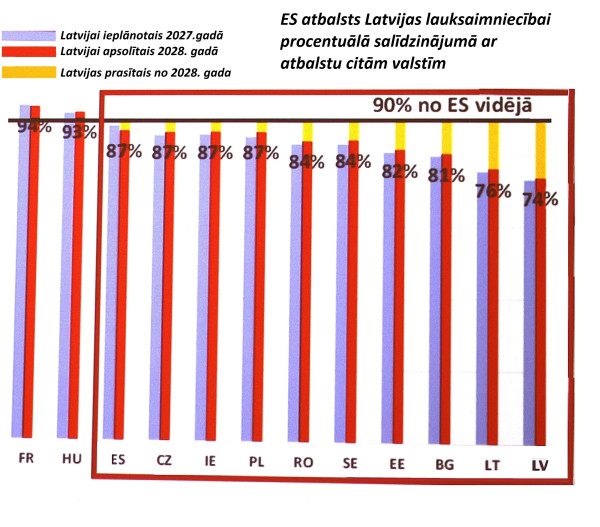
The system currently favors some nations over others, with the highest-receiving country receiving 177% of the average support and the lowest receiving 74%. Recognizing that production costs are higher in Western Europe, Latvia is not requesting equalization of support, but rather an increase to 90% of the EU average (not the highest!). These disparities are so significant that it’s difficult to characterize the current situation as genuine competition within the EU. The influx of cheaper products could further jeopardize the viability of Latvian agriculture.
According to the Ministry of Agriculture, an additional €1.3 billion is needed to sustain agriculture, more than the European Commission is currently offering:
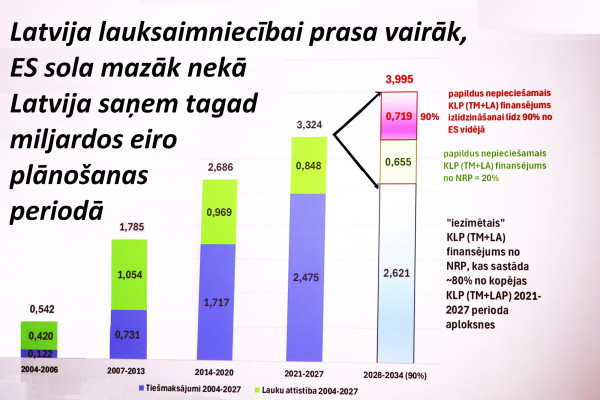
While the request, when divided over seven years, appears modest, the European Commission is likely to engage in lengthy and difficult negotiations to avoid encouraging other countries to demand similar increases.
Promises May Exceed Reality
Both the funding promised by the European Commission and the amount requested by Latvia have diminished purchasing power compared to 2020, when the current EU multiannual budget was established. The decline in the value of the Euro further erodes the real value of these funds. Taking this into account, the reduction in EU support is closer to 124% than the stated 24%.
It’s also important to note that promises and requests extend beyond the framework of the EU’s 2021-2027 planning period. The European Commission is also curbing spending increases in existing budget lines to free up funds for new priorities, such as technological advancement and military protection. In some cases, this could mean that Latvia may continue to receive funding for biodiversity conservation or innovative agricultural processing methods, rather than traditional agricultural support. In short, the allocation of funds for the 2028-2034 planning period remains uncertain, with little cause for optimism.
