
As 2026 approaches, investors are facing a shifting landscape marked by geopolitical uncertainty and economic transition. New analysis suggests that while equities have historically provided the strongest long-term returns – averaging around 10% as 1928 – maintaining discipline and navigating inevitable market volatility will be critical.This report examines the outlook for various asset classes, including gold, bonds, real estate, and cash, as investors reassess traditional strategies in light of evolving global conditions.
What does “making money in the long term” actually mean? Data spanning from 1928 to 2025 offers a starkly clear answer, and it’s precisely this clarity that often creates internal resistance among investors. For nearly a century, history has demonstrated that capital invested in equities grows at an average annual rate of around 10%, while all other asset classes significantly lag behind.
This isn’t a matter of luck, specific policy, or a temporary economic cycle, but rather a fundamental characteristic of capitalism. Equities represent ownership in a productive system that creates value, adapts, increases efficiency, and ultimately survives wars, inflation, technological disruptions, and political upheaval.
However, this long-term return doesn’t translate to a smooth, predictable path. It requires enduring uncertainty, navigating periods of steep declines, and making decisions that can feel psychologically untenable. This is why these figures are often “uncomfortable”—they demand discipline, not comfort.
Looking ahead to 2026, the investment landscape is shifting. The year unfolds against a backdrop of geopolitical fragmentation, pressure on institutions, a potential interest rate easing cycle, and accelerating technological transformation. This shifts the question from “which asset is best” to what type of risk is being rewarded in this environment. The current environment is forcing investors to reassess traditional strategies.

Equities as a Long-Term Driver, But Not a Guaranteed Win
The historical returns of equities are often misinterpreted as a guarantee. In reality, they are the result of a constant process where some companies consistently outperform and replace others. While the overall market grows, it’s a dynamic environment characterized by shifting leadership, failures, and transformations.
As 2026 approaches, equities face a dual narrative. High valuations and concentrated capital in a limited number of large companies create a sense of vulnerability. However, the prospect of lower interest rates and cheaper capital could extend the lifespan of corporate profits. This suggests equities will likely remain the best long-term growth instrument, but with increased selectivity and volatility.
The biggest danger for investors in 2026 isn’t a market downturn itself, but the incorrect assumption that “this time is different” and that the logic of long-term investing no longer applies. History shows that the worst decisions are often made when the future appears most uncertain.
Gold as a Reflection of Distrust
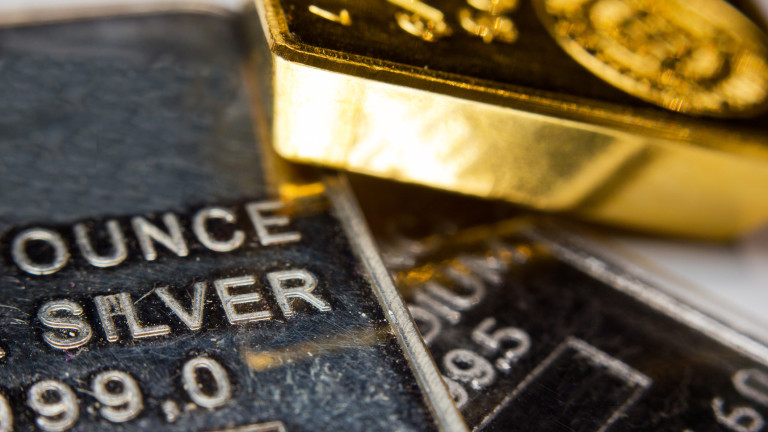
Gold has never been an asset that generates wealth through growth. Its strength lies in its resilience when the system shows signs of stress. An average annual return of around 5.6% is sufficient to preserve purchasing power and serve as an anchor during periods of institutional doubt.
In 2026, gold is positioned favorably. Pressure on central bank independence, geopolitical conflicts, and high levels of government debt are eroding confidence in fiat currencies. In this environment, gold isn’t simply an asset, but an indicator of systemic stress. The precious metal is gaining traction as a safe haven amid global economic uncertainty.
The risk here isn’t economic, but psychological. When gold becomes widely perceived as an obvious choice, some of its potential is already diminished. In the long run, it remains an insurance policy, not a growth engine, but such insurance can prove invaluable in years like 2026.
Bonds and the Return to Balance
After a decade of near-zero interest rates, bonds were often seen as a pointless asset. However, their historical return of around 4.5% takes on new significance in an environment where interest rates are rising and the cycle is turning.
For 2026, bonds offer not aggressive gains, but stability. If the economy cools and central banks are forced to cut rates, they could also generate capital gains. If inflation persists, the risk is that real returns will be limited. This makes bonds a tool for risk management, not maximizing returns.
Real Estate: Between Stability and Structural Change
Real estate, with a long-term return of around 4.2%, appears to be a “safe bet,” but this is one of the biggest oversimplifications in finance. These figures include periods of mass urbanization, population booms, and cheap credit—conditions that are no longer universally valid.
In 2026, the real estate market is fragmented. Some segments are under pressure from demographics and high costs, while others benefit from logistics, industry, and economic transformation. This means real estate is no longer a “universal hedge,” but an asset that requires selectivity and contextual understanding. Investors are increasingly focused on niche opportunities within the sector.
Cash as an Option, Not a Solution
Historically, cash has barely kept pace with inflation and often loses real value. However, its role isn’t to generate returns, but to provide freedom. In times of high uncertainty, it allows for reaction when others are forced to sell.
The danger in 2026 is that cash becomes a refuge from fear, rather than a tool for opportunity. In the long term, it’s a temporary parking spot, not a strategy.

Conclusion: 2026 as a Year of Regimes, Not Promises
The history from 1928 to 2025 tells us clearly that productive risk is rewarded. However, 2026 reminds us that the path to that reward is rarely straightforward. The greatest opportunities lie where long-term returns meet structural tailwinds, and the greatest dangers lie in complacency and fear.
The real question for the new year isn’t which asset will be “best,” but which investor will maintain discipline when the noise is loudest. That’s where history shows real money is made in the long term.
*This material is for analytical purposes only and does not constitute investment advice.
OBJECTIVE
Create an article that reads as if it were originally reported and written in English for a U.S. and global business audience.
Include only the verified facts, company names, financial data, locations, and times that exist in the original content;
do not introduce any new data, analysis, opinions, or external information.
Your rewritten version must sound human, contextual, and newsroom-authentic while staying factual and faithful to the verified information.
