
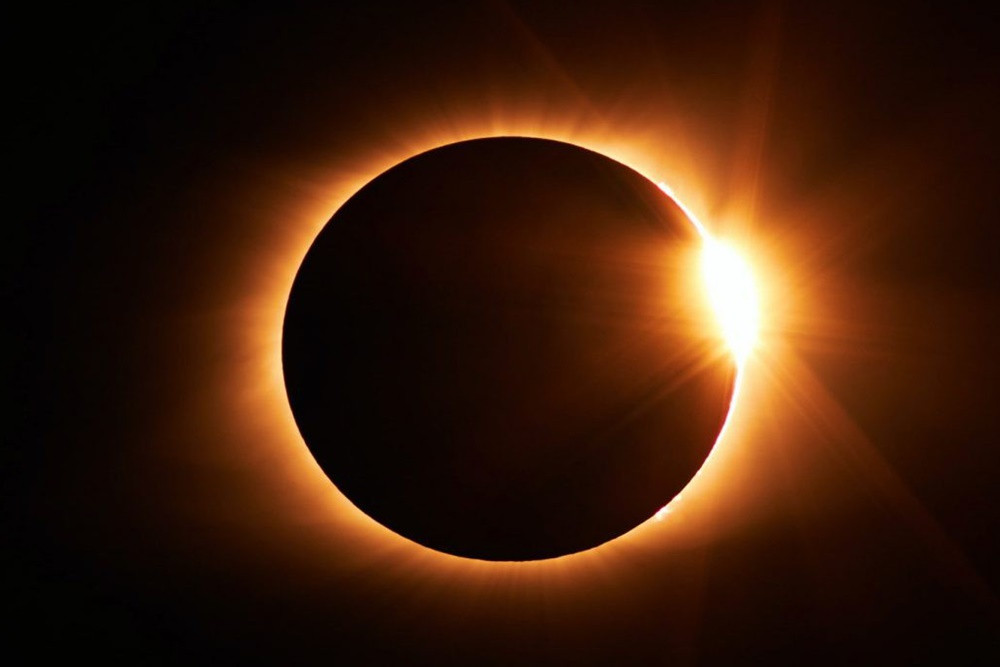
On August 12, 2027, a total solar eclipse will sweep across parts of the globe, offering skywatchers a rare celestial event that will last up to six minutes in certain locations. This duration makes it one of the longest total solar eclipses of the century, drawing attention from astronomers and the public alike.
The eclipse’s path of totality will initiate in the Atlantic Ocean, traverse southern Europe and northern Africa, then continue across the Middle East and into parts of Asia before ending in the Pacific. Observers in regions including Spain, Algeria, Libya, Egypt, Saudi Arabia, and parts of India and China will experience the full eclipse, where the moon completely blocks the sun’s disk for several minutes.
Scientists note that even as solar eclipses are predictable astronomical events, they provide valuable opportunities to study the sun’s outer atmosphere, or corona, which is usually obscured by the sun’s bright surface. During totality, researchers can observe solar flares, coronal mass ejections, and other phenomena that help improve space weather forecasting — information critical for protecting satellites, power grids, and astronauts.
Although the event poses no direct health risks to the general public, experts continue to emphasize the importance of eye safety. Looking directly at the sun — even during partial phases of an eclipse — can cause permanent retinal damage. Certified eclipse glasses or indirect viewing methods, such as pinhole projectors, are strongly recommended for safe observation.
Public health officials and science educators often use such events to promote awareness about both astronomy and eye health. The 2027 eclipse, due to its extended duration and wide visibility, may serve as a timely reminder of the universe’s predictable rhythms and the simple precautions needed to enjoy them safely.
