
A groundbreaking study published this week in teh astrophysical Journal Letters demonstrates how ancient astronomical observations can refine modern scientific understanding. Researchers have utilized a 2,700-year-old record of a total solar eclipse-observed in ancient China in 709 B.C.-to more precisely measure the Earth’s rotation adn, surprisingly, pinpoint a correction to the historically accepted location of the ancient city of Qufu. The findings highlight the continued relevance of historical records in contemporary scientific inquiry.

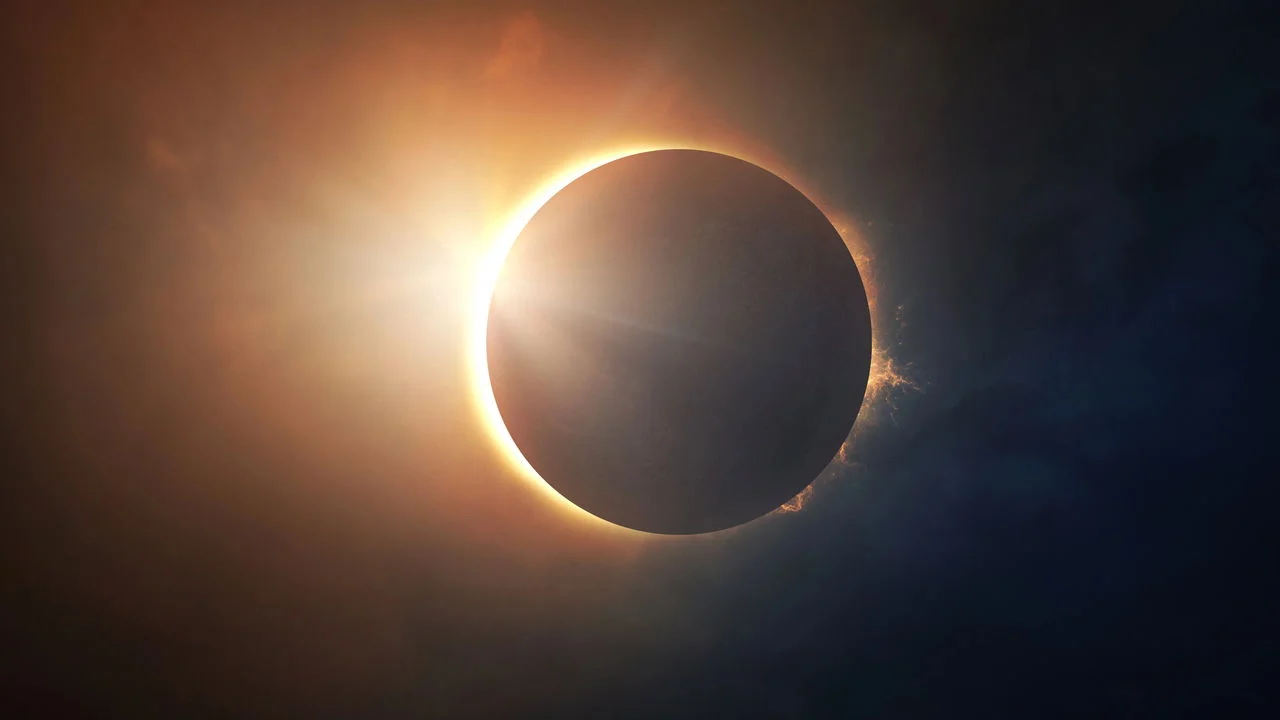
An international team of researchers has leveraged the oldest documented record of a total solar eclipse – dating back to 709 B.C. – to refine measurements of Earth’s variable rotation speed. The study, published in the Astrophysical Journal Letters, analyzed accounts of the eclipse as it was observed in Qufu, the ancient capital of the State of Lu in China. Through these calculations, scientists were able to pinpoint the exact date of the eclipse: July 17, 709 B.C.
The analysis not only provided reliable data regarding the planet’s rotation, but also led to a correction in the historically accepted location of the city. By comparing eclipse records with archaeological data, the team discovered that the true location of Qufu was approximately 5 miles (8 kilometers) from its previously believed position. “This correction allowed us to accurately measure the Earth’s rotation during the total eclipse,” explained lead author Hisashi Hayakawa of Nagoya University.
Researchers examined descriptions of the solar corona – the Sun’s outer atmosphere visible only during total eclipses – found within the ancient records. From this information, they were able to calculate the orientation of the Sun’s rotational axis and simulate the appearance of the corona at that time. This type of historical astronomical data is increasingly valuable as researchers seek to understand long-term solar behavior.
However, the scientists caution about the absolute reliability of data pertaining to the corona, as it wasn’t consistently documented again for over 700 years. Despite these caveats, the study offers robust new insights into Earth’s rotation and provides independent support for recent research on the solar cycle.
