
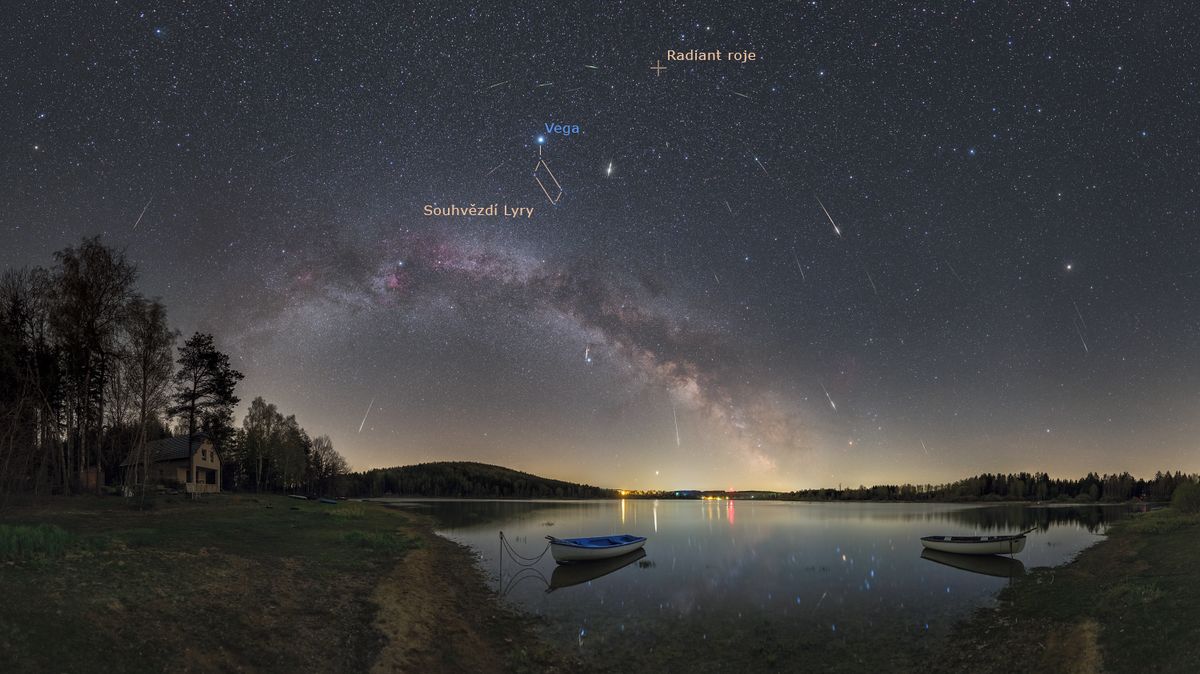
Stargazers across the Northern Hemisphere are preparing for one of the year’s most reliable celestial displays as the Lyrid meteor shower peaks in late April. According to astronomical forecasts, the shower will reach its maximum activity on the night of April 22nd, offering skywatchers a chance to witness shooting stars that have been observed by human eyes for over 2,700 years.
The Lyrids, which originate from debris left behind by comet C/1861 G1 Thatcher, typically produce between 10 and 20 meteors per hour at their peak under dark, clear skies. Whereas not the most intense shower of the year, the Lyrids are notable for their historical significance — records of the event date back to ancient Chinese astronomers in 687 BCE, making it one of the oldest known meteor showers still visible today.
Observers are advised to look toward the constellation Lyra, specifically near its brightest star, Vega, after midnight local time when the radiant point rises highest in the sky. For optimal viewing, experts recommend finding a location away from city lights and allowing eyes at least 20 minutes to adjust to the darkness. No telescopes or binoculars are needed — the meteors are visible to the naked eye.
Even though the Lyrids are not associated with any technological innovation or space mission, their annual return serves as a reminder of the enduring connection between astronomy and human curiosity. The shower’s predictable return each spring continues to inspire both amateur skywatchers and professional researchers studying meteoric phenomena and planetary defense.
This year’s peak coincides with a waning crescent moon, which will set early in the evening, minimizing light interference and improving visibility across much of the United States and Europe. Weather permitting, the display should be particularly favorable for observers in mid-latitude regions.
The Lyrid meteor shower will remain active from April 16th through April 25th, with the highest rates expected during the pre-dawn hours of April 22nd. As with all astronomical events, local conditions such as cloud cover and light pollution will affect visibility, but the shower’s broad peak offers multiple opportunities for viewing over several nights.
