Martin Glaser is set to take the helm of the National Theater in Prague in 2028, bringing with him a career trajectory that began unexpectedly with a shift from chemistry to the arts. In a recent interview, Glaser detailed his path from a childhood in Sokolov and the Bohemian Forest region to leadership roles at the National theatre in Brno, and now, one of Europe’s most esteemed cultural institutions. The incoming director discussed his unconventional journey, his artistic vision, and the challenges-and opportunities-that await him in Prague.
Martin Glaser, the newly appointed director of the National Theatre in Prague, reflects on his journey from a small town to leading one of Europe’s most prestigious cultural institutions.
Table of Contents
- Martin Glaser, the newly appointed director of the National Theatre in Prague, reflects on his journey from a small town to leading one of Europe’s most prestigious cultural institutions.
- Born in Sokolov, with roots tracing back to the Bohemian Forest region, Glaser’s path wasn’t always destined for the arts.
- Glaser initially pursued chemistry before a pivotal shift led him to the world of theatre.
- That shift occurred after leaving his hometown.
- His early career was shaped by his time at the Theatre on the Threshold.
“I’m Czech through and through, but we pronounce our surname in the German way: Glázr. I’ve been correcting people since I was little,” Glaser shared, addressing questions about his family’s origins.
Born in Sokolov, with roots tracing back to the Bohemian Forest region, Glaser’s path wasn’t always destined for the arts.
“Our families have roots around the Bohemian Forest, in the area of Nepomuk, Plánice. They come from the small towns and villages there. My parents went to Sokolov for work and housing in the early seventies. That’s why I feel a connection to the Bohemian Forest, where I used to visit my grandmothers. I really love that area from my childhood, unlike Sokolov, which I left at eighteen to go to Prague for my studies. I usually return there for a few days a year to visit my mother.”
Glaser initially pursued chemistry before a pivotal shift led him to the world of theatre.
“Fate? I was a quiet child who was always reading, but I needed a way to channel my energy. And because introverts who aren’t athletic don’t have many options, I looked for ways to do that. I accidentally ended up with chemistry. I was lucky to have a formative teacher who, thanks to her, I went down the path of natural sciences for a while. And since I think I have more talents from God, I was good at it. But in Prague, a different world opened up to me, an incredible space for culture and art.”
That shift occurred after leaving his hometown.
“I didn’t have that in Sokolov. I came to Prague from a small town at the end of the 80s. I realized I could try something other than chemistry. I dreamed for a while and applied to DAMU, the Academy of Performing Arts, for directing. And I was incredibly lucky. I came at the right time, in the right constellation, and they accepted me. I know it had to be fate. I wouldn’t have applied a second time. I would have become a chemist.”
His early career was shaped by his time at the Theatre on the Threshold.
“Again, coincidence, or fate. In Prague at that time, there was only one independent scene, Kašpar by Jakub Špalek. DAMU lost its space at DISK, and the school theatre in Celetná Street didn’t allow for many performances for audiences, so we took the opportunity to perform our own productions at the Žižkov Theatre. It was beautiful. By ‘we,’ I mean my classmates from acting – Marika Procházková, Michal Zelenka, Martin Kubačák, and dramaturg Olga Šubrtová… But I didn’t want to do generational theatre. I was looking forward to a repertory theatre, with actors of all generations.”
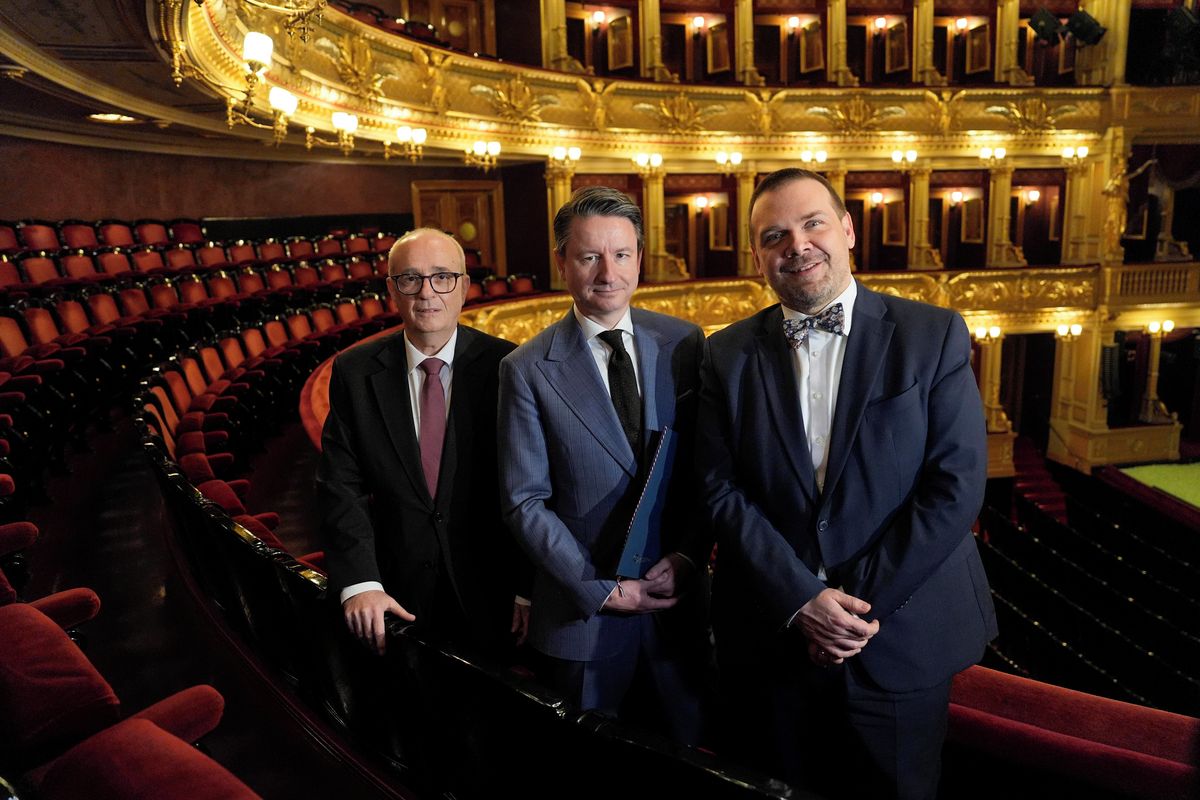
Foto: Petr Horník, Novinky
Tisková konference ministra kultury k představení nového generálního ředitele Národního divadla od roku 2028, léto 2025. Na snímku zleva ředitel ND Jan Burian, budoucí ředitel ND Martin Glaser a tehdejší ministr kultury Martin Baxa
Glaser’s career progressed to the South Bohemian Theatre in České Budějovice, where he spent eight years. “I was very happy there. I received an offer for a directing position at the end of my fourth year at DAMU. Although some professors raised an eyebrow because České Budějovice wasn’t a particularly renowned destination, I was happy to go. I was lucky to work with a stable acting ensemble, and it wasn’t considered normal to have to immediately succeed in television or film. Being ‘just’ in the theatre was considered the norm.”
He continued, “Then I became artistic director and the following seven years flew by. I needed a change. I felt I had done what was in my power, and it was time to move on. When I started preparing to leave, completely voluntarily, I received an offer from Brno. Although – I won’t lie to you – I wasn’t particularly yearning for the position of director. At that moment, it was already the third selection process, and no one was particularly eager to lead the National Theatre Brno. It was in a kind of limbo of disintegration at the time.”

What ultimately convinced him to apply for the position? “Besides the desire for change, I think it was a need for stability. But before I agreed, I got myself into a situation where I ended up in the hospital on a drip because of the decision. Because of me, the premiere was postponed for the first time, and I guest-starred at the Liberec Theatre at the time. I wasn’t really able to rehearse, I spent sleepless nights with tables, numbers, and considerations of whether I should even go to Brno.”
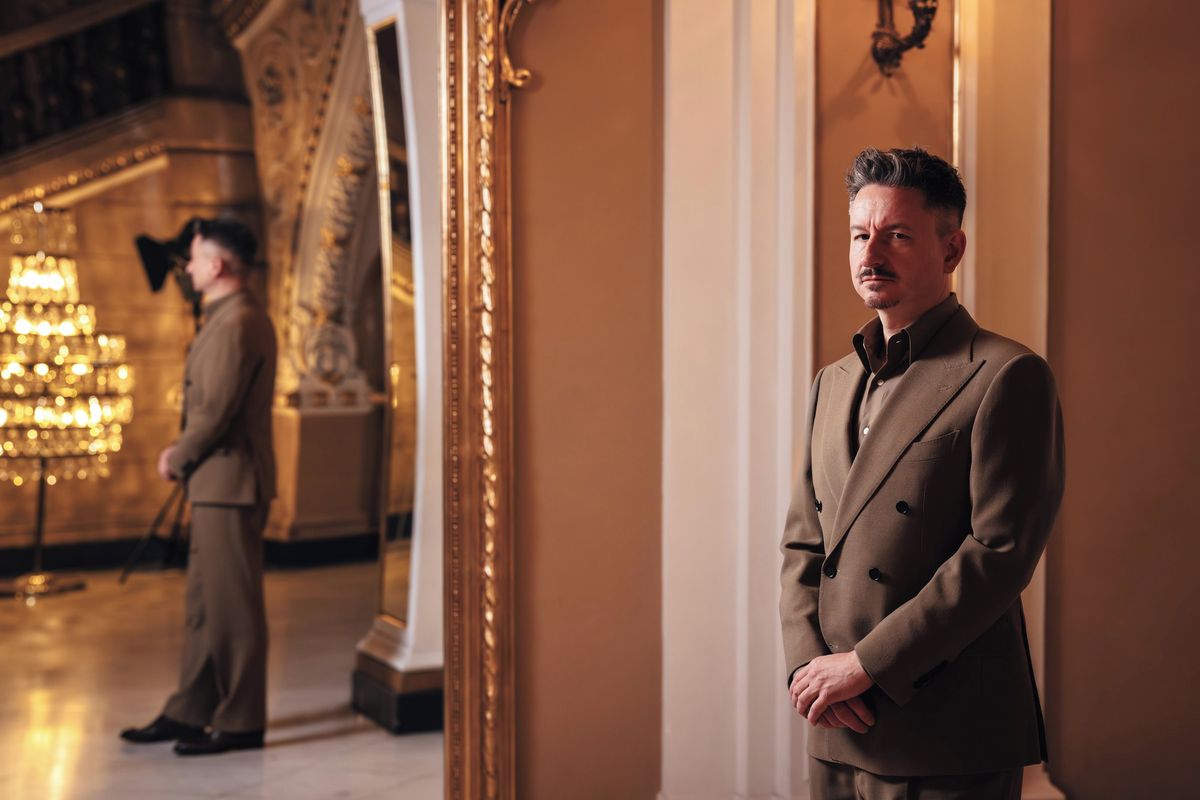
Foto: Tomáš Škoda, Novinky
Martin Glaser, divadelní režisér v Mahenově divadle
“I knew it was something different to lead a company in a region than to run a large three-ensemble theatre. In making the decision, people around me helped me, who wanted to go with me. Most of them are still with me in Brno, and some of them will go with me to Prague from the summer of 2028.”
His appointment to the National Theatre in Prague followed a similar process. “I think so, because without a direct invitation, I probably wouldn’t have applied for the competition. But I was a little calmer when making the decision than when considering moving from České Budějovice to Brno. I already have some idea of what to expect in Prague, what I can and cannot count on.”
When asked about potentially disrupting established norms at such institutions, Glaser acknowledged the challenge. “Of course, changing things is never easy. It wasn’t a walk in the park in Brno at first, there were more frowning faces with a priori distrust. I think that in Prague, my age will help me, I have some experience, demonstrable results, and I’m no longer the boy from České Budějovice with a shaved head…”
He chuckled, “You mean the hairstyle? I used to cut my hair with clippers at home every two weeks. It was practical. I completed the look with a suit and tie. But of course, a director isn’t made by the right outfit, but by a vision that you have to convince people of and get them to go with you. Gaining trust always takes time. In Brno, they initially looked at me like a castaway.”
“Artistic directors were changing like on an assembly line, directors didn’t last a year. I came into that atmosphere with my team. They felt like we were just going to mess things up and leave. To sum it up, when we arrived, there were hundreds of sour faces waiting for us in Brno. We had to convince people that we wanted to work, that we wanted to take care of them. So we started working hard. This is typical of me, if I have a goal, I give it everything.”
“Did it work? Today, most of us smile at each other. There are 650 employees in the theatre, so I really appreciate those prevailing smiles.”
Looking ahead to Prague, he anticipates managing a much larger organization. “In the summer of 2028, I’ll have 1300 people under me. I’m not a revolutionary, I’m a man of evolution. I expect that in some phases, they’ll frown at me too. I want to continue the transformative efforts of the current management. It’s clear that some steps will be painful, unpleasant, perhaps even risky… But if we want the National Theatre to play in the first European league, we can’t avoid more drastic changes.”
Foto: Petr Horník, Novinky
Tisková konference ministra kultury k představení nového generálního ředitele Národního divadla od roku 2028, léto 2025. Na snímku zleva ředitel ND Jan Burian, budoucí ředitel ND Martin Glaser a tehdejší ministr kultury Martin Baxa
Recent successes, such as the National Theatre Brno’s international opera award, demonstrate Glaser’s ability to elevate artistic standards. “It would theoretically be easier – Prague is the capital, has a large airport, it’s not a problem to get there from the world. But we have a lot of work ahead of us, so I’m glad we’re not starting from scratch, as we were in Brno.”
He emphasized the importance of long-term planning, advocating for a shift towards a model similar to public broadcasters like Czech Television and Czech Radio. “It’s good for the theatre! It’s a European standard. I’m glad that Martin Baxa, as Minister of Culture, had the courage to do it. Yes, it’s a revolutionary step for us, but it really makes sense. Employees know what to expect. There’s no risk that they’ll come to work one day and the director will be different. Such an approach ruins the institution and artistically loses years.”
“Look at the plans of world stages or top creators. They have a lot planned for years ahead and are already solving, for example, 2030. If we want to have similar people in the Czech Republic, we must plan, create programs well in advance. And that’s impossible without a director.”
When asked about financial realities, Glaser was candid. “There’s no golden parachute, unlike the directors of Czech Railways or Czech Television… although the requirements for those positions are comparable. The reward is a fraction of theirs, and moreover, currently without the guarantee that the founder will not fire us from one hour to the next. Even this appointment decree, that I will be the director of the National Theatre in Prague, is just ‘paper.’ If the future Minister of Culture decides otherwise, they don’t even have to say why. They just have to think: I don’t like that guy from Brno, I’ll find my own.”
Looking ahead to 2026, Glaser invites audiences to experience his production of Václav Havel’s *The Temptation* at the Mahen Theatre. “A little selfishly, my latest production. Havel’s texts mature like wine. They hold up a fairly uncompromising mirror to us. What he dealt with at the height of normalization resonates extraordinarily with what we are experiencing in Europe and at home.” He also highlighted an upcoming Baroque opera, Agrippina by George Frideric Handel, in collaboration with Collegium 1704. “We’ve approached it as a wild cabaret about the world of the powerful.”
Regarding his potential to direct in Prague, Glaser stated, “I really like directing, but I have two conditions. First, I need to get the job of general director of the National Theatre working according to my ideas. The second condition is that the artistic directors in Prague will need me to participate in profiling their ensembles as a director. It’s the same in Brno. My bosses know they don’t have to offer me directing jobs, period.”